
Pruning
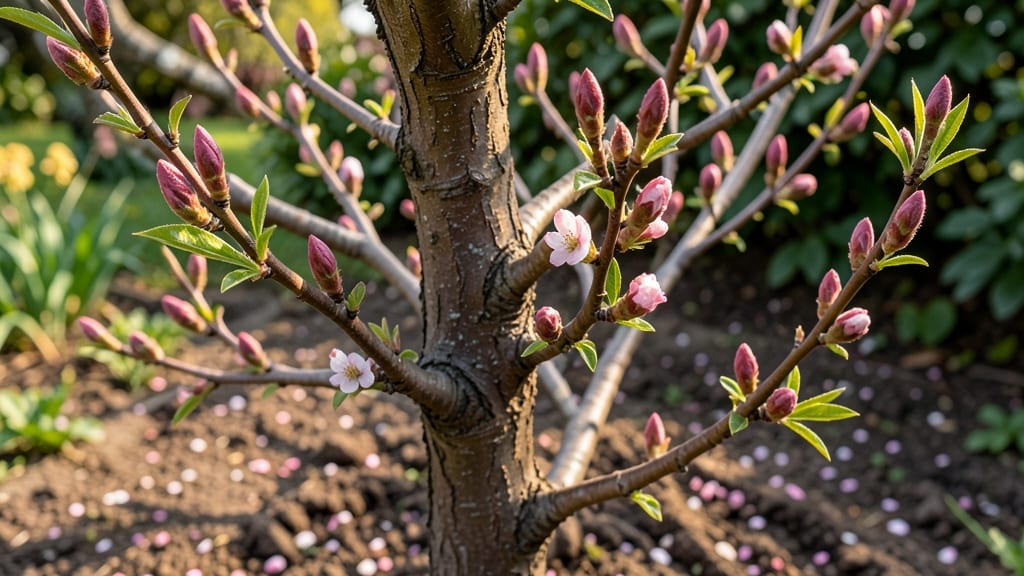
Peach tree flower buds form the foundation of next year's harvest—if you prune them right now, you'll see twice as many blossoms in spring. 🌸 I've watched my own peach tree go from sparse blooms to heavy branches under the weight of flowers, and it all starts with understanding when and how to shape those buds during dormancy.
The magic happens in late winter before buds swell, when you remove dead wood and thin crowded branches. Use sharp pruners to make clean cuts just above outward-facing buds—this encourages new growth that will bear fruit.
Too much pruning now stresses the tree, while too little lets pests and disease hide in crowded branches.
You'll notice buds plump up by early spring, and with proper care, they'll burst into vibrant pink blossoms that attract pollinators. Protect them from late frosts with frost cloth, and avoid over-fertilizing nitrogen—it promotes leafy growth at the expense of flowers.
This method works for both young trees and mature ones, though older trees may need gradual pruning over a few years. The payoff? A tree so laden with blossoms you'll need a ladder to pick fruit—and fewer empty branches where pests can hide.
📚 In This Guide
- What you need
- Instructions
- Tips and common mistakes
- Wrapping up and next steps
What you need
- ● Pruning shears: Bypass pruners (sharp, clean blades, 6–8" handle) – 1 pair (for small branches).
- ● Loppers: Bypass or anvil type (8–12" handle, 2–3" cutting capacity) – 1 pair (for thicker branches up to 2").
- ● Pruning saw: Curved-tooth or folding saw (for branches >2" thick) – 1.
- ○ Disinfectant (optional but recommended): 70% isopropyl alcohol or bleach solution (1 part bleach : 9 parts water) – small spray bottle or cloth.
- ● Garden gloves: Cut-resistant, breathable – 1 pair (to protect hands from thorns and splinters).
- ● Rag or paper towels: For cleaning tools between cuts – 5–10 sheets.
- ● Timing: Prune dormant peach trees in late winter (Feb–early March), before buds swell but after hard frosts.
- ● Weather: Choose a dry, calm day (no rain for 24 hours before/after pruning).
- ● Tree health check: Inspect for diseased or dead branches (brown, mushy wood, or fungal growth). Remove these first!
- ○ First aid kit (optional): Bandages and antiseptic (for thorn pricks or cuts).
How to prune peach trees for maximum flower buds
Here’s the method I’ve used for years to turn my peach trees into blossom machines—no guesswork, just strategic cuts.
✂️ Step 1: Prune at the Right Time
Timing is everything. Prune your peach tree in late winter or early spring, just as buds begin to swell but before they burst open. This gives the tree time to heal before the growing season kicks in. I aim for February or March in my zone, but adjust based on your last frost date—never prune after buds open, or you’ll sacrifice next year’s blooms.
If you missed the window, wait until summer to do light maintenance pruning, but avoid heavy cuts. Peach trees are sensitive, and wrong timing leads to weak growth or no flowers. Watch for buds that look plump and ready to bloom—that’s your cue.
✂️ Step 2: Remove Dead, Diseased, or Crossing Branches
Start by cutting out dead, broken, or diseased branches—these sap energy from the tree and invite pests. Use clean, sharp pruners to make cuts just outside the branch collar (the swollen area where the branch meets the trunk). I always disinfect my tools with rubbing alcohol between cuts to prevent spreading disease.
Next, look for branches that cross or rub against each other. These create wounds that weaken the tree and reduce flower production. Remove the smaller of the two branches to maintain an open canopy. You’ll know you’re doing it right when sunlight can reach the center of the tree—this encourages more bud formation.
🌱 Step 3: Thin Out Overcrowded Branches
Peach trees produce flower buds on one-year-old wood, so focus on keeping the structure open and airy. Remove too-thin branches (smaller than a pencil) and suckers (shoots growing from the base or trunk). These compete with the main branches for nutrients, leaving fewer buds for spring blooms.
I like to step back and visualize the tree’s shape—aim for a modified central leader (one main trunk with scaffold branches spaced 12-18 inches apart). Cut back any branches growing straight up or inward. You’ll see stronger growth and more buds when the tree isn’t fighting for space.
☀️ Step 4: Encourage Flower Bud Formation
Peach trees need full sun (6-8 hours daily) and well-drained soil to set flower buds. After pruning, fertilize lightly with a balanced 10-10-10 or fruit-tree-specific fertilizer to support new growth. Avoid heavy nitrogen—it promotes leafy growth at the expense of flowers.
Water deeply once a week (unless it rains) to keep the soil moist but not soggy. Mulch around the base with 2-3 inches of organic mulch to retain moisture and protect roots. By late summer, you’ll start seeing small, green flower buds forming—these are your future blooms!
⏰ Step 5: Monitor and Adjust for Next Year
After the first flush of blooms, keep an eye on the tree’s response. If it produces too many leaves but few flowers, it may need less nitrogen next season. If buds fail to form, check for pests (like peach tree borers) or disease (like brown rot)—both can kill buds before they open.
I mark my calendar to prune again in late winter, using the same method. Over time, your peach tree will develop a strong framework of branches that reliably produce abundant, healthy flower buds year after year. Patience is key—it takes a few seasons to see the full payoff.
Tips & tricks for pruning peach trees
A few key insights will help you avoid common mistakes and maximize those future blossoms.
Timing is Everything: In Step 1, when you're aiming for late winter or early spring, check your local frost dates—pruning too early can expose the tree to cold damage, while waiting too long risks losing next year's buds. I always look for those plump, swollen buds as my cue, and I've never regretted waiting an extra week rather than rushing too soon.
Branch Selection Strategy: During Step 2, when removing crossing branches, focus on creating a balanced shape rather than just eliminating intersections. The goal is to let sunlight reach the center—this is where flower buds thrive. I like to step back every few cuts to visualize the tree's "bones" and ensure no branches are competing for sunlight or air circulation.
Thinning for Future Buds: In Step 3, when you're thinning out overcrowded branches, remember that peach trees form buds on last year's wood. Cutting back too aggressively removes potential bud sites. I aim to keep scaffold branches at 12-18 inches apart and never remove more than 25% of the tree's canopy in one season—this gradual approach builds a stronger framework for future blooms.
Post-Pruning Care: After completing all steps, don't forget the follow-up care in Step 4. The 6-8 hours of daily sunlight is non-negotiable—partial shade reduces bud formation by up to 50%. I've found that adding a 2-3 inch layer of organic mulch right after pruning helps retain moisture while protecting roots from temperature swings, which directly impacts bud development.
Pro Tips for Peach Tree Flower Buds
- A few key insights will help you avoid common mistakes and maximize those future blossoms.
- I always look for those plump, swollen buds as my cue, and I've never regretted waiting an extra week rather than rushing too soon.
- Branch Selection Strategy: During Step 2, when removing crossing branches, focus on creating a balanced shape rather than just eliminating intersections.
Frequently asked questions
Got questions about peach tree flower buds? You’re not alone! Here are some of the most common concerns—and their answers—to help you master the art of pruning for stunning spring blooms.
When should I prune peach tree flower buds?
Prune your peach tree after harvest (late summer to early fall) or dormant season (late winter, before buds swell). Avoid pruning in spring—this removes next year’s flower buds! Focus on shaping and removing dead/diseased wood first. Pro tip: Use sharp tools to make clean cuts just above a bud or branch collar.
How do I know if my peach tree flower buds are healthy?
Healthy flower buds are plump, firm, and greenish-pink (not shriveled or brown). If buds look mushy, discolored, or covered in mold, your tree may have bacterial leaf spot or peach leaf curl. Prune affected branches immediately and sterilize tools with rubbing alcohol. Alternative: Apply copper fungicide in late fall/winter as a preventative.
Can I prune too much? What’s the right amount?
Yes! Over-pruning stresses the tree and reduces next year’s blooms. Aim to remove no more than 20-30% of the canopy per year. Focus on:
- Dead/diseased wood
- Crossing or rubbing branches
- Suckers (shoots at the base)
- Water sprouts (vertical, fast-growing shoots)
What if my peach tree isn’t flowering? Could it be the buds?
Lack of flowers often stems from poor pruning, age, or environmental stress. If buds are missing or sparse:
- Check for late frost damage (buds may have died back).
- Ensure the tree gets 6+ hours of sunlight daily.
- Fertilize in early spring with low-nitrogen, high-phosphorus (e.g., 5-10-10).
- Young trees (<3 years) may need patience—flowering takes time!
Can I prune peach trees in winter? What about frost?
Pruning in dormant winter (Jan–Feb) is ideal, but avoid extreme cold (<10°F/-12°C). If frost is forecast, wait until temperatures stabilize. Key steps:
- Prune on dry, calm days to prevent sap bleeding.
- Seal large cuts (>2 inches) with pruning sealant to reduce disease risk.
- Water deeply before pruning to reduce stress.
Wrapping up and next steps
Caring for your peach tree’s flower buds is the first step to a stunning spring display and a fruitful harvest!
By mastering the right pruning techniques—timing, tools, and cuts—you’re setting your tree up for success. Don’t wait until spring; take action now to ensure those delicate buds thrive and transform into vibrant blooms next year.
Ready to give your peach tree the love it deserves? Grab your pruners and start planning your pruning session—your future harvest will thank you! 🌸✂️