
Container Gardens
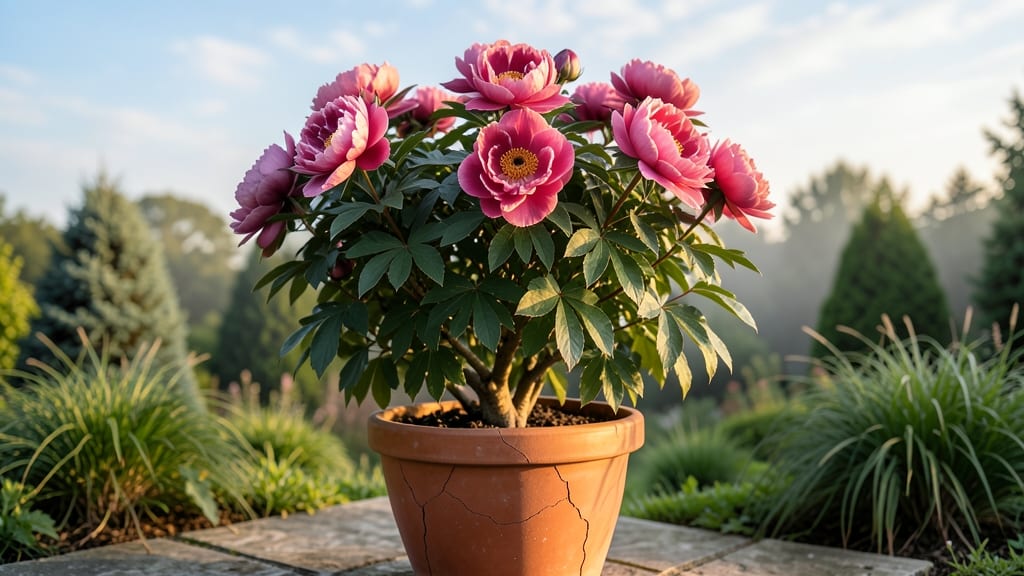
Growing tree peonies in pots means stunning blooms without the yard space. 🌸 I've mastered the trick of keeping these heavy bloomers happy in containers—it's all about the right soil mix, pot size, and a little winter patience that mimics their natural cold stratification.
The secret starts with a 20-25 gallon container (minimum) and a soil blend that drains well but holds moisture—think 60% organic matter, 30% perlite, and 10% sand. Tree peonies need full sun (6+ hours daily) and regular watering, but they hate soggy roots.
A saucer underneath catches excess water, and a 1-2 inch layer of mulch keeps roots cool in summer.
By late fall, you'll give them a cold stratification trick: move pots to an unheated garage or wrap them in burlap and store them outside. This mimics winter dormancy, ensuring bold, abundant blooms the following spring.
The first flush of flowers arrives in late May or early June, and with proper care, they'll rebloom in fall.
Container-grown tree peonies stay compact and manageable, making them perfect for patios, balconies, or small gardens. The trade-off? They need annual repotting to prevent root-bound stress. With the right setup, you'll enjoy these showstopping blooms for decades—just like the ones in my front yard that neighbors admire every spring.
📚 In This Guide
- What you need
- Instructions
- Tips and common mistakes
- Wrapping up and next steps
What you need
- ● Tree peony tubers: 1–3 healthy, dormant tubers (choose varieties like 'Koi No Ue' or 'Shin Koi' for compact growth).
- ● Pot: 1 large container (12–18 inches deep, with drainage holes) made of terracotta, ceramic, or high-quality plastic.
- ● Well-draining potting mix: 3–5 gallons of a blend with 50% peat moss or coconut coir, 30% perlite or pumice, and 20% compost.
- ● Gravel or expanded shale: 1–2 inches (for drainage layer).
- ● Cold stratification supplies: 1–2 plastic bags (for moisture retention during stratification).
- ● Refrigerator or cold storage space (35–45°F / 2–7°C for 4–8 weeks).
- ● Garden trowel or small shovel (for planting).
- ● Watering can with a fine rose (for gentle hydration).
- ○ Mulch (optional): 1–2 inches of pine bark fines or straw (to retain moisture).
- ○ Slow-release fertilizer (optional): 1–2 tbsp of balanced 10-10-10 or peony-specific fertilizer.
- ○ Support stake (optional): 1 bamboo stake or small trellis (for varieties with heavy blooms).
Step-by-step instructions for growing tree peonies in pots
Cold-stratified tree peonies thrive in containers with the right care—here’s how to coax those stunning blooms.
🌱 Step 1: Select the Right Container and Drainage
Choose a 12-15 inch diameter pot with drainage holes—tree peonies hate soggy roots. I use unglazed terra cotta because it breathes and prevents rot. If your pot lacks holes, drill 3-4 evenly spaced ones near the bottom. Line the bottom with 2-3 inches of gravel or broken pottery to create a reservoir for excess water.
Tree peonies need deep roots, so a narrow, deep pot works better than a wide, shallow one. If repotting an established plant, go 2-3 inches larger in diameter—just enough to accommodate roots without overwhelming the plant. The goal is stability, not excess space that encourages weak growth.
🌿 Step 2: Prepare the Soil Mix for Cold Stratification
Blend 50% high-quality potting mix with 30% compost and 20% perlite or coarse sand for drainage. Tree peonies need well-draining yet moisture-retentive soil—too much sand dries them out, while pure potting mix compacts over time. Mix in a handful of slow-release fertilizer (10-10-10) to support early root growth.
Fill the pot ⅔ full, leaving space for the root ball. Press the soil down lightly to remove air pockets but don’t compact it—roots need room to expand. I like to add a 1-inch layer of orchid bark at the bottom for extra aeration, especially if my soil mix feels dense.
❄️ Step 3: Cold-Stratify the Roots Before Planting
Tree peonies require 6-8 weeks of cold stratification to break dormancy. Place the bare-root plant in a plastic bag with a damp paper towel and seal it loosely. Store the bag in your refrigerator’s crisper drawer (keep temps at 35-40°F) for the full period. Check weekly—if the towel dries, mist it lightly.
This mimics winter’s natural chilling process. Without it, buds may fail to open or produce weak stems. I mark the bag with the stratification start date so I don’t forget. After 6 weeks, remove the plant and let it sit at room temperature for 24 hours before planting—this prevents shock.
🪴 Step 4: Plant the Stratified Root Ball
Position the root ball 2 inches below the pot’s rim—tree peonies need depth to establish. Gently spread roots outward if they’re curled, then backfill with soil, pressing lightly to secure the plant. Leave 1 inch of space between the soil and pot rim for watering. Water deeply until it drains from the holes below.
Planting too deep buries the buds, delaying blooms. I use a wooden dowel to check depth—insert it beside the root ball until it touches the topmost bud. The soil line should sit 1-2 inches above this point. Mulch with 2 inches of shredded bark to retain moisture and regulate temperature.
☀️ Step 5: Position for Light and Gradually Acclimate
Place the pot in partial shade (morning sun, afternoon shade) for the first 2 weeks—direct sunlight can scorch new growth. Tree peonies tolerate 6 hours of filtered light but avoid harsh afternoon rays. I rotate the pot quarter-turn weekly to prevent leaning toward the light.
After 2 weeks, move to full sun (6+ hours daily). You’ll see new shoots emerge in 4-6 weeks—that’s your cue everything’s working. Water deeply once a week, letting the top 2 inches of soil dry between waterings. Overwatering in pots is the #1 killer of tree peonies.
⏰ Step 6: Fertilize and Prune for Next Year’s Blooms
Feed with a balanced liquid fertilizer (10-10-10) every 4 weeks during spring and summer. Stop fertilizing in late August to encourage bud formation for next year. Deadhead spent blooms by cutting stems ½ inch above the next set of leaves—this redirects energy to root and bud development.
In fall, reduce watering as temps drop. Once leaves yellow and die back, cut stems to 6 inches and move the pot to a cool, dark garage or shed (40-50°F). This mimics winter dormancy. I wrap the pot in burlap to protect roots from freezing temps—tree peonies in pots are more vulnerable than in-ground plants.
Tips & tricks for growing tree peonies in pots
Here's what I've learned after years of coaxing these stunning blooms from containers—these details make all the difference.
Pot Selection Wisdom: While 12-15 inch diameter pots work perfectly, I've found that glazed ceramic pots actually work better than terra cotta in humid climates—they retain moisture longer. If using terra cotta, place the pot on a saucer filled with pebbles and water to increase humidity around the roots. The key is balancing drainage with moisture retention, especially during the critical first growing season when roots establish.
Soil Mix Secrets: Don't skimp on the orchid bark layer—it's not just for aeration. I've noticed that adding ½ cup of worm castings to the soil mix gives plants a gentle nutrient boost without overwhelming them. The bark also helps prevent soil compaction over time, which is crucial since tree peonies need loose soil to develop their deep root systems.
Cold Stratification Precision: The 35-40°F temperature range in your fridge is ideal, but I've learned to monitor the crisper drawer's humidity. If condensation forms inside the plastic bag, open it slightly for 10 minutes daily to prevent mold. Also, place the bag on a towel-lined tray—condensation dripping onto roots can cause rot during this critical period.
Light Transition Strategy: When moving from partial shade to full sun after 2 weeks, do it gradually over 5-7 days. I start by moving the pot to a spot with 3 hours of direct sun, then increase by 1 hour daily. This prevents sunburn on new growth. Watch for leaves that look dull or yellowed—this is your sign to slow down the transition.
Pro Tips for Tree Peony In Pots
- Here's what I've learned after years of coaxing these stunning blooms from containers—these details make all the difference.
- Pot Selection Wisdom: While 12-15 inch diameter pots work perfectly, I've found that glazed ceramic pots actually work better than terra cotta in humid climates—they retain moisture longer.
- Soil Mix Secrets: Don't skimp on the orchid bark layer—it's not just for aeration.
Frequently asked questions
about growing tree peonies in pots—because even the most elegant blooms need a little troubleshooting! Here are answers to the questions we hear most often.Can tree peonies thrive in pots long-term, or do they need to be replanted?
Tree peonies can thrive in pots for years if given the right conditions! Opt for containers at least 18–24 inches wide and deep with drainage holes, and refresh the soil every 2–3 years. Over time, they may outgrow their pots, so plan to upgrade container size or divide roots every 5–7 years to maintain health.
How do I know when to plant tree peony tubers in pots?
Plant tree peony tubers in early fall (8–12 weeks before your first frost) for cold stratification—a must for blooming success. If you miss this window, plant in late winter or early spring (just before buds swell), but expect delayed or reduced blooms that first year.
What’s the best way to overwinter potted tree peonies in cold climates?
Move pots to a protected, unheated space (like a garage or shed) where temps stay 30–40°F. Bury pots in straw or leaves for insulation, and avoid watering until spring. In Zone 5 or colder, add extra mulch or use a frost blanket to shield roots from extreme cold.
Why aren’t my potted tree peonies blooming?
No blooms? Check these fixes:
- Insufficient sunlight: Tree peonies need 6+ hours of sun daily.
- Improper cold stratification: They need winter chill (40–60°F for 6–8 weeks).
- Overcrowded roots: Divide clumps every 5 years to refresh growth.
- Too much nitrogen: Use a balanced fertilizer (10-10-10) in early spring.
Are there dwarf tree peony varieties better suited for pots?
Try these compact varieties for smaller pots:
- ‘Koi Nuigata’ (3–4 ft tall, fragrant pink blooms)
- ‘Duchesse de Nemours’ (4–5 ft, classic pink, cold-hardy)
- ‘Shin Shirakawa’ (3–4 ft, double white flowers)
Wrapping up and next steps
Growing tree peonies in pots is a rewarding way to enjoy their stunning blooms without sacrificing space—just remember the key to success lies in cold stratification and thoughtful care. With the right container, soil, and seasonal adjustments, you’ll unlock vibrant flowers year after year. 🌸
Ready to transform your patio or balcony into a fragrant paradise? Start by selecting your peony variety and gather your supplies—then dive in! Whether you’re a beginner or a seasoned gardener, these cold-hardy beauties will bring joy with minimal fuss. Happy planting! 🌱