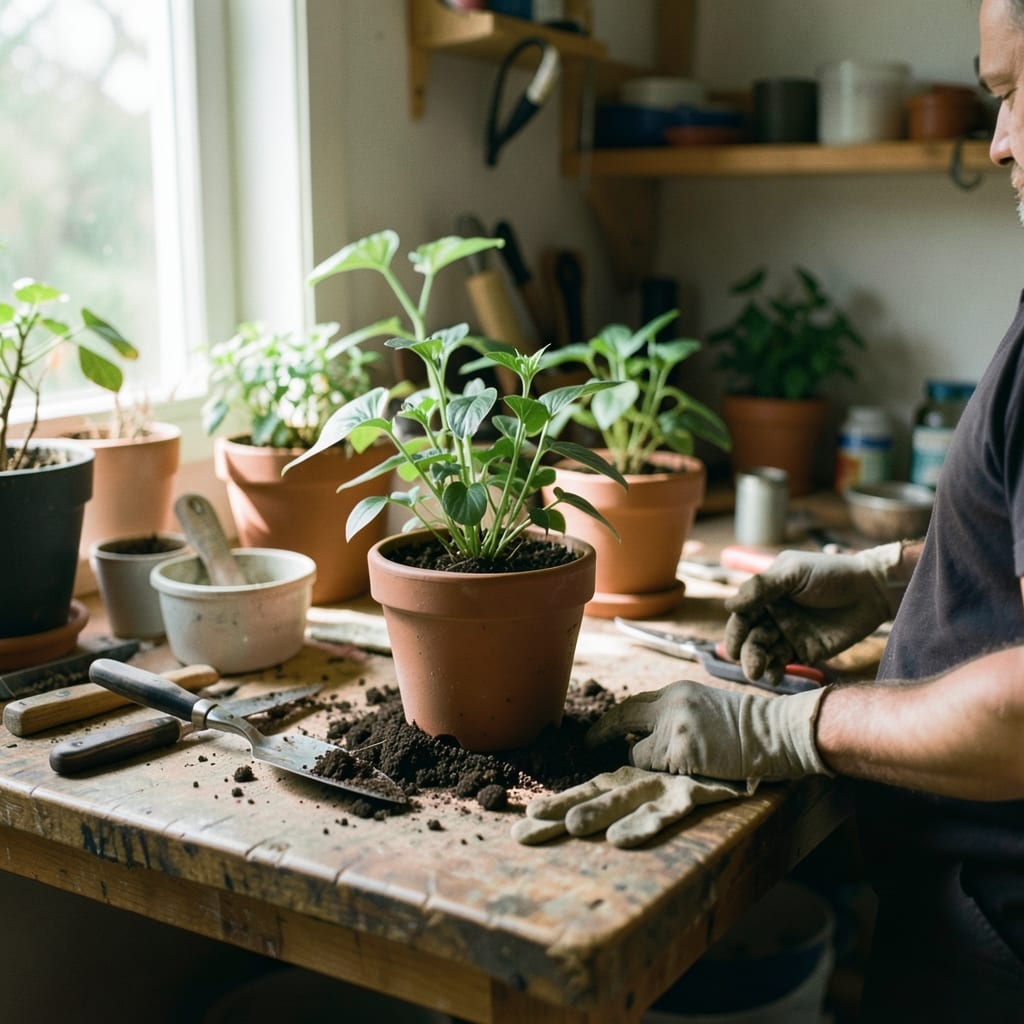
Why I started Tree Grow Guide
I was knee-deep in a patch of stubborn sunflowers when my grandmother—who’d taught me to pinch off the first blooms to keep the stems sturdy—shrugged and said, *‘That’s not how you do it anymore.’* I’d followed the advice from a gardening forum, and the plants had split at the base, toppling over like drunkards.
That was the moment I realized most ‘tips’ online were either outdated, overly technical, or just plain wrong. There had to be a better way to learn, one that didn’t assume you had a greenhouse or a decade of experience.
So I started *Tree Grow Guide* as a place for the rest of us—the people who don’t have a degree in horticulture but still want to grow something. No jargon, no assumptions, and definitely no sunflowers that collapse like overwatered jelly.
If you’ve ever Googled ‘why is my basil wilting?’ at 2 AM or wondered how to coax life from a seed packet, this is for you.
Here, you’ll find the answers I wish I’d had back then: practical, tested, and written for people who actually *grow* things with their hands—not just their hopes.
Meet the founder

My grandmother’s kitchen table was where I first learned the rhythm of growth.
She’d press seeds into damp paper towels, tape them to the window, and wait. *‘Patience,’* she’d say, *‘is the only fertilizer you can’t buy.’* I ignored that advice for years—starting seeds too early, crowding them in trays, and then wondering why they leggy little ghosts when they finally hit the soil.
She’d just sigh and hand me a pair of pruners. *‘Again.’*
The tool I still use is a rusted trowel I ‘borrowed’ from her garden when I was twelve. It’s missing a chunk of the blade now, but it’s the one I reach for when I’m digging in stubborn clay or trying to coax a stubborn dahlia back to life.
She’d laugh if she saw me now—me, who once swore I’d never grow tomatoes without burning the leaves, running a site about it. But here we are.
The failure that changed everything was the year I tried to grow peppers from seed indoors. I followed the ‘expert’ advice: bright light, bottom watering, perfect humidity.
The seedlings emerged, but they stretched toward the window like they were reaching for salvation, their stems so thin they snapped at a touch. That’s when I realized most ‘rules’ were just guesses—and that the real work starts when the guesses go wrong.
I still talk to my plants. Out loud. Not the dramatic, *‘Grow, my little friend’* kind of way—more like a running commentary on their progress (or lack thereof). *‘Come on, basil, you’ve got this’* or *‘Why are you wilting? Did I overwater you?
Underwater you?’* My neighbors think I’ve lost it. My plants don’t care. They just keep growing—or don’t.
Meet the mascot

The first scribble was on a napkin at a café in Portland, where I’d just spent an hour arguing with a barista about why their ‘herb garden’ was nothing but dead parsley.
I’d drawn a seedling poking through cracked soil, all lopsided and determined, with a sun hat that was more like a lopsided bowl. The barista took one look and said, *‘That’s your gardening spirit right there.’* I didn’t argue.
The proper drawn version was on yellow legal paper, where I tried to give the seedling arms—because, let’s be honest, a plant that *doesn’t* wave at you when you walk by isn’t very relatable.
The soil turned into a proper crack, the hat became a tiny spade, and the seedling’s leaves got a bit more definition. But the lopsidedness stayed. That’s the point: growth isn’t neat.
To simplify it for a browser tab, I had to kill most of it—the arms, the spade, even the hat’s brim. What remained was just the seedling, the crack, and a hint of soil, like a snapshot of the moment before anything changes.
I named it *Sprout* because it’s stubborn, a little messy, and always pushing upward—just like the rest of this site.
What I promise you
This site is a promise: no matter how many times you’ve failed before, you can still grow something. Maybe it’s a single tomato, a stubborn basil plant that refuses to bolt, or a windowsill jungle of herbs. The goal isn’t perfection—it’s progress.
What you can hold me to
- Every ‘tip’ here is something I’ve actually tried—and either made work or learned *why* it didn’t.
- If I say ‘water when the top inch of soil is dry,’ I mean it. No vague ‘keep it moist’ nonsense.
- You’ll never see a step that says ‘until it looks right.’ Because ‘right’ is subjective, and I’d rather tell you the exact time it takes for a cutting to root (hint: it’s not a week).
- If a plant dies here, I’ll tell you exactly why—and how to fix it next time.
How I create a guide
Every guide starts with a mistake. Not a grand, catastrophic failure—just the quiet kind, like the time I swore my zucchini plants were thriving, only to find them hollowed out by squash vine borers.
That’s when I realized most ‘problems’ in gardening aren’t about the soil or the sun; they’re about the things you can’t see until it’s too late. So I start by listing what went wrong, then work backward to the fix.
The first step: watching
The first 48 hours with a new plant are spent doing nothing but observing. I don’t water, I don’t fertilize—I just sit and watch. Is the soil drying out in patches? Are the leaves curling at the edges?
That’s when you spot the real issues: overcrowded roots, hidden pests, or a windowsill that’s too hot. I time how long it takes for the top inch of soil to dry, mark it on a calendar, and adjust. No guesswork. Just data.
The moment something goes wrong is usually obvious—wilting, yellowing, or (in my case) a sudden influx of aphids that turn your fava beans into a sticky mess. But the *why* takes longer. Was it the tap water? The lack of mulch?
The fact that I ignored the warning signs for three weeks? I write it all down, even if it means admitting I overwatered *again*. Because the next time, I’ll catch it sooner.
The second step: fixing
Fixing starts with the hands. If the roots are circling in the pot, I repot it—*now*, not ‘next spring.’ If the soil is compacted, I loosen it with a fork, even if it means getting my knees dirty.
I don’t believe in ‘waiting it out.’ If a plant is struggling, I act like it’s the only one that matters. That means pruning the damaged leaves, adjusting the watering schedule, or (if all else fails) starting over with a cutting.
The most important tool isn’t a trowel—it’s a notebook. I jot down every change I make: *‘Reduced water to every 3 days’* or *‘Moved to east window after spider mites.’* No plant stays in the same spot forever. Neither should your approach.
The goal isn’t to turn your thumb green overnight—it’s to learn what *your* soil, *your* light, and *your* plants need. Even if that means more failures along the way.
How a page gets onto this site
A page starts on a scrap of paper while I’m still kneeling in the dirt, scribbling notes about what worked (and what didn’t).
I’ll cross out entire sections if I realize I’m repeating myself or if a step is too vague—like saying ‘water lightly’ when what I mean is *‘pour until it runs out the drainage hole, then stop.’* The first draft is always messy.
The second draft is where the real work begins.
Some pages get rewritten months later because I’ve learned something new—or because a reader pointed out a mistake. (Yes, I’ve had to admit that my ‘foolproof’ tomato-growing guide was missing a key step about pruning suckers. Oops.) The contact page is where those updates start.
If you’ve ever grown something that didn’t match the guide, tell me why. Chances are, I’ll fix it.
Write to me
I love hearing about the plants that surprised you—the ones that grew when you least expected them or the failures that taught you the most. Did your basil finally bolt after three years of trying? Did your tomato plants produce fruit the size of marbles? Send it my way.
I’m also curious about the ‘why’ behind your gardening habits: Do you swear by companion planting? Do you kill your houseplants with love? The contact page is where these stories begin.
And if you’re just starting out? Send me a photo of your first seedling. No judgment here—even the lopsided ones count.
Happy growing,<br>Nolan Rivas
The guides are grouped by category: Advice, Aphids, Blooming, Companion Plants, Container Gardens and Diseases.