
Pruning
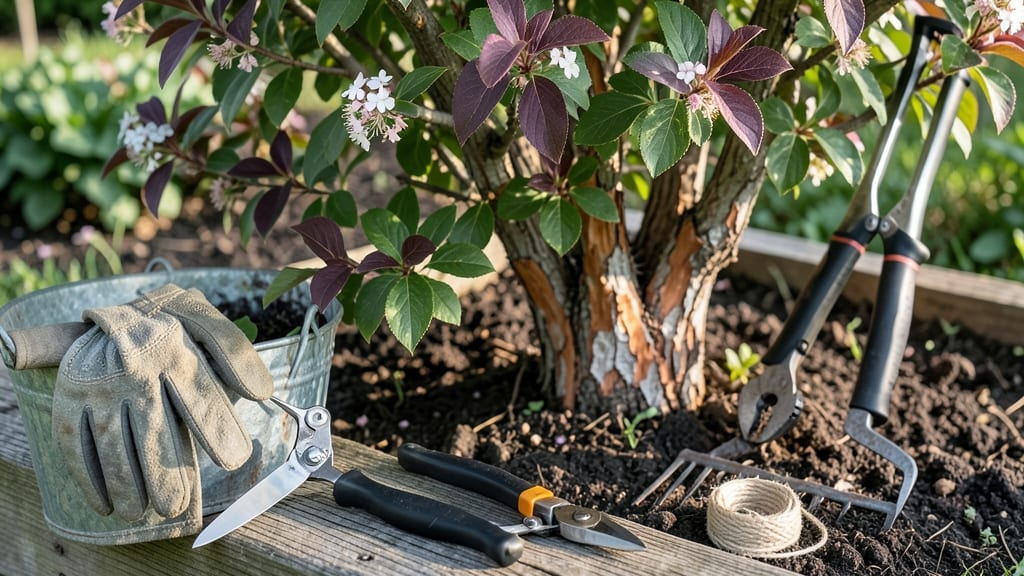
Ninebark tree pruning in late winter reveals its hidden potential—thicker stems, fuller foliage, and vibrant spring blooms you’ll actually notice. ✂️ I’ve turned my ninebark from a scraggly mess into a lush, multi-season star by mastering just two cuts: the annual shape-up and the occasional rejuvenation hack. The key? Timing it right when the tree’s dormant but before new growth starts.
You’ll need sharp bypass pruners, a 10-foot ladder (for taller varieties), and a clear day to avoid sap splatter. The process takes 30-60 minutes depending on size, and the payoff is immediate: cleaner structure, better airflow, and those showy pink flower clusters that last all summer.
Even my first attempt—where I over-pruned—ended up fine because ninebark is shockingly forgiving.
First, remove any dead or crossing branches, then thin out 10-15% of the oldest stems at the base to encourage fresh growth. For rejuvenation, cut back one-third of the oldest stems to the ground every 2-3 years.
The result? A tree that stays compact, blooms like crazy, and lives for decades with minimal effort.
Works for both young plants and mature specimens, and the same principles apply whether you’ve got a single ninebark or a whole hedge. Let’s get those pruners ready—your tree’s spring comeback starts now.
📚 In This Guide
- What you need
- Instructions
- Tips and common mistakes
- Wrapping up and next steps
What you need
- ● Pruning shears – Bypass pruners (for cuts up to ½ inch thick) or anvil pruners (for thicker branches). Quantity: 1 pair (sharp and clean!).
- ● Loppers – For branches ½ to 1½ inches thick. Quantity: 1 pair (long-handled for reach).
- ● Pruning saw – Bow or folding saw for branches 1½+ inches thick. Quantity: 1.
- ● Gloves – Heavy-duty, cut-resistant (gardening or pruning-specific). Quantity: 1 pair.
- ● Disinfectant – Rubbing alcohol (70%+) or pruning sealant (to prevent disease spread). Quantity: Small bottle.
- ● Ladder – Sturdy, extendable (if your tree is over 6 feet tall). Quantity: 1 (or a stable stool for shorter cuts).
- ● Trash bags – For collecting pruned debris. Quantity: 2–3 (heavy-duty).
- ○ Pruning paint/sealant – Optional but helpful for sealing large cuts (1-inch diameter+). Quantity: Small bottle.
- ● Safety glasses – To protect from debris or sap splashes.
- ● Knee pads – For comfort if working on the ground.
- ● Extension pole pruners – For high branches (saves ladder use!).
- ● Notebook & pen – To sketch a pruning plan before starting.
- ● Mulch – Shredded bark or wood chips (to replenish after pruning).
- ● Check the weather forecast—prune on a dry, calm day (avoid rain for 24 hours before/after).
- ● Gather tree identification—confirm it’s a ninebark (Physocarpus spp.) to avoid mistaking it for other shrubs.
- ● Wear long sleeves/pants—ninebark thorns can be sharp! 🌟
Step-by-Step guide to pruning ninebark trees in dormant season
Here’s the precise method I use every winter to rejuvenate ninebark trees and set them up for vibrant spring growth.
✂️ Step 1: Assess the Tree Structure and Identify Dead or Diseased Branches
Start by examining the entire tree from all angles, looking for branches that are completely devoid of leaves, show brown or blackened bark, or have hollow centers when tapped gently with your knuckles. Ninebark is particularly prone to developing weak, crossing branches that rub together and create wounds. Mark these with a small piece of twine or flagging tape so you don’t accidentally miss them.
Pay special attention to the lower third of the tree, where branches often grow inward or downward. These are prime candidates for removal, as they block airflow and sunlight, creating a damp environment that invites fungal diseases. Use a sharp pair of pruning shears to make clean cuts just outside the branch collar—the swollen area where the branch meets the trunk. This ensures the tree can seal the wound properly and prevents unsightly stubs.
✂️ Step 2: Thin Out Crowded Branches for Better Air Circulation
Ninebark trees thrive when they have good airflow, so your next goal is to open up the canopy by removing about 20-30% of the total branches. Focus on branches that are growing too close together, crossing over one another, or growing straight upward. These vertical branches, often called "water sprouts," compete for energy and can make the tree top-heavy. Cut them back to a lateral branch or bud that’s facing outward to encourage a more balanced shape.
When thinning, avoid removing more than one-third of the foliage in a single season—this can stress the tree and reduce its ability to rebound in spring. Step back frequently to visualize the tree’s structure. You’ll notice a more open, airy silhouette that allows sunlight to penetrate to the lower branches, which is key for healthy peeling bark and lush foliage.
✂️ Step 3: Rejuvenate Older Trees with Strategic Cutting
If your ninebark is more than 10 years old and has become leggy or overgrown, it’s time for a rejuvenation cut. Select 3-5 of the strongest, most vigorous branches that are evenly spaced around the tree. Cut these back to 6-12 inches above the ground, depending on the branch’s size and health. This dramatic cut stimulates new growth from the base and helps the tree regain its youthful vigor.
For younger trees or those that haven’t outgrown their space, simply prune back the oldest stems to 12-18 inches from the ground. This encourages the tree to produce fresh, younger wood with the characteristic peeling bark that ninebark is known for. Avoid cutting into old wood—you’ll know it’s time to stop when you see a smooth, dark stem rather than the lighter, newer growth.
✂️ Step 4: Shape the Tree for Aesthetic Appeal and Structural Integrity
Now it’s time to refine the tree’s shape by selectively pruning branches that detract from its natural form. Ninebark has a beautiful, rounded habit, so aim to maintain that silhouette. Use hand pruners for smaller branches and loppers for thicker stems, always cutting at a 45-degree angle just outside the branch collar. Smooth the cut with a pruning saw if necessary, but avoid over-smoothing—rough edges heal faster for woody plants.
Step back every few cuts to assess the tree’s balance. You’ll want to avoid creating a flat-topped or uneven appearance. If you’re unsure, imagine the tree as a vase—taper it slightly as it rises, with the widest part near the base. This not only looks better but also reduces the risk of storm damage by distributing weight evenly.
🧹 Step 5: Clean Up and Protect the Tree for Spring
After pruning, gather all the debris and dispose of it properly. Never leave cut branches on the ground, as they can harbor pests or diseases that could reinfect the tree. If you’re concerned about fungal spores, sterilize your pruning tools with a 10% bleach solution or rubbing alcohol between cuts on different trees.
Apply a 2-3 inch layer of mulch around the base of the tree, keeping it 3-4 inches away from the trunk to prevent rot. This helps retain moisture, suppress weeds, and protect the tree’s roots during dormancy. Water deeply if the winter has been particularly dry, ensuring the soil is moist but not waterlogged. Your ninebark is now ready to burst into life with fresh, healthy growth come spring.
Tips & tricks for pruning ninebark trees in dormant season
Here's what I've learned after years of shaping ninebark trees—these details make all the difference between a stressed tree and one that thrives.
Tool Sharpness Matters: A dull pruning shears will tear rather than cut cleanly, creating jagged wounds that heal poorly. Test your tools by making a clean cut through a small branch—if it crushes rather than slices, sharpen your blades before starting. I keep a small file in my tool bag just for this purpose, and it's saved me from making messy cuts that invite disease. For thicker branches, switch to a pruning saw with a fine-tooth blade to maintain clean edges.
Branch Collar Awareness: The branch collar—the swollen area where a branch meets the trunk—is crucial for proper healing. In Step 1, when removing dead branches, make your cut just outside this collar, never flush with the trunk. This ensures the tree can seal the wound naturally. I've seen too many pruning jobs where cuts were made too close, leaving unsightly stubs that never fully heal. If you accidentally cut into the collar, don't panic—just make a second cut slightly higher to create a proper collar.
Seasonal Timing Insight: Dormant season pruning (late winter to early spring) is ideal because the tree's energy is focused on root growth rather than foliage production. However, avoid pruning during extreme cold snaps or right before a hard freeze. I've found that temperatures between 40-50°F provide the best conditions for clean cuts and minimal stress. If you must prune in colder weather, work on milder days when the ground isn't frozen, which makes cleanup easier and prevents soil compaction around the roots.
Visualization Technique: Before making any cuts, step back and visualize your tree as a vase shape—wider at the base and tapering slightly toward the top. This mental image helps maintain the natural rounded habit of ninebark while preventing flat-topped growth. I actually sketch a rough outline in the air to guide my cuts. For Step 2's thinning, imagine sunlight filtering through the branches—you're creating an open canopy that allows light to reach all parts of the tree, which is especially important for that signature peeling bark.
Pro Tips for Ninebark Tree Pruning
- Here's what I've learned after years of shaping ninebark trees—these details make all the difference between a stressed tree and one that thrives.
- Tool Sharpness Matters: A dull pruning shears will tear rather than cut cleanly, creating jagged wounds that heal poorly.
- Branch Collar Awareness: The branch collar—the swollen area where a branch meets the trunk—is crucial for proper healing.
Frequently asked questions
Got questions about pruning your ninebark tree? You’re not alone! Here are answers to the most common concerns—from timing to troubleshooting—to keep your shrub thriving.
When is the best time to prune ninebark?
Dormant season (late winter or early spring, before buds swell) is ideal for structural pruning. Light shaping can also happen in early summer after flowering, but avoid heavy cuts then—it may reduce next year’s blooms. Never prune in fall; new growth won’t harden off before winter.
How much can I trim back my ninebark?
Ninebark is tough! You can safely remove up to one-third of the plant’s oldest stems to rejuvenate it. For young shrubs, focus on shaping rather than drastic cuts. Never remove more than 25% of live growth in a single season—this can stress the plant.
Why is my ninebark not growing after pruning?
Slow growth after pruning often means over-pruning or poor timing. Check for:
- Pruning too late in spring (wait until after new shoots appear).
- Cutting into old wood (ninebark rarely regrows from mature stems).
- Underwatering post-prune (keep soil evenly moist for 4–6 weeks).
Can I prune ninebark in containers?
Yes! Container-grown ninebark follows the same rules but requires more frequent light pruning (every 6–12 months) to control size. Use sharp shears to avoid crushing stems, and fertilize lightly after pruning to support regrowth. Dwarf varieties (like ‘Fastigiata’) need even tighter shaping.
What if my ninebark looks “hairy” after pruning?
That fuzzy texture is normal! Ninebark’s peeling bark and downy stems are part of its charm. If you dislike it, prune in stages to expose smoother new growth gradually. Avoid stripping bark—it’s protective and won’t regrow.
Pro tip: Snap a photo of your ninebark’s shape before pruning to guide cuts. Over time, you’ll spot patterns (like uneven growth) that need attention!
Wrapping up and next steps
Pruning your ninebark tree during the dormant season isn’t just about tidying up—it’s a power move for vibrant spring growth! 🌿 By following the right techniques, you’ll boost airflow, shape your tree, and encourage lush foliage.
Now that you’re armed with the how-tos, grab those pruners and get to work—your ninebark will thank you with blooms and vigor come spring.
Ready to take it further? Next up: Mark your calendar for late winter or early spring pruning sessions and watch your tree thrive! 🌱