
Pruning
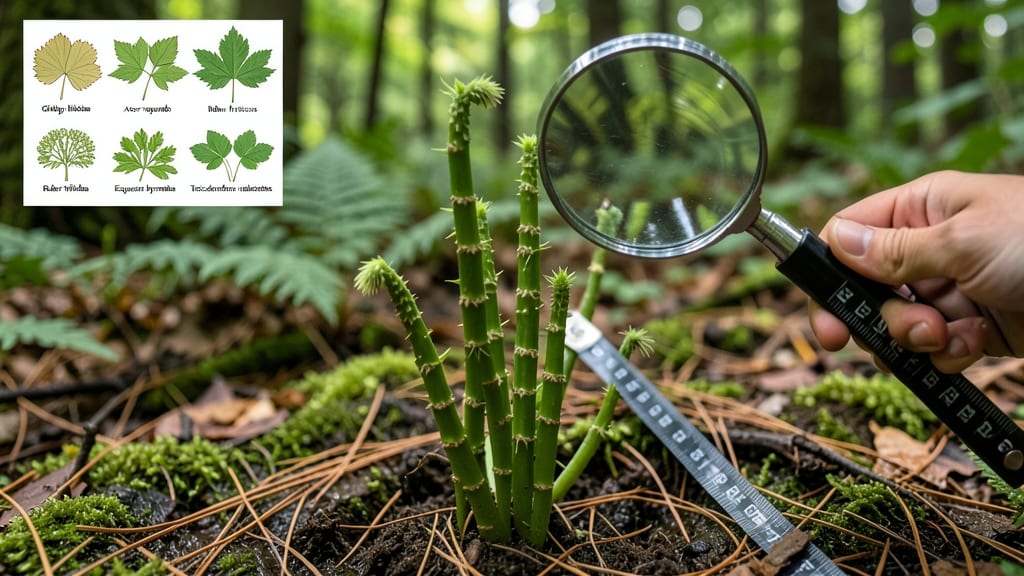
Five-leaf tree identification starts with the leaves themselves—those compound clusters can reveal mysteries about your yard. 🌿 I’ve spent years untangling these lookalikes, and the key lies in how those leaflets attach, the bark texture, and even the fruit. One wrong guess could mean the difference between a prized native and an invasive nuisance (or worse, a toxic one).
Take box elder (Acer negundo), for example: its opposite-branched stems and samara seeds (those helicopter-shaped fruits) give it away. Or poison ivy (Toxicodendron radicans), where the three-leaflet clusters grow in a V pattern—though some varieties have five leaflets.
Native black walnut (Juglans nigra) also sports compound leaves, but its nuts and furrowed bark set it apart.
Here’s the game-changer: count the leaflets, check the branch arrangement, and inspect the bark or fruit. A hand lens helps spot subtle differences, like the smooth edges of box elder vs. the serrated edges of poison ivy.
Regional clues matter too—box elder thrives in the Midwest, while poison ivy spreads everywhere but deserts.
Confusion happens when trees hybridize or when people miscount leaflets. Start with the big three—box elder, poison ivy, and black walnut—and narrow it down. The more you observe, the easier it gets. Let’s break it down step by step.
Understanding Leaf Patterns Naturally
When identifying a tree with five distinct leaflets, the arrangement and structure of those leaves aren’t random—they’re the result of evolutionary biology and environmental adaptations. Whether you’re admiring a lush canopy or diagnosing an unusual specimen, these patterns form due to specific causes rooted in science.
Let’s break down why five-leaf structures emerge in certain trees.
The most fundamental reason for five-leaf patterns lies in a tree’s genetic code. Many species, like the Ginkgo biloba or Parrotia persica, inherit a compound leaf structure as part of their DNA. This trait is often passed down through generations, ensuring consistency in leaf shape and arrangement.
- Key Example: The Horse Chestnut (Aesculus hippocastanum) famously displays palmately compound leaves with five leaflets. This isn’t coincidence—it’s a fixed genetic trait that defines the species.
- Actionable Tip: If you’re identifying a tree, cross-reference its leaf structure with known species databases. Genetic consistency is your first clue!
Nature favors efficiency, and five-leaf patterns often evolve as a survival adaptation. Here’s how:
- Light Capture: Compound leaves with multiple leaflets (like five) can maximize sunlight absorption without increasing the tree’s overall size. This is crucial in dense forests where competition for light is fierce.
- Water Conservation: Some species in arid climates develop thicker, waxy leaflets that reduce water loss. The five-leaf structure may help distribute moisture more evenly across the leaf surface.
- Resistance to Damage: If one leaflet is damaged (e.g., by insects or wind), the tree can still photosynthesize through the remaining four. This redundancy** builds resilience.
Pro Tip: 🌡️ Trees in drier regions often exhibit more pronounced five-leaf structures as an evolutionary trade-off for survival.
The way a tree’s leaves develop—from bud formation to maturity—directly influences their final structure. Here’s the science behind it:
| Stage | Process | Result |
|---|---|---|
| Bud Formation | The tree’s meristem (growth tissue) produces a primary leaf with multiple leaf primordia (future leaflets). | A template for compound leaves is set. |
| Cell Division | Genes like _KNOX_ and _CUC_ regulate how many leaflets form. In five-leaf species, these genes trigger exactly five divisions. | A symmetrical, five-leaflet structure emerges. |
| Maturation | Environmental factors (light, temperature) fine-tune the leaf’s final shape and size. | Variations in leaflet size or spacing may appear. |
Fun Fact: Some trees, like the Smokebush (Cotinus), can produce variable leaf counts due to environmental stress, but five leaflets remain the most common stable form.
While genetics set the stage, the environment often refines the outcome. Here’s how external factors play a role:
- Sunlight Exposure: Trees in full sun may develop larger, more distinct leaflets to capture more light, while shaded trees might have smaller, tightly clustered leaflets.
- Soil Nutrients: Poor soil can lead to stunted growth, sometimes causing leaflets to appear closer together or underdeveloped.
- Pollution or Disease: Stress from air pollution or pathogens (like anthracnose) can distort leaf patterns, occasionally resulting in fewer or malformed leaflets.
Pro Tip: ✨ If a tree’s five-leaf pattern looks unusually irregular, check for signs of stress—yellowing, spots, or stunted growth could indicate environmental issues.
By understanding these root causes—genetics, evolution, growth biology, and environment—you’ll gain a deeper appreciation for why certain trees boast that iconic five-leaf signature. Next time you spot one, you’ll see it’s not just a coincidence, but a masterpiece of nature’s design!
Quick Fixes for Five-Leaf Trees
Got a five-leaf tree (likely a maple, ash, or ginkgo) with wonky growth, pests, or pruning woes? Don’t panic—these solutions are simple, effective, and tailored to common issues. Below, we’ll break down cause-specific fixes and share prevention tips to keep your tree thriving.
Cause: Poor pruning habits, weak branch structure, or aggressive growth. Solution:
- 🔪 Prune at the Right Time: Late winter or early spring (when the tree is dormant) is ideal. Avoid heavy pruning in fall—it stresses the tree before winter.
- ✂️ Use the "Three-Cut Method":
- Make an undercut about 6–12 inches from the branch collar.
- Cut just outside the branch collar from the top.
- Clean up the stub by cutting flush with the collar.
- 🌱 Balance the Canopy: Remove water sprouts (fast-growing vertical shoots) and crossing branches to improve airflow and sunlight penetration.
- 🌳 Support Weak Branches: If a branch is too heavy (e.g., from fruit or snow), use tree ties or cabling to stabilize it temporarily.
💡 Prevention Tip:
- Prune regularly (every 2–3 years) to avoid drastic cuts. Aim for no more than 25% of the canopy in one session.
Cause: Aphids, scale insects, or fungal infections (like anthracnose or verticillium wilt). Solution:
- 💦 Wash Off Soft-Bodied Pests: Spray branches with a strong hose to dislodge aphids or scale. Repeat weekly for 2–3 weeks.
- 🧴 Apply Organic Treatments:
- Neem oil (for pests) – Mix 1 tbsp per gallon of water, spray at dusk.
- Baking soda spray (for fungal issues) – 1 tsp baking soda + 1 tsp dish soap + 1 quart water.
- 🌱 Improve Soil Health: Amend soil with compost and mycorrhizal fungi to boost tree resilience.
- 🚫 Remove Infested Debris: Clean up fallen leaves and pruned branches to prevent reinfection.
🔥 Emergency Fix: If your tree shows sudden wilting or oozing sap, it may have verticillium wilt—a fungal disease with no cure. Remove and destroy the tree to prevent spread to other plants.
Cause: Overwatering, underwatering, compacted soil, or root damage. Solution:
- 💧 Check the Soil: Stick your finger 4–6 inches deep—if dry, water deeply. If soggy, let it dry out.
- 🌱 Aerate Compacted Soil: Use a garden fork to loosen soil around the root zone (avoid digging too close to the trunk).
- 🍃 Mulch Properly: Apply 2–4 inches of mulch (wood chips or shredded bark) 3–6 inches away from the trunk to retain moisture and regulate temperature.
- ☀️ Provide Shade Cloth: If your tree is in full sun, use 30–50% shade cloth during extreme heat to reduce stress.
✨ Quick Revival Hack:
- Fertilize lightly with a balanced, slow-release fertilizer (10-10-10) in early spring. Avoid over-fertilizing—it burns roots!
Cause: Tree planted too deep, girdling roots, or poor soil contact. Solution:
- 🔍 Inspect the Trunk: If the root flare (where roots meet the trunk) is buried, excavate gently to expose it.
- 🌿 Loosen Girdling Roots: If roots are circling the trunk, make 2–3 vertical cuts (without damaging the trunk) to encourage outward growth.
- 💧 Water Deeply After Planting: Soak the root ball for 10–15 minutes to eliminate air pockets.
🚫 Big Mistake to Avoid:
- Never add soil on top of the root flare—it can suffocate the tree. Instead, grade the soil to slope away from the trunk.
To keep your five-leaf tree healthy: ✅ Inspect annually for pests, diseases, or structural issues. ✅ Prune in late winter to shape and remove dead wood. ✅ Water deeply but infrequently (1–2 times per week, depending on climate). ✅ Avoid heavy foot traffic near the trunk to prevent soil compaction.
Final Thought: Most five-leaf tree problems are preventable with consistent care. Whether it’s a maple’s aggressive growth or an ash tree’s pest issues, acting early saves time and money. Grab your pruners and get started! 🌳✂️
Frequently asked questions
What’s the most common five-leaf tree I might find in my yard?
The box elder (Acer negundo) is the most widespread five-leaf tree in North America. Its opposite branching and samara seeds (helicopter-shaped fruits) make it easy to spot. Other common ones include ash trees (like white ash) and black walnut—both with compound leaves, though walnut’s nuts and furrowed bark distinguish it.
Can poison ivy have five leaflets?
Yes! While poison ivy is famous for its three-leaflet clusters, some varieties (like Toxicodendron radicans var. negundo) can develop five leaflets. The key difference is the V-shaped growth pattern—if the leaflets grow in a V with a smooth edge, it’s still poison ivy. Avoid touching any suspicious vines!
How do I tell a box elder apart from a black walnut?
Box elders have opposite branching (branches grow in pairs) and smooth, green bark, while black walnuts have alternate branching and deeply furrowed, dark bark. Another clue: box elders produce helicopter seeds, while walnuts drop hard-shelled nuts. Walnut leaves also have serrated edges, unlike box elder’s smoother leaflets.
Are all five-leaf trees toxic?
No! While box elder and black walnut are non-toxic, poison ivy (with its rare five-leaflet forms) is highly irritating. Horse chestnut (Aesculus hippocastanum) also has five palmate leaflets but is safe. Always check for leaf arrangement and bark/fruit—never rely on leaflet count alone for safety.
Why does my five-leaf tree have fewer than five leaflets?
Environmental stress (drought, poor soil, or disease) can cause underdeveloped leaflets. Young trees or new growth may also start with fewer leaflets before maturing. If the pattern is consistent across the tree, it might be a genetic variation—but if only some branches are affected, check for pests or fungal issues.