
Trees
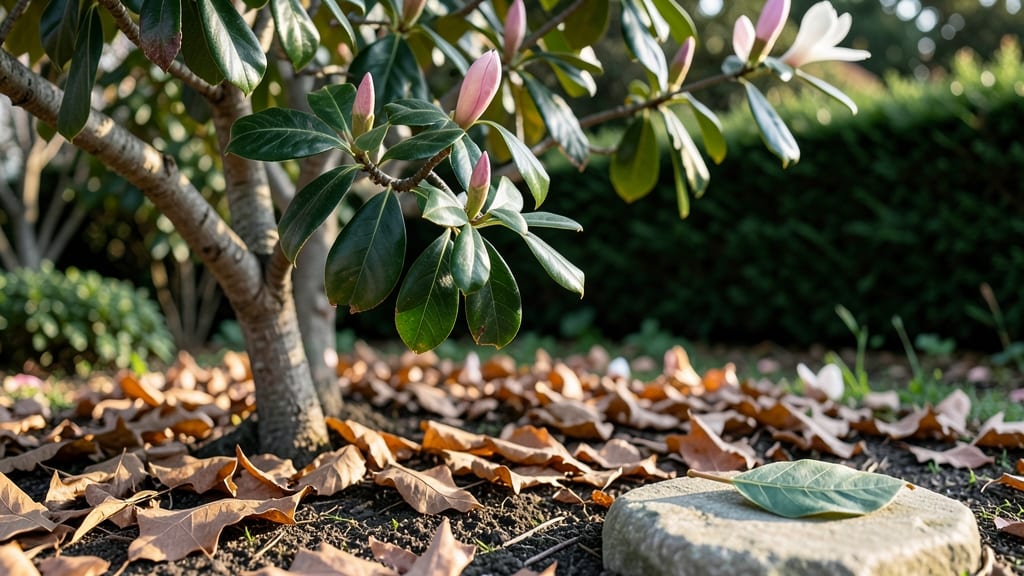
When your magnolia tree leaves start falling off, it’s not just a cosmetic issue—it’s a cry for help from a tree that’s been part of your landscape for years. 🌿 I’ve seen this happen after a brutal summer heatwave or when fungal spores get the upper hand, and the good news is most causes have simple fixes that bring those glossy leaves back in no time.
The most common culprits are powdery mildew (that white, flour-like dust on leaves), anthracnose (dark spots that spread quickly), or environmental stress from inconsistent watering. Even scale insects or spider mites can trigger leaf drop by draining the tree’s energy.
The key is acting fast—once the tree loses too many leaves, recovery takes longer.
With the right approach, you’ll see new growth within weeks. Prune affected branches to improve airflow, apply a copper fungicide for diseases, and keep the soil moist but not soggy. I’ve revived trees that looked hopeless with just these three steps—no expensive treatments needed.
This works for both young trees and mature specimens, though larger trees may need more frequent monitoring. The secret is consistency: check your tree weekly during growing season, and you’ll catch problems before they spiral. Let’s get your magnolia back to its full, leafy glory.
Common causes of leaf drop
Understanding why your magnolia tree is shedding leaves is the first step toward restoring its health. These majestic trees are generally hardy, but several factors—both natural and environmental—can trigger premature leaf loss. Below, we break down the most common culprits and why they happen, so you can take targeted action.
Magnolias thrive in USDA Hardiness Zones 4–9, but sudden temperature swings—especially late spring frosts or early fall freezes—can shock the tree. When temperatures drop below 20°F (-6°C), the leaves may blacken and fall off rapidly.
Even heatwaves above 90°F (32°C) can cause stress, particularly in younger trees or those not yet fully acclimated.
Why it happens:
- Cold damage: Frost can rupture cell walls, causing oxidative stress and leaf desiccation.
- Heat stress: High temperatures disrupt photosynthesis, leading to nutrient deficiencies and leaf abscission (the natural shedding process).
- Transplant shock: If your magnolia was recently moved, its roots may struggle to regulate moisture and temperature, making it vulnerable to stress-related leaf drop.
Actionable fix: ✔ Mulch properly (3–4 inches of organic mulch) to insulate roots from temperature extremes. ✔ Avoid planting in low-lying areas where cold air pools overnight. ✔ Water deeply during heatwaves to help the tree cool itself via transpiration.
Magnolias hate "wet feet"—soggy soil leads to root rot, a fungal infection that strangles the tree by blocking nutrient uptake. While they prefer moist, well-draining soil, standing water suffocates roots, causing leaves to yellow, wilt, and drop.
Why it happens:
- Compacted or clay soil prevents oxygen from reaching roots, leading to anaerobic conditions (where harmful bacteria thrive).
- Overzealous watering (especially in containers) can drown roots, as magnolias prefer consistent moisture, not saturation.
- Improper planting depth: If the root flare (where roots meet the trunk) is buried too deep, it restricts airflow and encourages rot.
Actionable fix: ✔ Test your soil’s drainage—dig a hole, fill it with water, and time how long it takes to drain. If it’s slower than 4–6 hours, amend with compost or sand. ✔ Water only when the top 2 inches of soil are dry—stick your finger in the soil to check! ✔ Raise the root flare if it’s buried; gently mound soil around the base to improve airflow.
Magnolias are susceptible to sap-sucking insects and fungal pathogens that weaken the tree, causing leaves to turn brown, curl, or fall prematurely. The most common offenders include:
| Pest/Disease | Symptoms | Why It Happens |
|---|---|---|
| Magnolia Scale | Sticky residue (honeydew), black sooty mold | These armored insects pierce leaves to feed, starving the tree of nutrients. |
| Webworms | Silk webbing, skeletonized leaves | Caterpillars defoliate leaves, reducing the tree’s ability to photosynthesize. |
| Fungal Leaf Spot | Brown spots with yellow halos | Fungi thrive in humid, stagnant air, causing tissue death. |
| Root-Knot Nematodes | Stunted growth, wilting | Microscopic worms damage roots, impairing water and nutrient absorption. |
Actionable fix: ✔ Inspect leaves regularly—look for holes, webbing, or unusual spots (use a magnifying glass if needed). ✔ Apply horticultural oil or neem oil in early spring to smother pests like scale. ✔ Prune and dispose of infected branches (don’t compost them!) to prevent spread. ✔ Improve air circulation by thinning dense foliage around the tree.
Magnolias are not heavy feeders, but imbalances in nitrogen, iron, or magnesium can cause leaf drop. Over-fertilizing—especially with high-nitrogen lawn fertilizers—can burn roots and lead to salt buildup, while deficiencies stunt growth.
Why it happens:
- Nitrogen deficiency: Leaves turn yellow between veins (a classic sign of chlorosis).
- Iron deficiency (chlorosis): Common in alkaline soils (pH >7.0), where iron becomes unavailable.
- Magnesium deficiency: Causes yellowing between leaf veins, similar to nitrogen deficiency but often starting at the older leaves.
- Over-fertilizing: Excess salts in soil disrupt water uptake, causing leaves to crisp and drop.
Actionable fix: ✔ Test your soil (a simple home kit or lab test) to check pH and nutrient levels. ✔ For acidic-loving magnolias, amend soil with sulfur or peat moss to lower pH if needed. ✔ Use a balanced, slow-release fertilizer (e.g., 10-10-10) in early spring, following package rates. ✔ Avoid fertilizing in fall or winter, as new growth is vulnerable to cold damage.
Even healthy magnolias may drop leaves due to wind, pollution, or urban heat islands. High winds desiccate leaves, while ozone or smog (common in cities) cause brown speckling and premature shedding.
Why it happens:
- Windburn: Strong gusts strip moisture from leaves, leading to browning edges.
- Air pollution: Ozone and sulfur dioxide damage leaf cell membranes, reducing photosynthesis.
- Salt spray (coastal areas): Salt buildup on leaves disrupts nutrient absorption.
Actionable fix: ✔ Plant windbreaks (like evergreens) to shield the tree from harsh gusts. ✔ Water leaves in dry, windy conditions to reduce desiccation (early morning is best). ✔ Avoid planting near roads if pollution is a concern—opt for low-traffic areas instead.
If your magnolia was recently transplanted, root trauma can cause delayed leaf drop as the tree struggles to establish. Even mechanical damage (like lawnmower cuts or construction vibrations) can sever roots, disrupting water flow.
Why it happens:
- Root pruning: If roots were trimmed too aggressively during moving, the tree loses its hydraulic capacity.
- Girdling roots: Roots growing in circles around the trunk strangle the tree, cutting off nutrient transport.
- Poor handling: Dropping the root ball or leaving it exposed to direct sun accelerates stress.
Actionable fix: ✔ Water deeply for the first 2–3 weeks after transplanting to encourage root regrowth. ✔ Stake only if necessary—over-staking can girdle the trunk with wire. ✔ Avoid fertilizing for 6–12 months post-transplant; focus on water and mulch instead.
Not all leaf drop is a cause for alarm! Magnolias naturally shed 10–20% of their leaves in late summer or early fall as part of their dormancy cycle.
If the tree is otherwise healthy (green leaves remain, no wilting, and new growth appears in spring), it’s likely just preparing for winter.
How to tell it’s normal: ✅ Leaves fall gradually, not all at once. ✅ The tree buds out in spring with fresh foliage. ✅ No pests, spots, or unusual discoloration are present.
When to worry: ❌ Sudden, heavy shedding (more than 30% of leaves). ❌ Leaves turn black, brown, or mushy before falling. ❌ No new growth in spring despite proper care.
Revive Your Tree’s Health Now
When your magnolia’s leaves start dropping unexpectedly, quick action can make all the difference. Below are targeted solutions for the most common causes—each with step-by-step fixes and prevention tips to keep your tree thriving. Let’s get your magnolia back to its lush, leafy glory!
Signs: Yellowing leaves, soggy soil, or leaves wilting and falling despite damp ground.
How to Fix It: 🔥 Step 1: Check the Soil Moisture Use your finger to test soil moisture 2–3 inches deep. If it’s consistently wet, your magnolia is drowning.
🍳 Step 2: Improve Drainage
- Raise the soil level by adding 2–3 inches of organic matter (like compost or peat moss) around the base.
- Avoid compacted soil—loosen the top 6 inches with a garden fork if needed.
- Install a French drain (if severe) to redirect excess water away from the roots.
👨🍳 Step 3: Adjust Watering Habits
- Water deeply but less often—magnolias prefer 1–1.5 inches of water per week (including rain).
- Water at the base, not overhead, to prevent fungal diseases.
- Use a moisture meter to track soil conditions accurately.
💡 Prevention Tip: Plant magnolias in well-draining soil (sandy loam is ideal) and avoid low-lying areas where water pools.
Signs: Brown spots, black streaks on stems, or leaves curling and dropping with a foul smell.
How to Fix It: 🔥 Step 1: Identify the Fungus Common culprits:
- Anthracnose (dark spots with yellow halos)
- Powdery mildew (white, dusty coating)
- Root rot (mushy, discolored roots)
🍳 Step 2: Prune Infected Areas
- Remove and destroy (do not compost) all fallen leaves and infected branches.
- Sterilize pruners with 70% isopropyl alcohol between cuts.
👨🍳 Step 3: Apply Fungicide
- Copper-based fungicides (like Copper Soap) work for anthracnose and bacterial issues.
- Neem oil (1 tsp per gallon of water) helps for powdery mildew—spray every 7–10 days until cured.
- For root rot, treat with Benomyl fungicide (follow label instructions).
🌡️ Prevention Tip:
- Space trees properly (15–20 ft apart) for airflow.
- Water in the morning to allow foliage to dry quickly.
- Mulch with pine straw (not wood chips) to deter fungal spores.
Signs: Leaves dropping in hot, dry spells or after sudden temperature swings.
How to Fix It: 🔥 Step 1: Provide Shade & Windbreaks
- Install temporary shade cloth (30–50% coverage) if your magnolia is in a full-sun, scorching area.
- Use burlap windbreaks if strong winds are dehydrating the tree.
🍳 Step 2: Mulch & Hydrate Properly
- Add 2–3 inches of mulch (wood chips or pine straw) to retain moisture.
- Deep-water weekly during droughts—soak the root zone (not just the surface).
👨🍳 Step 3: Protect from Frost
- Wrap young trees in burlap or frost cloth if late frosts are expected.
- Avoid fertilizing in late summer/fall—it encourages new growth that’s vulnerable to cold.
✨ Prevention Tip:
- Plant magnolias in microclimates (e.g., near buildings or fences that trap warmth).
- Group with other trees to create a natural windbreak.
Signs: Holes in leaves, sticky sap (aphids), or webbed foliage (spider mites).
How to Fix It: 🔥 Step 1: Identify the Pest Common magnolia pests:
- Scale insects (brown bumps on stems)
- Japanese beetles (skeletonized leaves)
- Spider mites (fine webbing on undersides)
🍳 Step 2: Manual Removal & Traps
- Blast off scale insects with a strong hose spray (disrupts their waxy coating).
- Set up pheromone traps for Japanese beetles.
- Spray leaves with water to deter spider mites (they hate humidity).
👨🍳 Step 3: Natural & Chemical Controls
- Neem oil or insecticidal soap (for soft-bodied pests like aphids).
- Bacillus thuringiensis (Bt) for caterpillars (like lace bugs).
- For severe cases, use permethrin-based insecticides (last resort—follow safety guidelines).
🎯 Prevention Tip:
- Encourage natural predators (ladybugs, birds) by planting neighboring pollinator-friendly plants.
- Inspect new plants before bringing them home—quarantine for 2 weeks if pests are suspected.
Signs: Yellowing between veins (iron/chlorosis), stunted growth, or purple-tinged leaves (phosphorus deficiency).
How to Fix It: 🔥 Step 1: Soil Test First
- Send a soil sample to a local extension office (costs ~$20–$50).
- Magnolias prefer slightly acidic soil (pH 5.0–6.5)—adjust with sulfur (to lower pH) or lime (to raise pH).
🍳 Step 2: Fertilize Correctly
- For iron deficiency (yellow leaves): Apply chelated iron (fast-acting) or iron sulfate.
- For general health: Use a balanced, slow-release fertilizer (10-10-10 or 8-3-9) in early spring.
- Avoid high-nitrogen fertilizers (like lawn food)—they burn roots.
👨🍳 Step 3: Boost Organic Matter
- Add compost or worm castings to the root zone.
- Use a seaweed extract (like Maxicrop) for micronutrients.
💡 Prevention Tip:
- Fertilize only in spring—never in fall or winter (can encourage weak growth).
- Avoid over-fertilizing—magnolias are low-maintenance and don’t need heavy feeding.
Final Pro Tip: 🌟 If your magnolia is severely stressed, prune back 1/3 of the canopy to reduce water loss and redirect energy to root recovery. Thin out dense branches to improve airflow and sunlight penetration.
With these fixes, your magnolia should regain its vigor within 4–8 weeks. Keep an eye on it, adjust care as needed, and soon you’ll be admiring full, healthy foliage again! 🌿✨
Frequently asked questions
Why are my magnolia leaves falling off in summer when it's hot?
Summer heat above 90°F (32°C) stresses magnolias, causing leaves to drop as the tree conserves water. To help, provide afternoon shade with temporary shade cloth and water deeply 1–1.5 inches per week at the base. Mulch with 2–3 inches of wood chips to retain moisture and protect roots from heat stress.
How do I know if my magnolia's leaf drop is from disease or just normal shedding?
Normal shedding is gradual (10–20% of leaves) without discoloration or spots. Disease causes sudden drop with black/brown spots (anthracnose), white powder (powdery mildew), or sticky residue (scale insects). Check leaves for these signs—if present, prune infected branches and apply copper fungicide or neem oil.
Can overwatering cause magnolia leaves to fall off?
Yes! Magnolias hate soggy soil—overwatering leads to root rot, which blocks nutrient uptake and causes leaves to yellow and drop. Test soil moisture: if it stays wet more than 4–6 hours after watering, improve drainage by adding compost or sand and water only when the top 2 inches are dry.
What's the best time of year to prune a magnolia with leaf drop issues?
Prune in late winter or early spring (before buds swell) to remove dead/diseased branches. Avoid pruning in fall—new growth is vulnerable to frost. If you must prune diseased branches, do it in dry weather and sterilize tools with 70% isopropyl alcohol between cuts to prevent spreading spores.
Will my magnolia recover if most of its leaves have already fallen?
Recovery is possible if the roots are healthy! Focus on watering deeply, mulching, and avoiding stress (like fertilizing). New growth should appear in 4–8 weeks if the tree isn’t suffering from severe disease or root damage. Monitor for pests and adjust care—magnolias are resilient with proper support!