
How To
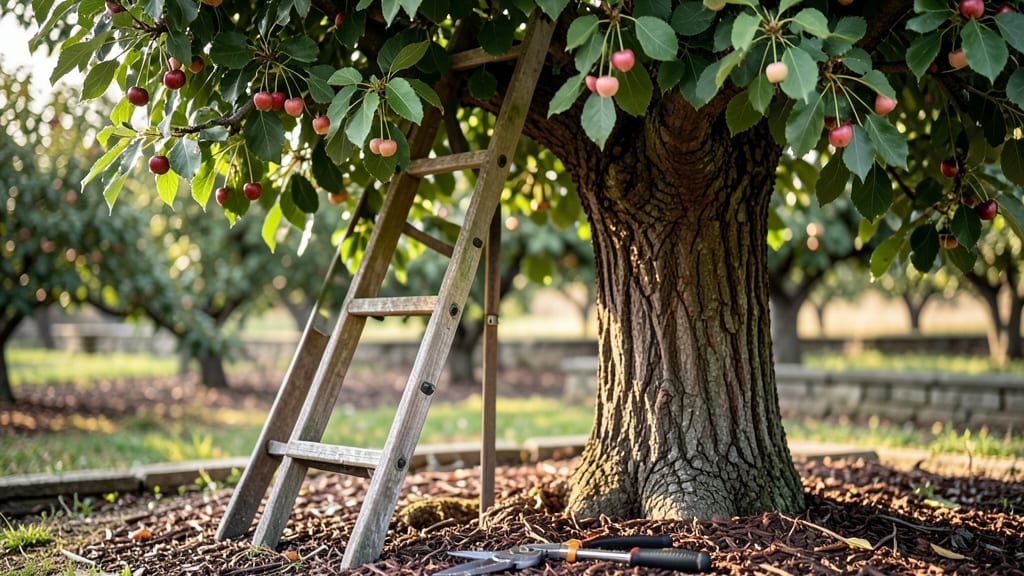
A cherry tree can grow anywhere from 8 feet to over 60 feet tall, depending on the variety and care you give it 🍒 — and yes, that includes dwarf options for small spaces.
Picture this: your backyard cherry tree stretching taller than your two-story house, or a carefully pruned dwarf variety that fits neatly into your patio planters. The difference isn’t just in the roots—it’s in the pruning, the soil, and even the rootstock you choose.
Most home gardeners struggle with the same question: Can I keep this tree manageable without sacrificing fruit? The answer lies in understanding your tree’s growth habits and when to make those strategic cuts.
Below, I’ll walk you through the varieties that stay small, the pruning secrets that work, and how to train your tree without stunting its productivity.
By the end, you’ll know exactly how to balance height control with a bountiful harvest—whether you’re working with a towering standard cherry tree or a compact dwarf variety.

Cherry tree height by variety: dwarf vs standard vs giant species
If you’ve ever dreamed of growing cherry trees but worried about their towering height, you’re not alone. Cherry trees can range from compact dwarf varieties (just 8-12 feet) to massive standard trees reaching 60 feet or more—depending on the species and rootstock.
The key to managing size lies in understanding these differences, especially if you’re working with limited space or want easy harvest access.
Most gardeners focus on sweet cherries (like Bing or Rainier) or tart cherries (such as Montmorency), but ornamental cherries (like Yoshino) also vary wildly in height. Even within the same variety, rootstock choices can shrink a 40-foot tree down to a manageable 12-foot shrub.
Let’s break down the height ranges and what influences them so you can pick the perfect tree for your garden.
🌱 Pro Tip: Always check the rootstock description when buying nursery trees—it’s the #1 factor in controlling height. For example, a Bing cherry grafted onto Gisela 5 rootstock will stay dwarf-sized, while the same variety on Mahaleb rootstock will grow standard height.
🌳 Visual Comparison: Imagine a standard cherry tree reaching the height of a two-story house (20-60 ft), while a dwarf variety stays about as tall as a garden shed (8-12 ft). Semi-dwarf trees fall in between, perfect for suburban yards (12-18 ft). The table below shows exact height ranges by category.
Here’s how rootstock influences height across common cherry types:
For sweet cherries, dwarf varieties like Bing on Gisela 5 are ideal for small gardens, while Rainier on Colt rootstock offers a semi-dwarf option (12-18 ft). Tart cherries follow similar patterns, with Montmorency on Puget Gold staying under 12 feet. Ornamental cherries are the exception—they’re naturally compact, making them perfect for urban landscapes without needing rootstock manipulation.
If you’re planting near a fence or patio, dwarf or semi-dwarf varieties are your best bet. These trees produce full-sized fruit but with easier access for harvesting and less maintenance (no ladder needed!).
Just be aware that dwarf trees may have slightly smaller yields compared to their standard counterparts, though the difference is minimal for home gardeners.
✂️ Pruning Impact: Even with dwarf rootstock, regular pruning can influence height. Heading cuts (trimming back growth tips) encourage bushier growth, while thinning cuts (removing entire branches) help maintain an open canopy. For ornamental cherries, pruning also shapes their bloom display, which is why many gardeners prune them lightly in late winter.
For those who love giant cherry trees, species like Black Cherry (Prunus serotina) or Pin Cherry (Prunus pensylvanica) grow wild and untamed, reaching 40-60 feet. These are best suited for woodland settings or as shade trees rather than fruit producers, as their fruit is often small and tart.
If you’re after massive canopies, standard sweet or tart cherries on Mahaleb rootstock will deliver.
When choosing a cherry tree, consider your space constraints, harvest goals, and long-term maintenance. A dwarf variety might seem limiting, but it’s the easiest way to enjoy fresh cherries without sacrificing your backyard to a 60-foot giant.
Plus, smaller trees fruit earlier—some dwarf varieties bear in as few as 2-3 years, compared to 5-7 years for standard trees.
Pruning techniques to control cherry tree height without reducing fruit
Controlling your cherry tree’s height doesn’t mean sacrificing fruit production—it’s all about strategic pruning techniques and timing. By focusing on structural pruning, you can shape your tree while encouraging strong fruit-bearing branches.
The key is to prune during dormant season (late winter) to avoid stressing the tree when it’s actively fruiting.
Start with heading cuts—these are cuts made just above a bud or branch collar to encourage lateral growth. For height control, target the uppermost branches first, reducing vertical growth while promoting a fuller canopy.
This method works best for sweet cherry varieties like Bing or Rainier, which respond well to structural pruning.
⚠️ Pruning Mistake Alert: Over-Pruning in Active Growth
Never remove more than 25% of the tree’s canopy in a single year—especially during active growth (spring/summer). This triggers excessive stress, weakens fruit production, and invites disease. Dormant-season pruning (late winter) is safest for height control.
Next, use thinning cuts to remove entire branches that grow inward or cross over others. This improves air circulation and sunlight penetration, both critical for cherry tree fruit quality.
Focus on branches thicker than 1/4 inch—these are the ones that will compete for energy with your desired fruit-bearing branches.
Timing is everything: dormant-season pruning (February-March) is ideal for shaping, while summer pruning (June-July) can refine growth but should be minimal. Avoid heavy pruning in late summer—this encourages tender new growth that won’t harden off before winter, making your tree vulnerable to frost damage.
For young cherry trees (under 5 years), prioritize central leader pruning to establish a strong framework. Remove competing leaders early to prevent a weak, multi-trunk structure. In older trees, focus on renewal pruning—cutting back older branches to stimulate new, productive growth from the base.
Pro tip: Always use sterilized pruning tools to prevent bacterial canker, a common cherry tree disease. Clean your shears with rubbing alcohol between cuts, and seal larger wounds with pruning sealant to reduce sap loss and infection risk.
With patience and precision, you’ll keep your cherry tree at an ideal height while enjoying a bountiful harvest.