
How To
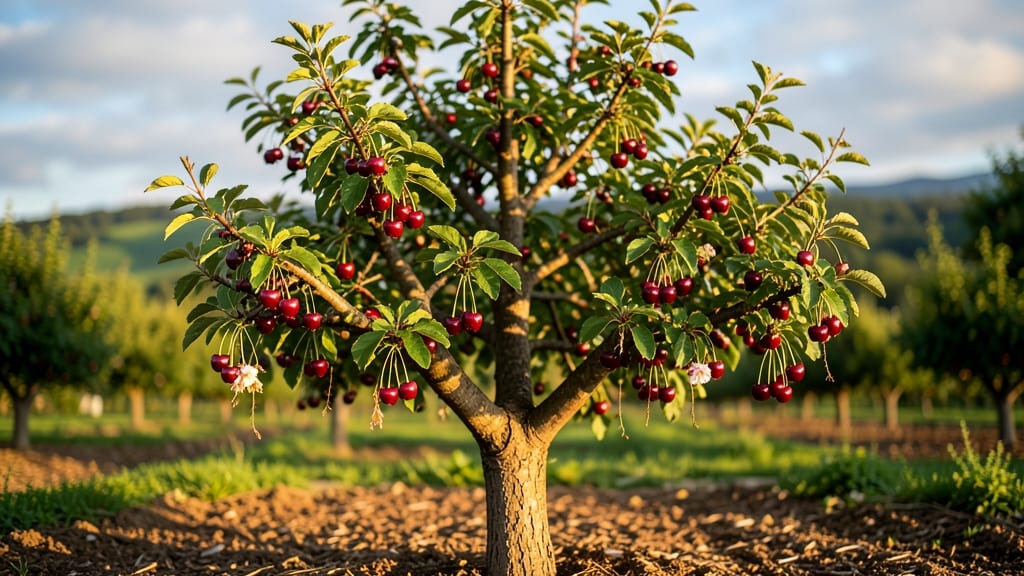
A Bing cherry tree grows how tall does a bing cherry tree grow between 15 and 25 feet at maturity, towering like a small oak but with fruit you’ll fight neighbors over 🍒.
If you're dreaming of a backyard bursting with sweet Bing cherries but wondering whether your space can accommodate this classic tree, you're not alone—many gardeners hesitate before planting due to size concerns.
The good news? With the right variety and pruning, you can fit a Bing cherry tree into even modest yards. Dwarf versions stay under 12 feet, while standard trees need 20+ feet of space to thrive.
Below, I’ll break down height ranges by rootstock, pruning tips for small spaces, and how to visualize where this tree will fit in your garden layout.

Bing cherry tree height by variety: from dwarf to standard sizes
Choosing the right Bing cherry tree variety is critical for your garden layout, especially if space is limited. The classic 'Bing' cherry tree can grow up to 20-25 feet tall when planted on standard rootstock, making it a towering feature in many backyards.
However, modern horticulture offers dwarf and semi-dwarf options that fit smaller spaces without sacrificing fruit production. Understanding these size differences helps you select the perfect tree for your landscape and harvest goals.
Your yard's size and layout will determine whether a standard Bing cherry, semi-dwarf variety, or compact dwarf is the best fit. For example, a standard tree needs ample room to spread its 15-20 foot canopy, while a dwarf variety might only reach 8-12 feet.
Let’s explore the most popular Bing cherry varieties and their mature heights to help you make an informed decision.
The 'Bing' standard cherry tree is the classic choice for gardeners with ample space, reaching heights of 20-25 feet and spreading 15-20 feet wide. This variety thrives in traditional orchards or large backyards where its expansive canopy can flourish.
However, if your space is more limited, consider the 'Stella' dwarf variety, which stays between 8-12 feet tall and is perfect for containers or small urban gardens.
For those with medium-sized yards, the 'Van' semi-dwarf offers a balanced solution, growing 12-18 feet tall while maintaining a manageable 10-14 foot spread. This variety is ideal for gardeners who want a productive tree without the overwhelming size of a standard Bing cherry.
Additionally, grafting Bing cherries onto Gisela 6 rootstock can reduce height to 14-18 feet, making it a versatile option for various garden layouts.
If you're working with extremely limited space, consider planting Bing cherries on Mahaleb rootstock, which typically results in trees 12-16 feet tall. This rootstock is also known for its cold hardiness, making it suitable for northern climates.
Always ensure your chosen variety aligns with your yard dimensions and sunlight exposure to maximize fruit production and tree health.
When planning your Bing cherry tree placement, remember that proper spacing is essential for airflow and sunlight penetration. Standard trees need 20-25 feet between them, while dwarf varieties can be spaced 8-12 feet apart.
Adequate spacing reduces the risk of disease and pest infestations, ensuring your tree remains healthy and productive for years to come.
Another key consideration is the canopy shape of your Bing cherry tree. Standard varieties often develop a broad, rounded canopy, while dwarf and semi-dwarf trees may have a more compact, upright growth habit.
Understanding these differences helps you visualize how the tree will fit into your landscape and which varieties will complement your existing plants and structures.
For gardeners in small spaces, consider training your Bing cherry tree using espalier techniques or growing it in a large container. Dwarf varieties like 'Stella' are particularly well-suited for these methods, allowing you to enjoy sweet cherries even in urban environments.
Just ensure your container has adequate drainage and is large enough to support the tree’s root system as it grows.
Before planting, check your local USDA hardiness zone to ensure your chosen Bing cherry variety can thrive in your climate. Most Bing cherries perform best in zones 5-7, but dwarf varieties on cold-hardy rootstocks like Gisela or Mahaleb can extend their range to zone 4.
Always plant in well-draining soil with full sun exposure to encourage strong growth and abundant fruit production.
With the right variety and proper care, your Bing cherry tree will reward you with juicy, sweet cherries for decades.
Whether you opt for a towering standard tree or a compact dwarf, understanding the height and space requirements ensures your tree will thrive in your garden for years to come. 🌳
Rootstock type matters: how it affects Bing cherry tree height and spacing
Choosing the right rootstock for your Bing cherry tree is one of the most important decisions you'll make—it directly controls how tall your tree grows and how much space it needs.
Unlike the scion (the Bing variety itself), the rootstock determines the tree's overall structure, cold hardiness, and even fruit quality. If you're working with limited space, understanding these differences can mean the difference between a manageable backyard tree and an unruly giant.
For example, a standard Bing cherry grafted onto Mazzard rootstock can reach 20–25 feet tall, while the same scion on Gisela 5/6 rootstock might stay under 8 feet.
This variation isn't just about height—it also affects cold hardiness, yield potential, and even how long the tree lives. Let’s break down the most common rootstocks and what they mean for your garden layout.
🌱
| Rootstock Type | Mature Height | Cold Hardiness (USDA Zone) | Spacing Needs | Yield Potential |
|---|---|---|---|---|
| Mahaleb | 12–18 ft | 4–7 | 12–15 ft from other trees | Moderate (smaller fruit) |
| Mazzard | 20–25 ft | 4–8 | 20–25 ft from other trees | High (large fruit) |
| Gisela 5/6 | 8–12 ft | 5–7 | 8–10 ft from other trees | Very High (dense canopy) |
| Colt | 10–15 ft | 4–6 | 10–12 ft from other trees | Moderate (early bearing) |
The Mazzard rootstock is the traditional choice for Bing cherries, producing the largest trees with the highest fruit quality. However, its 20–25 foot height and need for 20+ feet of spacing make it impractical for small yards.
If space is limited, Gisela 5/6 is a game-changer—it keeps trees under 12 feet tall while delivering exceptional yields and earlier fruiting. My own Gisela 5/6 Bing cherry produces enough fruit for canning by year 3, despite being planted in a 10x10 ft space.
For gardeners in colder climates (Zones 4–5), Mahaleb rootstock offers a middle ground—taller than Gisela but more cold-hardy than Mazzard. It’s ideal if you want a 12–18 foot tree with reliable winter survival.
Just be prepared to prune aggressively to manage its spread, as Mahaleb-rooted trees can develop wide canopies. I’ve seen Mahaleb Bings in urban backyards thriving when paired with central leader pruning to control height.
One trade-off to consider is fruit size. Trees on dwarfing rootstocks (Gisela, Colt) often produce smaller cherries, though the difference is usually minimal for home use. If you’re growing for commercial sales or large jars of jam, a Mazzard-rooted tree might still be worth the space.
For most home gardeners, though, the Gisela 5/6 rootstock strikes the perfect balance—compact size, high yield, and manageable spacing.
When planning your planting site, remember that spacing isn’t just about height. Cherry trees need room for their canopy spread, which can be 15–20 feet wide even on dwarfing rootstocks.
If you’re planting multiple trees, consider cross-pollination requirements—Bing cherries need a second variety (like Stella or Van) within 50–100 feet for optimal fruit set.
My Gisela 5/6 Bing and Stella pair in a 12x12 ft plot produces enough cherries to share with neighbors, proving that even small spaces can be productive with the right rootstock choices.
🌿