
Pruning
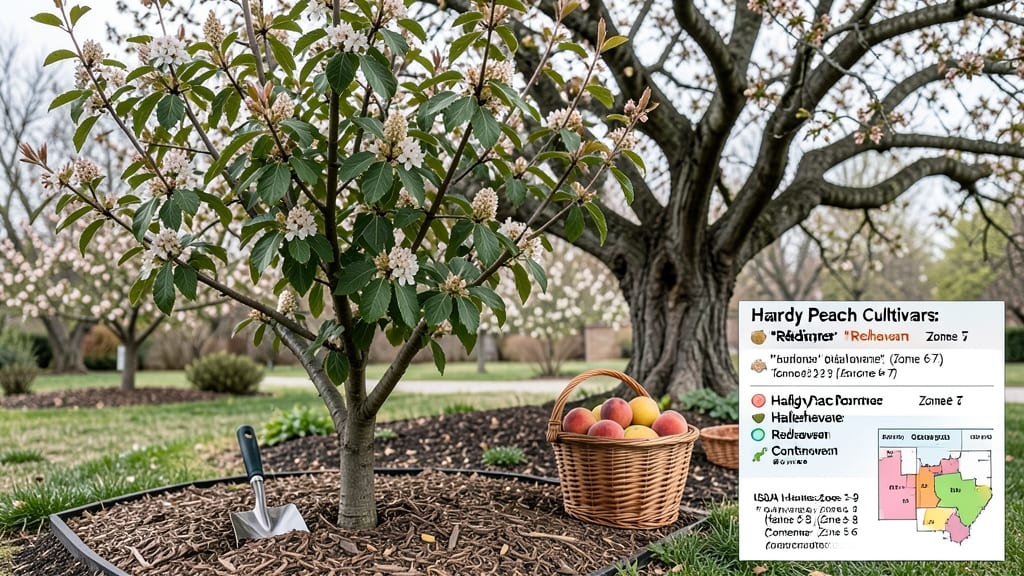
Cold-hardy peach trees like 'Reliance' and 'Contender' prove you can grow stone fruit in Zone 5—no more dreaming about peach cobbler. 🌱 I’ve watched these varieties survive winters down to -20°F, their branches heavy with blossoms come spring, while neighbors with tender varieties scratch their heads wondering why their trees keep dying.
The secret lies in their genetics: these trees produce wood-hardy buds that resist winter burn, and their roots run deep enough to avoid heaving in freeze-thaw cycles.
You’ll need a sunny, sheltered spot with well-draining soil—peaches hate soggy feet—but once established, they reward you with sweet, juicy fruit that rivals anything from the grocery store.
Planting’s straightforward: dig a hole twice as wide as the root ball, mix in compost, and water deeply. Prune in late winter to open the center, and by summer, you’ll be harvesting fruit that tastes like childhood summers.
The first year’s crop might be small, but patience pays off—these trees thrive for decades with proper care.
For extra protection, wrap the trunk in burlap or use tree guards in harsh winters. Mulch heavily in fall to insulate roots, and you’ll have peaches year after year without the heartache of tender varieties. Here’s how to make it work in your Zone 5 garden!
📚 In This Guide
- What you need
- Instructions
- Tips and common mistakes
- Wrapping up and next steps
What you need
- ● Peach tree varieties: Choose cold-hardy cultivars like 'Reliance', 'Contender', or 'Redhaven' (Zone 5-rated). Buy 1–2 bare-root or container-grown trees from a reputable nursery.
- ● Pruning tools: 1 sharp bypass pruners (for clean cuts on small branches)
- ● 1 loppers (for thicker branches, 1.5"–2" cutting capacity)
- ● 1 pruning saw (for large limbs, 8"–12" blade)
- ● Safety gear: 1 pair gloves (cut-resistant, like Felco or Fiskars)
- ● 1 face shield or safety goggles
- ○ Pruning sealant: 1 small bottle of tree wound paint (optional but helpful for large cuts)
- ● 1 spreader (for even mulch distribution)
- ● 1 tree tie kit (to support young trees in windy areas)
- ● 1 soil test kit (to check pH and nutrient levels before planting)
- ● 1 mulch (3–4 inches of wood chips or straw)
How to select and plant hardy peach trees for Zone 5
Cold winters don’t have to keep you from growing sweet peaches—just pick the right varieties and plant them properly.
🌱 Step 1: Choose the Right Cold-Hardy Varieties
Look for peach varieties bred for Zone 5’s -20°F to -10°F winters. Reliable options include 'Reliance' (red freestone), 'Redhaven' (yellow freestone), and 'Contender' (yellow clingstone). These tolerate cold snaps better than traditional southern varieties. I always check the USDA chilling hour requirements—most Zone 5 peaches need 400-600 hours below 45°F to set fruit properly.
Dwarf varieties like 'Bonanza' or 'Springcrest' are perfect for small spaces—they produce full-sized fruit on a 10-15 foot tree. Standard varieties like 'Honey Babe' grow 18-20 feet and handle cold well but need more space. Buy bare-root trees in early spring for best survival rates.
☀️ Step 2: Pick the Warmest, Most Sheltered Location
Peaches need 6-8 hours of full sun daily, but they also benefit from winter protection. Plant near a south-facing wall or fence to absorb daytime heat and radiate warmth back to the tree at night. Avoid low spots where cold air settles—you’ll see frost damage first on plants in dips.
Well-drained soil is critical. Peaches hate soggy roots, so choose a spot with slightly sloped ground or amend heavy clay with 2-3 inches of compost mixed into the top 12 inches of soil. Test your soil pH—peaches prefer 6.0-6.5. If yours runs acidic, add lime in fall.
🪴 Step 3: Plant at the Right Time and Depth
Plant bare-root trees in late winter or early spring while still dormant, but before buds swell. Dig a hole twice as wide as the root ball but no deeper—peaches hate having their graft union buried. The top of the root flare should sit 2-3 inches above ground level.
Spread the roots gently without bending them, then backfill with native soil mixed with 1 part compost. Water deeply to settle the soil, then add 2-3 inches of mulch (straw or wood chips) to protect roots from temperature swings. Don’t mulch too close to the trunk—keep 3-4 inches of bare soil around it.
✂️ Step 4: Prune for Cold Hardiness and Structure
First-year pruning shapes the tree for winter resilience. Remove any dead, crossing, or inward-growing branches. Open the center to improve airflow and reduce disease risk. Cut back the main scaffold branches to 18-24 inches—this encourages a strong, low center of gravity that resists winter wind damage.
Apply a thin layer of tree wrap around the trunk in late fall to protect against sunscald and rodent chewing. I also install a 4-foot tall tree guard (wire cage) to shield the trunk from voles and rabbits, which see young peach bark as a snack. Water deeply once a month through winter if we have less than 1 inch of snow cover.
🌿 Step 5: Winterize for Maximum Survival
After the first hard frost, wrap the entire tree in burlap or frost cloth if temperatures are forecast to drop below -15°F. Secure it loosely—too tight and you’ll restrict airflow. Remove the wrap in early spring once buds begin to swell to prevent rot.
Apply a 2-3 inch layer of straw mulch around the base in late fall, extending it out to the drip line. This insulates roots and prevents soil heaving from freeze-thaw cycles. In early spring, fertilize lightly with 10-10-10 when buds show color—this jumpstarts growth before the tree sends out new leaves.
Tips & tricks for perfect hardy peach tree planting
These practical insights will help you maximize your peach tree's cold resistance and fruit production in Zone 5.
Variety Selection: When choosing between 'Reliance' and 'Redhaven', consider your harvest timing needs. 'Reliance' ripens slightly earlier (late July) and handles cold snaps better during bloom, while 'Redhaven' produces slightly larger fruit but needs consistent chilling hours. Check your local microclimate—some Zone 5 areas get colder than others, so 'Contender' might be safer in northern parts of the zone.
Site Preparation: The 6-8 hours of sunlight requirement is non-negotiable, but don't stop there. I've found that adding a 4-inch layer of coarse gravel around the drip line improves drainage during spring thaws—this prevents root rot that can kill young trees. Also, plant at least 20 feet from other fruit trees to reduce disease spread through shared airspace.
Planting Depth: That 2-3 inch root flare above ground is critical—any deeper and the tree struggles to establish properly. I've seen many gardeners bury it too deep, which leads to poor growth. Use a small stake to mark the correct depth before planting, and double-check after backfilling. The graft union should remain visible above soil level.
Winter Protection: For the -15°F threshold mentioned, I recommend adding a layer of bubble wrap inside the frost cloth wrap—it creates an extra insulating barrier without restricting airflow. Remove the wrap as soon as buds show color in spring, usually around late April in Zone 5. This timing prevents rot while still protecting from late frosts.
Pro Tips for Hardy Peach Tree Varieties
- These practical insights will help you maximize your peach tree's cold resistance and fruit production in Zone 5.
- Variety Selection: When choosing between 'Reliance' and 'Redhaven', consider your harvest timing needs.
- Site Preparation: The 6-8 hours of sunlight requirement is non-negotiable, but don't stop there.
Frequently asked questions
Got questions about growing hardy peach trees in colder climates? You’re not alone!
Here are answers to the most common concerns gardeners in Zone 5 ask when selecting and caring for cold-resistant peach varieties.
How cold can hardy peach trees actually tolerate?
Most cold-hardy peach varieties survive down to -15°F to -20°F once established, but young trees (under 3 years) need winter protection like mulch or burlap wraps. Look for hybrids like ‘Reliance’ or ‘Contender’, bred for Zone 5-6 resilience. Pro tip: Plant in south-facing spots to maximize sun exposure and warmth.
When is the best time to plant a hardy peach tree in Zone 5?
Plant in early spring (April) or fall (October), when soil is workable but not frozen. Spring planting gives roots time to establish before summer heat, while fall planting avoids drought stress. Avoid late fall—young trees may not harden off before winter. Bonus: Soak roots in water for 1-2 hours before planting to reduce transplant shock.
Do hardy peach trees still need winter protection?
Yes! Even cold-hardy varieties benefit from mulching (4-6 inches of straw or wood chips) around the base to insulate roots. Wrap the trunk with burlap or tree wrap to prevent sunscald in winter. For extreme cold snaps, add a lightweight blanket over the tree (remove by early spring). Prune in late winter to avoid stressing the tree before dormancy.
What pests or diseases should I watch for with hardy peach trees?
Hardy peaches are less prone to fungal diseases like brown rot, but peach leaf curl and aphids can still strike. Use copper fungicide in early spring for prevention, and spray neem oil for aphids. Tip: Remove fallen leaves in autumn to reduce overwintering pests. Dwarf varieties (like ‘Dwarf Redhaven’) are easier to monitor for issues.
Can I grow hardy peach trees in containers?
While possible, it’s challenging—peach trees need deep roots and space. If you must, choose dwarf varieties (like ‘Bonanza’) and use a 50-gallon+ container with drainage. Move pots to a garage or sheltered spot in winter. Warning: Container-grown trees may struggle with cold stress and limited nutrient access. Ground planting is ideal for long-term success.
What’s the best alternative if peaches don’t thrive in my Zone 5 garden?
If peaches prove too finicky, try apricots (e.g., ‘Goldcot’) or plums (e.g., ‘Stanley’)—both tolerate cold better and produce reliably. For fruit lovers, cherry plums (like ‘Mount Royal’) are Zone 5-hardy and disease-resistant. Pro move: Cross-pollinate with another variety for better fruit set!
Wrapping up and next steps
Choosing the right hardy peach tree varieties for Zone 5 gardens means you can enjoy sweet, juicy fruit even in colder climates—without the stress! Varieties like Reliance and Contender prove that cold resistance doesn’t mean sacrificing flavor or yield.
With proper care, these trees can thrive and reward you with bountiful harvests year after year.
Ready to plant? Start by selecting a variety that suits your climate and taste, then give your tree the love it needs—pruning, mulching, and protection from late frosts. Your future peach pies are waiting! 🍑✨