
Pruning
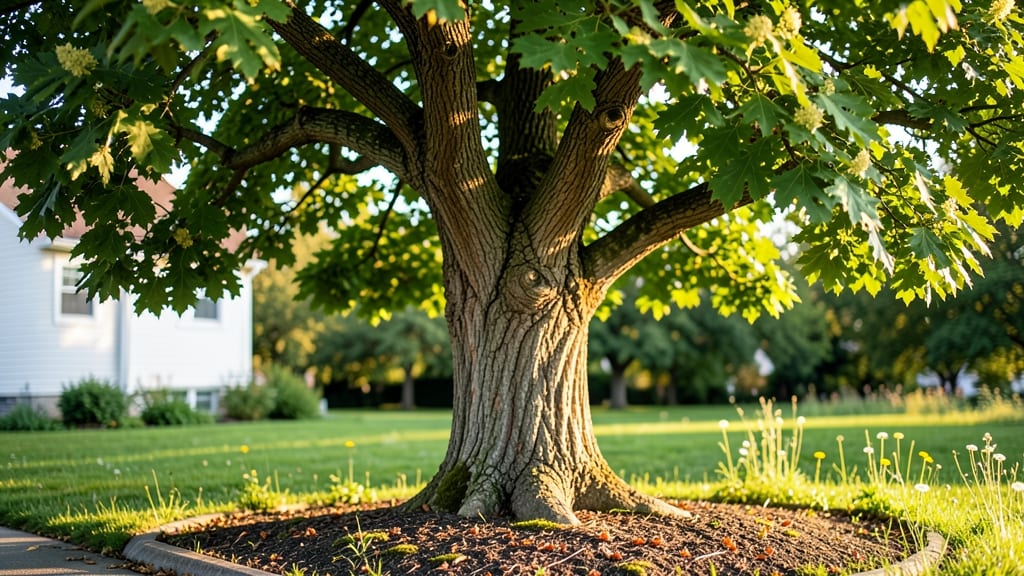
Identifying that towering tree in your yard just got easier. 🌳 I’ve spent years studying how to tell an oak from a maple—or even a fruit tree from a shade tree—just by looking at leaves, bark, and branches.
The key is in the details: the shape of the leaf edges, the texture of the bark, and whether it drops acorns or maple samaras. Start with the leaves—are they lobed like an oak, serrated like a birch, or smooth-edged like a magnolia?
Then check the bark: smooth and gray like a beech, or deeply furrowed like a sycamore? Seasonal changes, like bud shapes in spring or seed pods in fall, seal the deal. No need for fancy tools—just your eyes and a little practice.
Once you know what you’ve got, you’ll unlock care tips, potential hazards, and even ecological perks. A healthy tree boosts curb appeal, cleans the air, and supports wildlife. Plus, you’ll finally know why your neighbor’s yard stays cooler in summer (hint: it’s probably that big oak).
For tricky cases, apps like LeafSnap or local arboretum databases can help. Or just ask a nearby expert—they’ve seen it all before. Let’s get started!
How Trees End Up Unrecognized
Ever walked past a towering oak or a delicate birch in your yard and thought, "Huh… what exactly is this tree?" 🌳🤔 The mystery isn’t just about curiosity—it’s rooted in science, biology, and even human behavior.
Here’s why identifying trees in your yard can feel like solving a puzzle, and what’s really going on under the bark (and in your brain).
Trees don’t wear name tags, and many species have evolved to look eerily similar to their neighbors. This isn’t just coincidence—it’s convergent evolution in action. Different tree species in the same region often develop comparable leaf shapes, bark textures, or growth habits to thrive in similar climates. For example:
- Maples and ashes both sport compound leaves with serrated edges, making them nearly indistinguishable at a glance unless you’re looking for subtle differences in leaf arrangement or seed pods.
- Oaks and hickories share lobed leaves and acorn-like fruits, but their bark and twig structures differ—details most people overlook until they’re up close.
- Evergreens like pines, spruces, and firs can look nearly identical from a distance, but their needle arrangement (spiral vs. flat clusters) or cone shapes reveal their true identities.
Actionable tip: 🔍 Flip the leaves over—leaf undersides often have unique textures, colors, or hairiness that break the camouflage. Snap a close-up photo of the leaf stem (petiole) or buds, as these are dead giveaways.
Trees aren’t static—they metamorphose with the seasons, and if you’re not paying attention to their full lifecycle, you might misidentify them. Here’s how:
| Season | What Changes | Why It Tricks You |
|---|---|---|
| Spring | New leaves, flowers, or catkins (e.g., willows vs. poplars) | Budding trees can look entirely different from their winter selves. A dogwood in bloom is unmistakable, but its bare branches in winter might fool you into thinking it’s a hawthorn. |
| Summer | Full foliage, fruit development (acorns, apples, berries) | Some trees, like mulberries and elms, produce fruit that’s easy to confuse. A mulberry’s dark, juicy berries vs. an elm’s samara (winged seed) are night and day. |
| Fall | Leaf color shifts, early leaf drop (e.g., ginkgo vs. maple) | A ginkgo’s golden leaves might make you think of a sweetgum, but ginkgos have fan-shaped leaves and no thorns. |
| Winter | Bare branches, bud scales, bark patterns | Without leaves, trees rely on bud shapes and branch angles. A birch’s peeling white bark is iconic, but a paper birch vs. a yellow birch can be tricky without close inspection. |
Pro tip: ✨ Take seasonal notes. Jot down observations in spring, summer, fall, and winter—suddenly, that "mysterious tree" will reveal its full personality.
Even with perfect clues, our brains can play tricks on us. Here’s why we sometimes see what we expect instead of what’s really there:
- Confirmation Bias: If you think your tree is an oak, you’ll focus on the lobed leaves and ignore the lack of acorns—until someone points out it’s actually a beech.
- Over-Reliance on Leaves: Leaves are the most obvious feature, but they’re also the most variable. A single tree can have different leaf shapes on the same branch!
- Ignoring the Basics: Skipping the bark or branch structure is like judging a book by its cover. A sycamore’s mottled bark is a dead giveaway, but many people don’t look down.
- App Overload: Tree ID apps are great, but they’re only as good as the photos you feed them. A blurry or partial image = a wrong answer.
Quick fix: 🎯 Start with the "big three"—leaves, bark, and branch pattern—before diving into flowers or fruit. This cuts through the noise.
Now that you know why tree ID feels like a game of hide-and-seek, the next step is learning how to crack the code. Stay tuned for our guide on leaf shapes, bark textures, and branch secrets that’ll turn you into a backyard arborist! 🌿🔍
Identify Your Tree Quickly
Now that you know the common reasons why identifying your yard tree feels tricky, let’s tackle the solutions step by step. Whether you’re dealing with seasonal changes, lack of distinct features, or simply a mystery tree, these practical fixes will help you pinpoint the species with ease.
Before diving into apps or books, take a moment to observe your tree closely. The more details you collect, the faster you’ll narrow it down.
- 🍃 Leaf Shape & Arrangement: Are they broad, needle-like, or compound? Do they grow in clusters or alternate along the branch? - 🌿 Bark Texture: Is it smooth, rough, flaky, or deeply grooved?
Snap a close-up photo if needed. - 🌳 Branch Structure: Are the branches horizontal, upward-sweeping, or twisting? Note any unique patterns. - 🌸 Flowers & Fruit: Even if they’re not in season, check for remnants like seed pods, nuts, or dried flowers.
Pro Tip: 💡 Use your phone’s camera to zoom in on small details—bark texture and leaf undersides can be game-changers!
If your tree still feels like a puzzle, technology can be your best friend. Here’s how to leverage it:
- 🌲 Tree Identification Apps:
- LeafSnap (iOS/Android): Upload a photo, and it matches your leaf to a database.
- PictureThis (iOS/Android): Works for leaves, flowers, and even bark.
- iNaturalist (Community-driven, great for rare species).
- 🔍 Online Databases:
- USDA Plant Database ([plants.usda.gov](https://plants.usda.gov)): Filter by your state and leaf type.
- Arbor Day Foundation’s Tree ID Guide ([arborday.org/trees/what-tree](https://www.arborday.org/trees/what-tree-is-that)): Step-by-step visual guide.
Pro Tip: 🌡️ If you’re unsure about the season, note whether your tree is evergreen (needles) or deciduous (loses leaves). This cuts down options by half!
Sometimes, the old-school method works best. Grab a regional tree field guide (available at bookstores or libraries) and flip through illustrations.
Look for: - Leaf silhouettes (compare yours to the book’s examples). - Bark cross-sections (some guides include bark close-ups). - Seed or fruit descriptions (even if your tree isn’t producing them now).
If you’re still stumped, ask a local nursery or arborist. Many offer free consultations, and they’ve seen hundreds of trees—your mystery might be their specialty!
Some trees have signature features that make them easy to spot once you know what to look for:
| Trait | Possible Trees | How to Spot It |
|---|---|---|
| White bark | Birch, Sycamore, Paper Birch | Peeling or smooth, often with dark markings. |
| Spiky fruit | Sweetgum, Buckeye, Horse Chestnut | Look for spiky seed pods in fall/winter. |
| Orange fall leaves | Maple, Ginkgo, Some Oaks | Bright red-orange hues are unmistakable. |
| Needle clusters | Pine, Spruce, Fir | Pines have bundles of 2–5 needles; firs are flat. |
Pro Tip: ✨ Smell test! Some trees, like cedar or pine, have a distinct aroma when crushed. Others, like sassafras, have spicy-scented leaves.
Once you’ve cracked the case, avoid future guesswork with these habits:
- 📅 Take seasonal notes: Jot down leaf color changes, flowering times, or fruit drops.
- 📸 Snap reference photos: Keep a digital scrapbook of your tree’s stages (spring buds, summer leaves, fall fruit).
- 🌱 Label young trees: If planting new trees, use stakes with the species name to avoid future confusion.
- 🌍 Learn regional favorites: If you live in Oak-heavy Texas or Maple-dotted New England, familiarize yourself with local staples.
By combining observation, tech tools, and expert advice, you’ll go from "What tree is in my yard?" to "Ah, it’s a towering sugar maple!" in no time. Happy identifying! 🌳🔍
Frequently asked questions
What are the most common yard trees I might have?
In most U.S. yards, you’ll likely find oak, maple, pine, birch, or sycamore trees. Oaks dominate in the Southeast, maples thrive in the Northeast, and pines are common in the Southwest. Start by checking leaf shape—lobed leaves suggest oak, while smooth-edged leaves might indicate maple or beech.
Can I identify a tree just from bark?
Bark is a game-changer. Look for these clues: smooth gray bark (beech), peeling white bark (birch), or deep furrows (sycamore). Even evergreens have telltale bark—red-brown plates (pine) vs. scaly texture (cedar). Snap a close-up photo if needed, as bark patterns are often unique to species.
What should I do if my tree doesn’t match any app results?
Don’t panic! Apps can miss rare or hybrid trees. Try these fixes: check seasonal clues (flowers in spring, fruit in fall), examine leaf undersides (some have fuzzy or shiny textures), or consult a local arborist. Many nurseries offer free ID help—bring a photo or sample leaf (sealed in a bag).
Are there trees I should avoid planting in my yard?
Yes! Some trees have invasive roots (like silver maple), messy fruit (e.g., mulberry), or weak wood (e.g., willow). Others cause allergies (elm pollen) or attract pests. Always research mature size—a 20-foot tree near your house could become a problem in 10 years. Local extension offices list region-specific "no-plant" trees.
How do I take good photos for tree ID?
Capture 3 angles: a full tree shot, a close-up of leaves (front and back), and bark texture. Use natural light, avoid shadows, and include a reference object (like a coin) for scale. Apps like LeafSnap require clear, well-lit images—blurry photos often lead to wrong matches. Pro tip: Snap pics in morning sunlight for the best detail.