
Plants
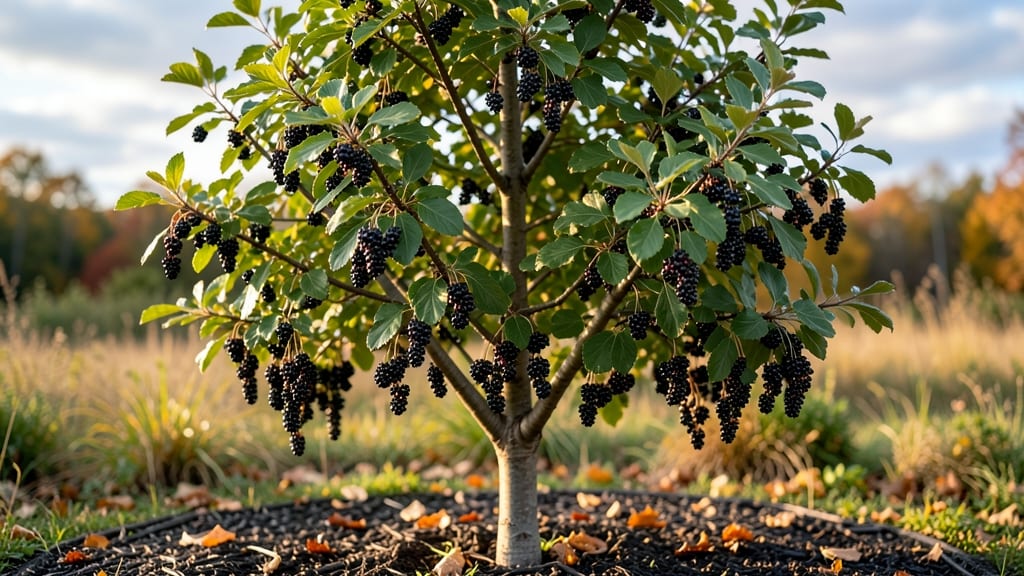
A chokeberry tree looks like a compact, bushy shrub or small tree standing 6-12 feet tall, featuring glossy oval leaves that blaze fiery red in autumn. Its tight clusters of tiny, deep purple-black berries appear in late summer, while the bark remains smooth and grayish-brown as it matures.
A chokeberry tree's most striking feature is its autumn foliage, which transforms from deep green to vibrant red—often resembling a smaller, more compact version of a maple tree. 🍂 The berries, though small (about ½-inch wide), pack a visual punch with their glossy, almost black appearance that persists even after frost.
Unlike many shrubs, chokeberry maintains a neat, rounded shape without needing heavy pruning, making it a favorite for ornamental landscapes.
What sets it apart from lookalikes is the leaf arrangement: chokeberry leaves grow in pairs along the stems, while similar shrubs like elderberry typically have leaves in whorls. The berries also cluster more densely, forming compact, grape-like bunches rather than the sparse, elongated spikes of serviceberry.
This combination of leaf structure, berry clusters, and seasonal color shifts makes identification straightforward once you know what to look for.
💡 In This Article
- Identifying Chokeberry Leaves, Berries, and Growth Habits
- Chokeberry Tree vs. Common Lookalikes: Key Differences
Identifying chokeberry leaves, berries, and growth habits
The chokeberry's leaves are its first visual clue, featuring a distinctive oval shape with finely serrated edges that resemble tiny saw teeth under magnification.
Each leaf measures about 1.5 to 3 inches long and 1 to 2 inches wide, with a glossy, deep green upper surface that reflects light in bright sunlight.
The underside appears slightly paler, with visible veins creating a subtle network pattern. 🌿 What's fascinating is how these leaves maintain their vibrant color well into late autumn before turning fiery red—this delayed color change helps distinguish chokeberry from maples or oaks that shift earlier.
The berries themselves are the star of the show, growing in dense, grape-like clusters that hang downward from the branches. Each berry measures roughly ½-inch in diameter, with a glossy, almost black skin that's slightly waxy to the touch.
When fully ripe, they have a deep purple-black hue that's nearly indistinguishable from elderberries at first glance, but chokeberries lack the white pithy core found in elderberries.
The texture is firm yet yielding, and they remain attached to the tree long after frost, often persisting through winter until birds finally consume them.
Chokeberry's growth habit is another key identifier, typically forming a rounded, multi-stemmed shrub that reaches 6 to 12 feet tall and spreads 5 to 8 feet wide. Unlike many shrubs that grow upright, chokeberry has a naturally compact form that makes it ideal for hedges or small garden borders.
The branches are sturdy yet flexible, and younger stems often have a slight reddish tint that fades to grayish-brown as they mature. This dense branching structure creates a thick canopy that provides excellent wildlife habitat while maintaining a neat appearance.
Seasonal changes reveal even more details about chokeberry's identity. In spring, you'll spot its white, five-petaled flowers that grow in small clusters along the branches, each with a subtle fragrance that attracts pollinators.
These flowers give way to the berries by mid-summer, while the autumn foliage transformation is nothing short of spectacular—leaves shift from green to orange to brilliant red over just a few weeks.
Even the bark tells a story, starting smooth and gray when young but developing slight horizontal lenticels (pores) as it ages, creating a subtle textured pattern.
What most gardeners don't realize is how chokeberry's root system influences its appearance. The roots spread widely but shallowly, creating a sturdy base that prevents the shrub from toppling in windy conditions.
This root structure also contributes to its drought tolerance once established, allowing it to maintain its compact form even during dry spells. The combination of these growth characteristics—leaf shape, berry clusters, seasonal color shifts, and root structure—makes chokeberry instantly recognizable to those who know what to look for.
For practical identification, focus on these three key features when examining a shrub in your garden: paired leaves with serrated edges, dense clusters of small black berries, and the compact, multi-stemmed growth habit.
These characteristics create a visual signature that distinguishes chokeberry from its closest lookalikes while making it a standout feature in any landscape. 🌟