
Pruning
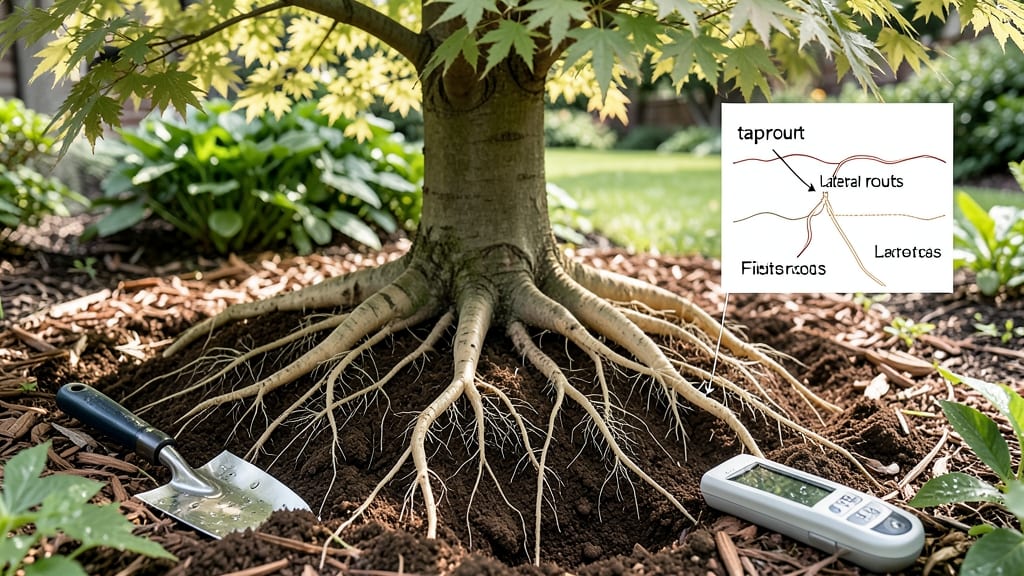
The Japanese maple tree root system is a delicate network that determines how well your tree thrives—yet most gardeners focus only on the leaves.
That stunning 🌿 Japanese maple foliage you love depends just as much on its roots as it does on sunlight and pruning. A shallow, fibrous root system means planting too close to structures or other trees can strangle its growth before it even starts.
Worse, compacted soil or improper mulching turns your tree’s roots into a ticking time bomb for stress and disease.
In this guide, I’ll break down what makes the Japanese maple root system unique—how it spreads, how deep it needs to go, and why spacing matters more than you think.
You’ll also learn how to protect those roots during planting, pruning, and everyday care to keep your tree healthy for decades.
Whether you’re planting a new sapling or caring for a mature specimen, understanding these roots is the key to avoiding common mistakes that lead to decline. Let’s dig in.
Understanding the Japanese maple root system: types, spread, and depth explained
Your Japanese maple’s root system is the foundation of its beauty and longevity, yet it’s often overlooked until problems arise. Unlike many trees, Japanese maples develop a fibrous root system rather than a deep taproot, which dramatically impacts how you plant, prune, and care for them.
Understanding these roots helps you avoid common mistakes like girdling or root stress, ensuring your tree thrives for decades.
The Japanese maple root system spreads horizontally more than it grows deep, typically reaching 1.5 to 2 times the canopy width. This means a mature tree with a 15-foot spread may have roots extending 22 to 30 feet outward.
This wide spread is why spacing is critical—planting too close can lead to competition for nutrients and water, stunting growth or causing decline.
Most of a Japanese maple’s roots lie in the top 12 to 18 inches of soil, with the majority concentrated in the top 6 inches. This shallow root system makes them sensitive to soil compaction, drought, and poor drainage.
Unlike deep-rooted trees, they struggle when their roots are buried too deeply during planting or when heavy foot traffic compresses the soil around them.
Japanese maples also develop lateral roots that grow outward from the trunk, creating a dense network. These roots are responsible for water and nutrient uptake, which is why mulching plays a crucial role in protecting them.
Without proper care, these lateral roots can become girdling roots—roots that wrap around the trunk and restrict growth by cutting off the tree’s nutrient flow.
One of the biggest misconceptions about Japanese maple roots is that they require deep planting. In reality, burying the graft union or root flare can suffocate the tree and lead to rot.
Always plant with the root flare visible above soil level—this ensures the tree can access oxygen and prevents water from pooling around critical roots. If you’re unsure where the flare is, gently scrape away soil until you see the swollen base of the trunk.
The shallow nature of Japanese maple roots also means they’re highly sensitive to temperature fluctuations. In winter, mulch heavily (3–4 inches) to insulate roots from freezing. In summer, mulch helps retain moisture and keeps roots cool.
Without protection, roots can suffer from heat stress or freeze damage, both of which weaken the tree’s ability to support its stunning foliage.
When planning your garden layout, account for the mature spread of your Japanese maple. Dwarf varieties like 'Crimson Queen' may only reach 8–12 feet tall but still spread 6–10 feet wide.
Standard varieties like 'Bloodgood' can spread 20–25 feet, so place them where they won’t crowd sidewalks, driveways, or other plants. Always measure the canopy width of nearby trees to determine safe planting distances.
If you’re transplanting a Japanese maple, be extra careful with the roots. Their fibrous system is delicate, and root damage during transplanting can take years to recover from.
Use a wide, shallow hole (twice as wide as the root ball but no deeper) and backfill with native soil mixed with compost. Water thoroughly after planting to encourage root expansion into the surrounding soil.
Finally, watch for signs of root stress, such as yellowing leaves, stunted growth, or early leaf drop. These symptoms often indicate compaction, drought, or girdling roots. If you suspect girdling, gently loosen the soil around the base and check for roots circling the trunk.
If found, carefully prune them with sterilized tools to restore healthy nutrient flow.
By understanding your Japanese maple’s root system—its fibrous structure, horizontal spread, and shallow depth—you’ll make smarter planting, pruning, and care decisions. These roots are the unsung heroes behind your tree’s vibrant foliage, so give them the attention they deserve! 🌿
How to protect Japanese maple roots: planting, mulching, and watering best practices
Your Japanese maple’s delicate foliage thrives when its roots receive the right care—just like how a strong foundation supports a house. The root system of a Japanese maple is shallow but expansive, spreading 2-3 times wider than its canopy.
Without proper planting and maintenance, roots can suffocate, dry out, or develop diseases that stunt growth. Let’s dive into the essential steps to protect your tree’s roots for decades of vibrant color and structure.
First, soil preparation is critical. Japanese maples prefer well-draining, acidic soil (pH 5.0-6.0). Amend heavy clay with compost or organic matter like pine bark fines to improve aeration.
Avoid compacted soil, as it restricts root growth and leads to root rot. Test your soil before planting—this simple step can prevent years of struggle.
⚠️ callout-warning
Japanese maples have shallow, fibrous roots that spread horizontally. Never plant near sidewalks or driveways—roots can crack concrete as they expand. Root damage from construction or foot traffic often appears as yellowing leaves months later. Always maintain a 3-foot clearance around the tree’s drip line for root health.
When planting, dig a hole twice as wide as the root ball but no deeper. This encourages roots to spread outward naturally. Gently loosen the roots if they’re circling the root ball—a common issue with nursery-grown trees.
Place the tree so the graft union (if present) is 2-3 inches above soil level to prevent rot. Backfill with native soil mixed with compost, tamping lightly to eliminate air pockets.
Mulching is another game-changer. Apply 3 inches of organic mulch (like wood chips or bark) around the base, keeping it 6 inches away from the trunk to prevent rot.
Mulch regulates soil temperature, retains moisture, and suppresses weeds. Replenish mulch annually, but avoid piling it against the trunk—this creates a moist environment that invites pests and disease.
Watering demands consistency. Japanese maples need deep, infrequent watering—about 1-2 inches per week during the growing season. Water at the base of the tree, not the leaves, to prevent fungal diseases.
Use a soaker hose for slow, even moisture. In hot climates, water twice weekly and monitor soil moisture with your finger—roots should stay moist but never soggy.
Finally, avoid common pitfalls like over-fertilizing or using heavy-handed pruning near roots. Japanese maples are sensitive to salt buildup from fertilizers, which can burn roots. If you notice yellowing leaves or stunted growth, it’s often a sign of root stress.
Adjust your care routine immediately—your tree’s roots will thank you with lush, vibrant foliage for years to come.