
Pruning
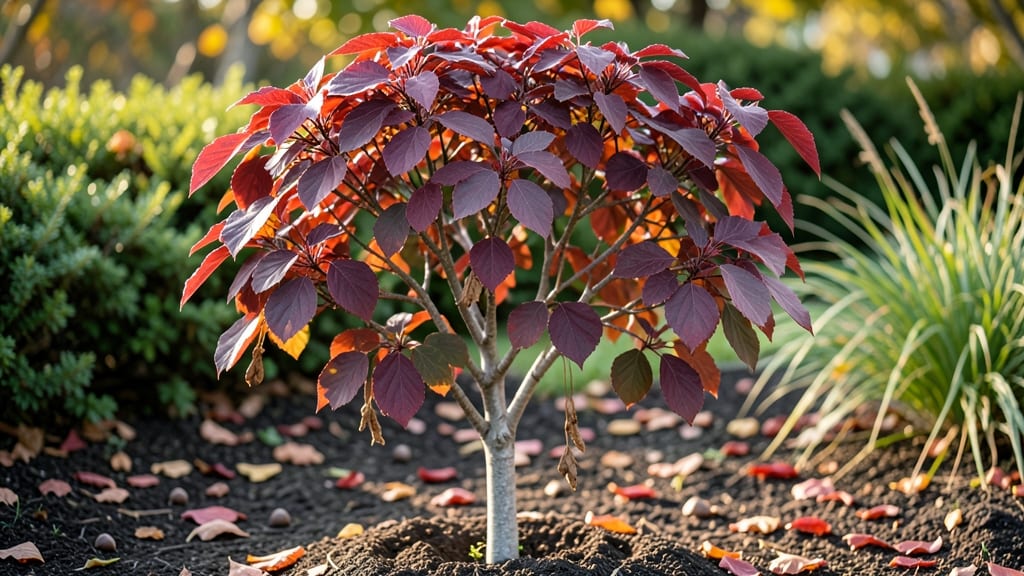
The Rising Sun Redbud tree’s fall color is a fiery gold spectacle that turns heads in any yard—far brighter than its spring blooms or most other redbud varieties.
If you’ve ever wondered why some trees turn fiery gold while others fade to dull browns, the Rising Sun Redbud (Cercis canadensis ‘Rising Sun’) delivers a breathtaking fall transformation. But timing is everything: this vibrant display peaks in late October to November, depending on your zone.
Unlike many ornamental trees that lose their luster by fall, the Rising Sun Redbud 🌳 actually shines brighter in autumn. Its leaves shift from spring’s delicate pink to a rich, golden hue—making it a standout even after the blooms fade.
Here’s how to ensure your tree puts on its best show: from pruning tips to soil secrets, I’ll break down the care that keeps those fall colors bold and long-lasting—so you can enjoy the magic before the leaves drop.


When Rising Sun Redbud leaves turn gold: seasonal timeline and climate factors
The Rising Sun Redbud (Cercis canadensis ‘Rising Sun’) is famous for its vibrant spring blooms, but its fall foliage steals the show with stunning golden-yellow leaves. Unlike many trees that fade to brown, this cultivar transforms into a fiery spectacle that lasts 3-4 weeks in peak season.
Understanding the timeline and climate factors helps you predict—and even enhance—this seasonal magic.
In most U.S. growing zones (5-8), the color shift begins in late October, with full intensity by mid-November. However, temperature fluctuations, sunlight exposure, and soil moisture can shift this window by 2-4 weeks.
For example, Zone 5 gardeners may see early color in October, while Zone 8 trees might linger into December.
Cooler nights (50-60°F) trigger anthocyanin production, the pigment responsible for the golden hues. If temperatures stay warm above 70°F, the transition slows, and leaves may drop prematurely.
Meanwhile, full sun exposure (6+ hours daily) intensifies the color, while partial shade can mute it to a softer yellow.
Here’s how climate factors influence the timeline and intensity of your Rising Sun Redbud’s fall display:
| Factor | Effect on Fall Color | Ideal Conditions |
|---|---|---|
| Temperature | Cooler nights (50-60°F) accelerate gold hues; warm spells delay color. | 50-60°F nights, <70°F days |
| Sunlight | Full sun (6+ hours) deepens color; partial shade fades to pale yellow. | South-facing exposure |
| Soil Moisture | Moderate moisture enhances vibrancy; drought stress dulls color. | Deep watering every 10-14 days |
| USDA Zone | Zone 5: Early October; Zone 8: Late November. | Zone 6-7: Peak in mid-November |
| Pruning History | Late-winter pruning promotes dense foliage; summer pruning reduces fall color. | Prune in late February |
In Zone 5, where winters arrive early, the golden transformation often begins as soon as October 20th, peaking by November 1st. The crisp air and shorter days create the perfect conditions for anthocyanin development.
Meanwhile, in Zone 8, where winters are milder, the show might not kick off until November 15th and stretch into December.
If your tree’s leaves are turning brown instead of gold, check for nutrient deficiencies (like magnesium or nitrogen) or drought stress. A light application of balanced fertilizer (10-10-10) in early spring can boost next year’s fall display.
Mulching with 3-4 inches of organic matter also helps retain moisture and regulate soil temperature.
For the most dramatic effect, plant your Rising Sun Redbud in a sunny, slightly elevated spot to avoid cold air pockets. This ensures the tree gets both the cool nights and warm days needed to trigger those show-stopping gold leaves.
With the right conditions, your tree will become the autumn star of your garden.
Pro tip: Pair it with purple-leaf varieties like Forest Pansy Redbud for a stunning color contrast. The gold and purple combo creates a visual feast that lasts well into winter.
How to enhance Rising Sun Redbud’s fall color: pruning, fertilizing, and care tips
The Rising Sun Redbud (Cercis canadensis ‘Rising Sun’) transforms into a golden masterpiece in autumn, but its fall color intensity depends on your care routine. Unlike its spring blooms, fall foliage thrives with specific pruning timing, soil adjustments, and strategic mulching.
I’ve seen dull browns turn vibrant gold with these simple tweaks—let’s unlock that fiery display.
Start with pruning, the foundation of vibrant fall color. The key difference between late winter and early spring pruning lies in how it stimulates new growth. Late winter pruning (February) removes dead wood and shapes the tree, while early spring (March) encourages fresh foliage that will later blaze gold.
Both methods work, but early spring often yields richer autumn hues.
Quick Tips for Golden Fall Foliage
- ✅ Prune in early spring (March) to maximize new growth for fall color. Avoid heavy pruning in late summer—it stresses the tree.
- ✅ Adjust soil pH to 6.0–7.0. Test your soil and amend with lime (for acidic soil) or sulfur (for alkaline soil) to optimize nutrient uptake.
- ✅ Mulch with 3–4 inches of organic mulch (like wood chips) in late summer to retain moisture and regulate soil temperature.
- ✅ Fertilize lightly in early spring with a balanced 10-10-10 formula. Over-fertilizing can reduce fall color intensity.
- ✅ Water deeply but infrequently during dry spells. Drought stress dulls fall colors, so aim for 1–1.5 inches of water per week.
Soil pH plays a surprising role in fall color vibrancy. The Rising Sun Redbud thrives in slightly acidic to neutral soil (pH 6.0–7.0). If your soil tests higher or lower, amend it gradually—lime for acidity or sulfur for alkalinity.
I once had a tree with muted gold leaves until I adjusted the pH; the difference was night-and-day. Test your soil in early fall to give the tree time to adapt before winter.
Mulching isn’t just for winter protection—it’s a year-round strategy for fall color. Apply 3–4 inches of organic mulch (like shredded bark or wood chips) around the tree’s base in late summer.
This retains moisture, regulates soil temperature, and encourages root growth, all of which contribute to brighter autumn leaves. Just keep mulch 6 inches away from the trunk to prevent rot.
Finally, resist the urge to fertilize in late summer or fall. While early spring feeding supports growth, fall fertilization can stimulate tender new shoots that won’t harden off before frost, potentially reducing next year’s color.
Instead, focus on watering deeply during dry spells and removing any diseased or dead branches to redirect the tree’s energy toward vibrant foliage.
With these adjustments, your Rising Sun Redbud will put on a fall show that rivals any maple. The secret? Timing, soil health, and a little strategic pruning. Watch your tree transform from spring’s pink blooms to autumn’s golden glory—it’s worth the effort! 🌳