
Pruning
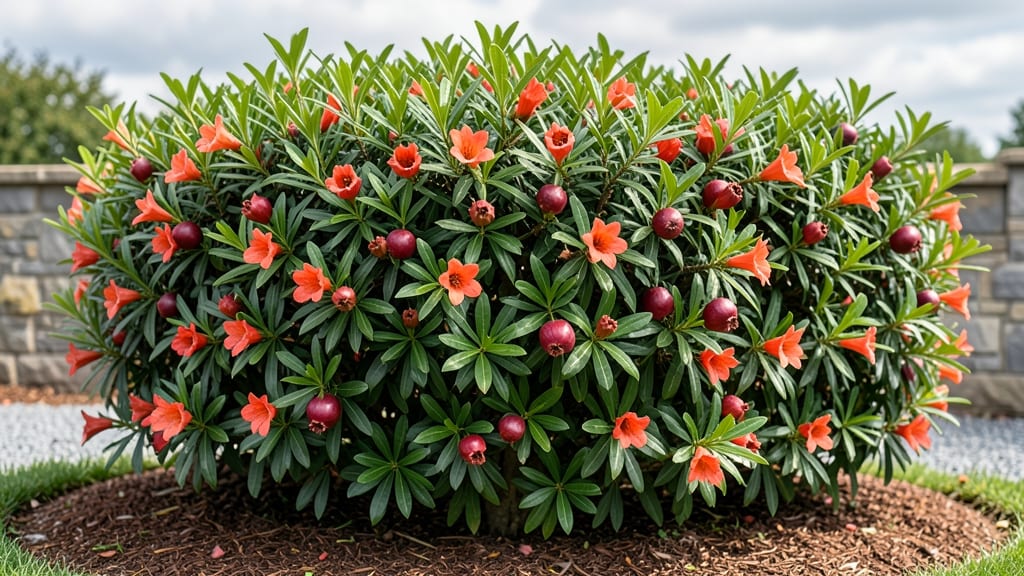
A pomegranate tree hedge turns your property line into a lush, fruiting privacy screen that outshines any standard hedge. 🌿 The dwarf varieties like 'Wonderful' or 'Eversweet' grow just 6-10 feet tall, perfect for narrow spaces while delivering vibrant blooms, glossy foliage, and jewel-toned fruit that lasts from fall through winter.
Spacing them 8-10 feet apart ensures they fill in without overcrowding, and their semi-evergreen nature means you get year-round interest—even when not in bloom.
The real magic happens in late summer when clusters of deep red or golden fruit hang like nature’s chandeliers, attracting birds and adding drama to your landscape.
Pruning is simple: trim back 1/3 of the oldest growth in early spring to encourage dense new shoots, and shape lightly after harvest. The hedge stays disease-resistant and drought-tolerant once established, making it a low-maintenance star for sunny climates (zones 7-11).
Just watch for squirrels and birds that love the fruit—harvest early or use netting! With proper care, your hedge will thrive for decades, offering both privacy and pantry potential every season.
📚 In This Guide
- What you need
- Instructions
- Tips and common mistakes
- Wrapping up and next steps
What you need
- ● Dwarf pomegranate tree saplings – 3-5 plants per foot of hedge (e.g., 15-25 for a 5-foot hedge). Choose cold-hardy varieties like ‘Wonderful’ or ‘Eversweet’.
- ● Well-draining potting mix – 60% native soil, 30% compost, 10% perlite/sand (avoid clay-heavy soil).
- ● Organic mulch – 2-3 inches of wood chips or straw to retain moisture and suppress weeds.
- ● Slow-release fertilizer – Balanced 10-10-10 or citrus-specific formula (apply at planting and mid-season).
- ● Drip irrigation or soaker hose – For consistent watering (pomegranates hate soggy roots!).
- ● Shovel or spade – For digging holes 3x wider than the root ball.
- ● Pruning shears – Sharp, bypass-style shears for shaping and trimming.
- ● Garden gloves – Heavy-duty for thorns!
- ● Measuring tape – To mark spacing (3-5 feet apart for dwarf varieties).
- ○ String and stakes – Optional, for guiding straight hedge lines.
- ● Sunlight – Full sun (6+ hours daily)—pomegranates thrive in hot, sunny spots!
- ● Drainage – Avoid low-lying areas to prevent root rot.
- ● Frost protection – Young trees may need burlap wraps in winter (zones 7-11).
- ● Patience – Hedges take 2-3 years to fill out—regular pruning speeds it up!
Step-by-Step guide to planting a pomegranate tree hedge
Dwarf pomegranate varieties create a stunning, low-maintenance hedge that thrives year-round. Here's how to establish one that delivers both privacy and beauty.
🌱 Step 1: Select and Prepare the Planting Site
Choose a location with full sun exposure (6-8 hours daily) and well-draining soil—pomegranates hate soggy roots. Test your soil's pH; aim for 6.0-7.0. If your soil is heavy clay, amend it with 2-3 inches of compost mixed into the top 12 inches of soil to improve drainage.
Mark your hedge line with stakes and string, spacing plants 6-8 feet apart for mature width. Dwarf varieties grow 8-10 feet tall, so plan for a 3-4 foot tall hedge at maturity. Avoid planting near large trees or structures that could compete for water or shade your pomegranates.
🪴 Step 2: Plant Dwarf Pomegranate Trees at the Right Depth
Dig holes twice as wide as the root ball but no deeper than the container. Gently remove each dwarf pomegranate from its pot and loosen any circling roots with your fingers. Place the tree in the hole so the top of the root ball sits 1-2 inches above ground level—this prevents water from pooling around the stem.
Backfill with native soil mixed with a 5-10-10 fertilizer (1 cup per hole) to give your new plants a nutrient boost. Water deeply to settle the soil and remove air pockets. Mulch around the base with 2-3 inches of wood chips, keeping mulch 6 inches away from the trunk to prevent rot.
☀️ Step 3: Establish Proper Watering and Light Routines
Water newly planted pomegranates deeply 2-3 times per week for the first 4-6 weeks, ensuring moisture reaches 12 inches deep. You'll know you're doing it right when water drains out the bottom of the hole—this prevents shallow root systems. After establishment, reduce to once weekly during dry spells, but never let the soil dry out completely.
Pomegranates need full sun to produce fruit, so avoid pruning lower branches that block light from reaching inner plants. If your hedge grows leggy toward the sun, rotate pots a quarter turn weekly to encourage even growth. Yellowing leaves signal either overwatering or insufficient sunlight—check your moisture levels first.
✂️ Step 4: Prune for Shape and Health in Early Spring
Prune your hedge in late winter or early spring, before new growth begins. Remove any dead, diseased, or crossing branches first, cutting back to the nearest healthy bud. Then shape the hedge by trimming outer branches to encourage dense growth. Use sharp bypass pruners for clean cuts and avoid shearing too aggressively—pomegranates respond better to selective pruning.
Here's the thing—pomegranates flower on new wood, so avoid heavy pruning in fall or winter. If you must prune for shape, do it lightly after flowering to preserve next year's fruit. Thin out overcrowded branches to improve airflow, which reduces disease risk. You'll see new growth within 2-3 weeks of proper pruning.
🌿 Step 5: Maintain Through the Seasons for Year-Round Privacy
Fertilize your hedge in early spring with a 10-10-10 fertilizer (½ cup per plant) to support flowering and fruiting. In late summer, apply a low-nitrogen fertilizer (5-10-10) to encourage root development before winter. Water deeply in fall to prepare plants for dormancy, then reduce watering in winter unless temperatures drop below 20°F.
Watch for signs of stress like leaf drop or fruit rot—these often signal overwatering or fungal issues. If pests appear, treat with neem oil or insecticidal soap early to prevent spread. With proper care, your pomegranate hedge will develop a dense, evergreen-like appearance, offering privacy year-round while adding vibrant blooms and fruit in season.
Tips & tricks for perfect pomegranate tree hedges
Transforming your yard into a lush, private sanctuary starts with these expert insights that go beyond the basics.
Site Selection Matters: While full sun (6-8 hours daily) is non-negotiable, don't overlook microclimates within your yard. South-facing walls or fences create natural heat sinks that can extend sunlight exposure by 1-2 hours—perfect for pushing your hedge's growth potential. I've seen pomegranates thrive in these spots with minimal additional care, producing fruit earlier in the season.
Root Ball Preparation: The 1-2 inches above-ground placement of your root ball isn't just about drainage—it's about creating an oxygen-rich zone at the stem. When planting, gently press the soil around the root ball to eliminate air pockets, then water immediately. This prevents transplant shock and encourages root expansion into the surrounding soil. Think of it as giving your pomegranate's roots a head start on their new home.
Watering Wisdom: Those first 4-6 weeks are critical—watering deeply 2-3 times weekly means your hose should deliver enough water to saturate the soil 12 inches down. Test this by digging a small hole; if the soil is moist at that depth, you're golden. Pro tip: Use a moisture meter for accuracy, especially in sandy soils that drain quickly. Overwatering here is just as damaging as underwatering.
Pruning Precision: When shaping your hedge in Step 4, focus on creating an open center that allows sunlight to penetrate. Pomegranates develop fruit on new growth, so avoid heavy pruning that removes too many potential flowering sites. I like to use a string line to maintain even height—this creates that clean, professional look while encouraging uniform growth throughout the hedge.
Pro Tips for Pomegranate Tree Hedge
- Transforming your yard into a lush, private sanctuary starts with these expert insights that go beyond the basics.
- Site Selection Matters: While full sun (6-8 hours daily) is non-negotiable, don't overlook microclimates within your yard.
- Root Ball Preparation: The 1-2 inches above-ground placement of your root ball isn't just about drainage—it's about creating an oxygen-rich zone at the stem.
Frequently asked questions
Got questions about creating a stunning pomegranate tree hedge? You’re not alone! Here are some of the most common queries—plus practical answers to help you grow a thriving, private oasis.
How long does it take for a pomegranate hedge to grow dense enough for privacy?
A dwarf pomegranate hedge typically reaches adequate privacy (6–8 feet tall) in 3–5 years with proper care. Young trees grow 1–2 feet per year, so patience pays off! For faster results, plant multiple trees in a staggered row to fill gaps sooner.
Can pomegranate trees survive winter in cold climates?
Most dwarf varieties (like ‘Wonderful’ or ‘Eversweet’) tolerate USDA Zones 7–11. In colder areas (below 10°F), mulch heavily and wrap young trees in burlap for protection. Prune back dead wood in early spring to encourage new growth.
Do pomegranate hedges produce fruit, and will they be edible?
Yes! Dwarf varieties yield small but delicious pomegranates (though not as large as standard trees). Fruit production peaks in 3–5 years, and the fruit is 100% edible—just remove the seeds if you prefer seedless varieties. Bonus: The hedges double as a fragrant, pollinator-friendly screen!
What’s the best alternative if pomegranates are too high-maintenance?
If you want low-maintenance privacy, consider:
- Olive trees (drought-tolerant, slow-growing)
- Lemon or Meyer lemon hedges (citrus scent + edible fruit)
- Boxwood or privet (evergreen, classic hedging)
- Dwarf citrus (like ‘Calamondin’) (tropical vibes, cold-sensitive)
For year-round color, pomegranates still win with their striking red blooms and winter fruit!
How often should I prune a pomegranate hedge, and when is the best time?
Prune twice a year for shape and health:
- Late winter/early spring ( Before new growth): Remove dead wood and thin crowded branches.
- Summer (after fruiting) ( June–July): Light trimming to encourage bushiness.
Pro tip: Use sterilized shears to prevent disease, and avoid heavy pruning in fall—it can stress the tree.
Wrapping up and next steps
A pomegranate tree hedge isn’t just a stunning addition to your landscape—it’s a functional one! With the right dwarf varieties and pruning know-how, you can enjoy year-round privacy, vibrant blooms, and delicious fruit—all while keeping maintenance manageable.
Whether you’re a seasoned gardener or just starting out, this low-maintenance hedge is a game-changer for curb appeal and sustainability.
Ready to transform your outdoor space? Start small—plant a few dwarf pomegranate trees today, and watch your vision grow! 🌱 For extra inspiration, browse local nurseries or check out pruning guides to refine your technique. Happy gardening!