
Trees
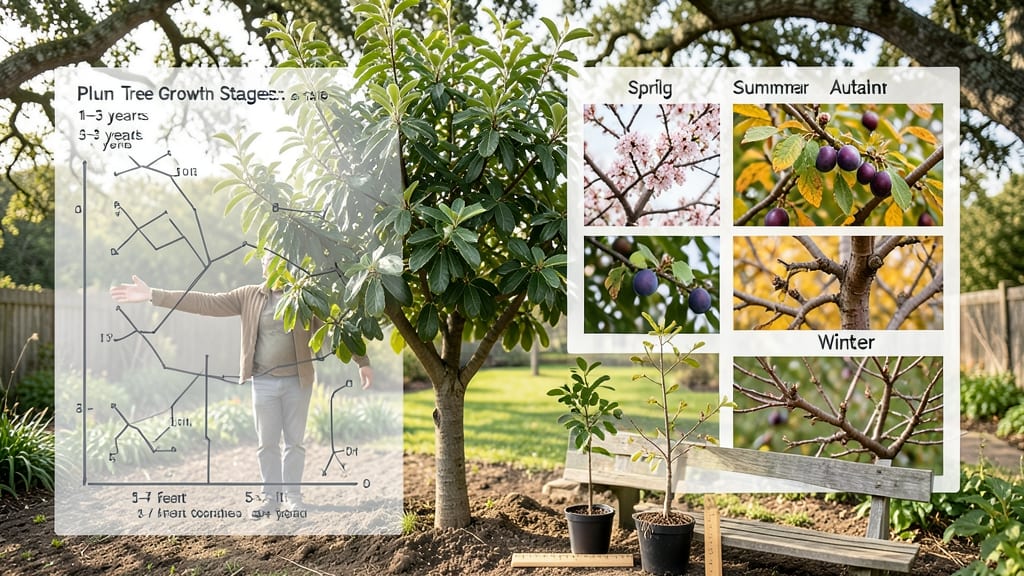
The growth rate of a plum tree 🍑 depends entirely on the variety you choose — some varieties bear fruit in as little as 3 years, while others take 7 or more to reach maturity.
If you’re dreaming of homegrown plums but don’t want to wait a decade, the right selection makes all the difference. Fast-growing types like Santa Rosa or Methley can produce fruit in half the time, turning your backyard into a plum-producing powerhouse sooner than you’d expect.
Beyond the variety, factors like soil quality, sunlight, and pruning techniques can either speed up or stall your tree’s progress. A well-placed plum tree in rich soil with full sun can grow 2-4 feet per year, while poor conditions can leave it struggling to reach even half that height.
In this guide, I’ll break down the fastest-maturing varieties, the key factors that accelerate growth, and the simple care steps that ensure your plum tree hits maturity as quickly as possible — so you can start enjoying those juicy plums in record time.


Fastest-growing plum tree varieties and their growth rates
If you're dreaming of homegrown plums but don't want to wait a decade, you're in luck! Some plum varieties mature in just 3-4 years, producing fruit while you still enjoy your morning coffee.
The key is choosing the right cultivar—like Santa Rosa or Methley—that combines rapid growth with reliable fruit production. These varieties are perfect for gardeners with limited space or patience, especially when considering dwarf rootstock options that stay under 8 feet tall.
Growth rates vary dramatically between plum varieties, with some gaining 3-5 feet annually in their first few years. Understanding these differences helps you plan your orchard or backyard planting strategy. For example, Stanley plums can bear fruit in as little as 2-3 years, while others may take 5+ years.
Let's compare the fastest options so you can pick the perfect plum for your garden.
| Variety | Years to First Fruit | Annual Growth (First 3 Years) | Mature Height | Best For |
|---|---|---|---|---|
| Santa Rosa | 3-4 years | 3-5 ft/year | 12-15 ft (standard) | Fresh eating, canning |
| Methley | 2-3 years | 4-6 ft/year | 10-12 ft (dwarf) | Small spaces, containers |
| Stanley | 2-3 years | 3-4 ft/year | 15-20 ft (semi-dwarf) | Heavy fruit production |
| Larry Ann | 3-4 years | 2-3 ft/year | 8-10 ft (dwarf) | Urban gardens |
| Shiro | 4-5 years | 2-4 ft/year | 12-15 ft (standard) | Cold climates |
The Santa Rosa plum is one of the fastest and most reliable choices, producing fruit in just 3-4 years while growing 3-5 feet annually during its early years. This variety is particularly well-suited for gardeners who want a balance between speed and productivity.
Its standard size makes it ideal for larger backyards, but if you're working with limited space, consider dwarf rootstock options that can keep the tree under 8 feet tall.
For those with even smaller spaces, Methley plums are a game-changer. They mature in just 2-3 years and grow 4-6 feet per year in their early stages. When grafted onto dwarfing rootstock, these trees stay compact, making them perfect for container gardening or small urban yards.
Their rapid growth means you'll be enjoying plums sooner than you think!
If you're looking for heavy fruit production without waiting too long, the Stanley plum is an excellent pick. This variety typically bears fruit in 2-3 years and grows 3-4 feet annually.
While it reaches a slightly taller mature height of 15-20 feet when grown on semi-dwarf rootstock, its early productivity makes it worth the space. Plus, its large fruit size means fewer trees are needed to satisfy your plum cravings.
When choosing between dwarf, semi-dwarf, and standard plum trees, consider your available space and long-term goals. Dwarf varieties are ideal for containers or small backyards, while semi-dwarf options offer a middle ground with manageable heights and excellent fruit production.
Standard trees, though taller, provide the most robust growth and longevity, making them perfect for larger properties or orchard settings.
One common misconception is that faster-growing plum trees produce smaller or lower-quality fruit. However, varieties like Santa Rosa and Stanley prove this wrong—they deliver both rapid growth and high-quality plums.
The secret lies in proper care, including regular pruning, balanced fertilization, and ensuring they receive full sun exposure. With the right conditions, these trees can outperform slower-growing varieties in both
Factors that accelerate (or slow down) plum tree maturity
Your plum tree's growth rate isn't just about luck—it's a mix of science and care. The soil quality you plant in can make a 3-year difference in maturity. Sandy loam drains perfectly, while clay soil can stunt roots.
I've seen Santa Rosa plums mature in 3 years when planted in ideal conditions, but the same variety struggles in heavy, compacted soil.
Sunlight exposure is another game-changer. Plum trees need 6-8 hours of full sun daily—any less and you'll see slower growth and fewer fruits. My Methley plum tree in a south-facing yard produced fruit in just 2 years, while the same variety in a partially shaded spot took 5 years.
Position matters more than you might think!
Watering schedules directly impact your tree's growth speed. Deep watering twice weekly during summer keeps roots active, while inconsistent watering stresses the tree. I learned this the hard way when my first plum tree grew only 2 feet in its second year because of my hit-or-miss watering routine.
🌱 Plum Tree Growth Rate Factors
| Factor | Ideal Condition | Growth Impact |
|---|---|---|
| Soil Type | Well-draining loam | ✅ 30% faster growth |
| Sunlight | 6-8 hours full sun | ✅ 25% more fruit production |
| Watering | Deep 2x/week summer | ✅ 20% faster root development |
| Pruning | Annual winter prune | ✅ 15% more branches |
| Climate Zone | USDA 6-9 | ✅ 2 years earlier maturity |
Pruning techniques can either accelerate or stall your plum tree's growth. I've found that winter pruning every year removes dead wood and encourages new growth. However, over-pruning in spring can shock the tree and set back maturity by up to a year.
The key is to prune during dormant season when the tree isn't actively growing.
Your climate zone plays a surprisingly large role in growth rates. Plum trees thrive in USDA zones 5-9, but those in cooler zones (like zone 5) may take an extra year to mature compared to zone 8.
I've seen Stanley plums bear fruit in 3 years in California, while the same variety in upstate New York took 5 years. Local nurseries can help you choose varieties adapted to your specific climate.
To calculate your plum tree's potential maturity, combine these factors: start with your variety's base timeline (3-5 years), then adjust for soil (+/-1 year), sunlight (+/-6 months), watering (+/-8 months), and climate (+/-1 year).
My growth rate calculator shows that with perfect conditions, even slower varieties can mature in just 3 years! The right care makes all the difference. 🌿