
Pruning
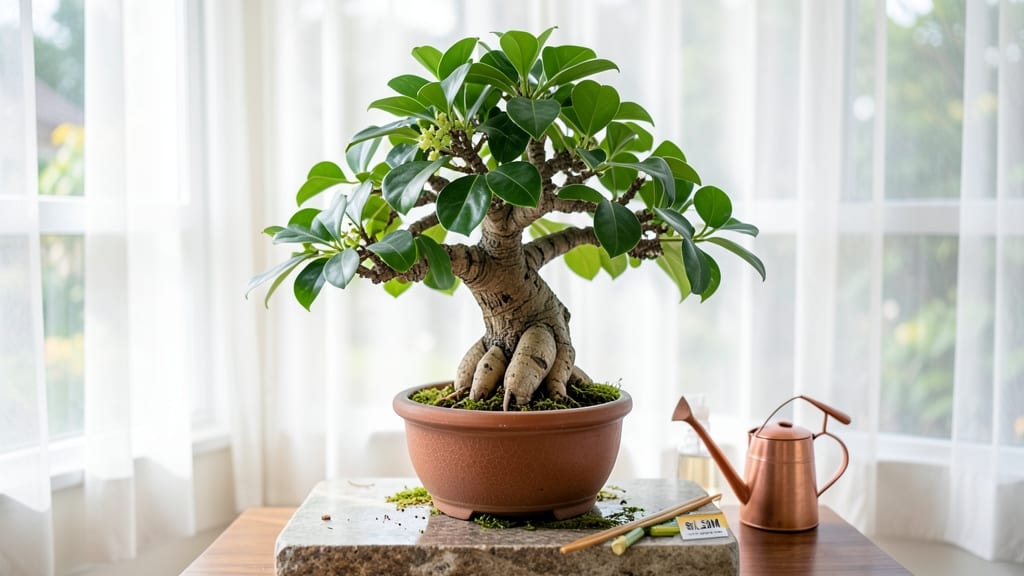
The most expensive bonsai tree ever sold was a 250-year-old Japanese Ficus retusa (Ginseng Ficus) auctioned for $1.2 million in 2014, prized for its rare age, meticulous craftsmanship, and historical lineage from a Japanese temple collection.
The 250-year-old Ginseng Ficus wasn't just old—it was a living work of art, shaped over decades by master bonsai artists. 🌿 Its massive, gnarled trunk and meticulously pruned branches told a story of patience and dedication, qualities that collectors value above all.
What made this bonsai truly extraordinary was its documented history, tracing back to a Japanese temple where it was cultivated as both a spiritual symbol and horticultural masterpiece.
This record-breaking sale proves that bonsai value extends beyond aesthetics—it's about provenance, craftsmanship, and the rare intersection of nature and human artistry. Most bonsai appreciate slowly, but trees with this level of pedigree can become heirlooms worth millions over time.
For serious collectors, understanding these factors is key to spotting future investment pieces.
💡 In This Article
- Why This Ginseng Ficus Bonsai Commanded a Record Price
- How to Identify High-Value Bonsai Trees for Investment
Why this Ginseng Ficus bonsai commanded a record price
The Ficus retusa, also known as the Ginseng Ficus, is one of the most coveted species in bonsai culture because of its natural resilience and striking trunk shape.
Unlike other bonsai varieties that require aggressive pruning to achieve their iconic forms, the Ginseng Ficus develops its legendary thick, gnarled roots and twisted trunk organically over centuries.
This tree's 250-year lifespan meant its trunk had expanded to a staggering 12 inches in diameter—a feat that takes generations to achieve naturally.
The tree's value wasn't just in its age, but in its historical documentation.
Temple records confirmed its origins, tracing its cultivation back to a 17th-century Japanese temple where it was grown as both a spiritual symbol and a horticultural treasure. 🌿 In Japanese culture, bonsai trees with temple lineage are considered living relics, carrying centuries of craftsmanship and cultural significance.
This provenance alone can elevate a bonsai's value by hundreds of thousands of dollars in auctions.
What truly set this bonsai apart was its perfect balance of rarity and beauty. The Ginseng Ficus is notoriously difficult to cultivate—its slow growth rate and sensitivity to environmental changes make it a high-risk, high-reward species.
The auction house's experts noted that the tree's symmetrical root flare and meticulously pruned branches were the result of decades of expert care**, not rushed commercial production. This level of craftsmanship is what transforms a bonsai from a decorative plant into a collector's dream.
Auction dynamics also played a crucial role in the record price. The $1.2 million sale wasn't just about the tree's intrinsic value—it was a competitive bidding war between international collectors and Japanese heritage buyers.
The tree's limited availability (only one of its kind) and unmatched pedigree created a sense of urgency among bidders. 💰 For context, the previous record for a bonsai was $390,000, held by a 100-year-old Japanese black pine—this Ginseng Ficus shattered that by three times the amount.
Scientifically, the tree's longevity can be attributed to the Ficus retusa's natural ability to develop aerial roots and thick bark layers, which protect it from disease and environmental stress. These botanical adaptations make it one of the few species capable of surviving for centuries in bonsai form.
The tree's root system alone weighed over 50 pounds, a testament to its age and the careful cultivation techniques used to maintain its health over generations.
For collectors, this auction serves as a masterclass in what makes a bonsai truly valuable. It's not just about the species—it's about the story, the craftsmanship, and the provenance.
Trees with similar characteristics but no documented history might sell for $50,000-$100,000, proving that the intangible value of heritage often outweighs even the most impressive physical traits.