
Pests and Diseases
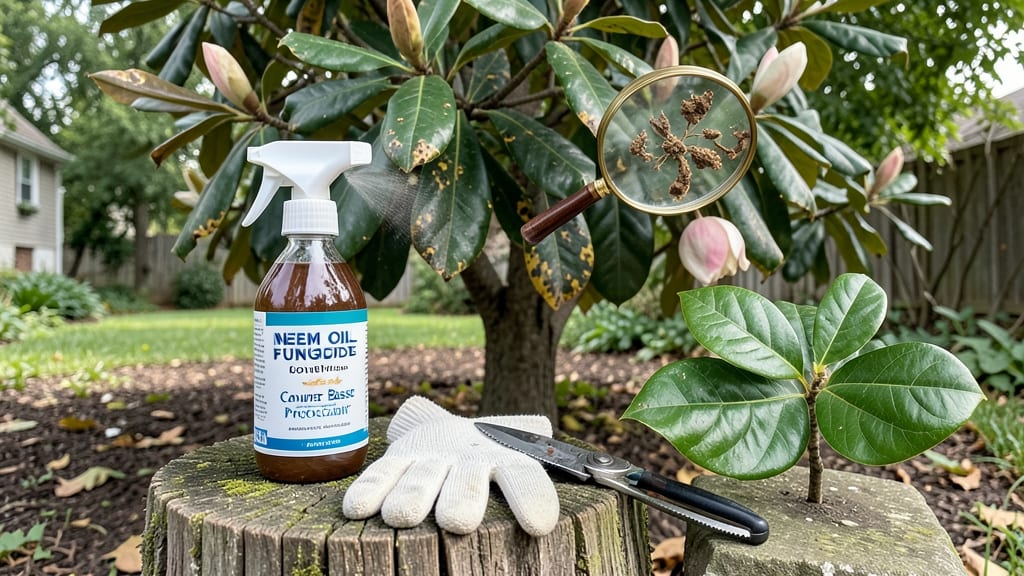
Your magnolia tree’s leaves are turning yellow or spotted, and you’re wondering if it’s just bad luck or a leaf disease. 🌿 The truth is, magnolias are prone to powdery mildew, anthracnose, and other fungal spots—especially when humidity and poor airflow team up against them.
I’ve seen these diseases ruin a tree’s lush foliage in just a few weeks, but the good news? Early action can save your tree’s health and beauty.
Most leaf diseases start with tiny spots that grow into larger patches, often with a white powdery coating (powdery mildew) or dark, sunken areas (anthracnose). The culprits? Fungal spores thriving in wet leaves, crowded branches, or nutrient-poor soil.
My first magnolia nearly lost its leaves to anthracnose—until I pruned for airflow and switched to a balanced fertilizer every spring. The difference was shocking.
You can treat fungal spots with neem oil sprays, copper fungicides, or even a baking soda mix (1 tbsp baking soda + 1 quart water + a drop of dish soap).
For prevention, focus on pruning for airflow, watering at the base (not overhead), and mulching to keep roots healthy. A few simple steps now mean your magnolia stays vibrant and disease-free for years.
Whether you’re dealing with a single branch or the whole tree, the key is acting fast—before the fungus spreads. I’ll walk you through the exact steps to diagnose, treat, and protect your magnolia, so you can enjoy its glossy leaves and fragrant blooms without worry.
Let’s get your tree back to its best.
Root Causes Behind Leaf Troubles
Magnolia trees are stunning additions to any landscape, but their lush foliage can quickly turn unsightly when leaf diseases strike. Understanding the why behind these issues is the first step to saving your tree.
Below, we break down the most common culprits—fungal infections, environmental stressors, and pest-related damage—that trigger leaf diseases in magnolias.
Fungi are the primary cause of magnolia leaf diseases, thriving in warm, humid conditions. These microscopic organisms release spores that land on leaves, creating ideal conditions for infection. Here’s how it happens:
- Overhead Watering 💦: When water droplets linger on leaves (especially in the evening), fungal spores germinate and penetrate leaf tissue. Tip: Water at the base of the tree in the early morning to allow foliage to dry quickly.
- Poor Air Circulation ⬇️: Dense foliage or overcrowded plantings trap moisture, creating a fungal paradise. Tip: Prune to improve airflow and space trees at least 15–20 feet apart.
- Warm, Humid Climates 🌡️: Fungi like Gloeosporium (causing anthracnose) and Phyllosticta (leading to leaf spots) flourish in temperatures between 70–85°F with high humidity. Tip: Mulch properly (2–4 inches) to moderate soil moisture and reduce splashing.
- Weakened Tree Defense 🛡️: Stress from drought, poor soil, or nutrient deficiencies makes magnolias more susceptible. Tip: Test soil pH (ideal: 5.0–6.5) and amend with compost or slow-release fertilizer if needed.
💡 Pro Tip: Fungal spores often hitch a ride on wind, tools, or even birds. Sterilize pruners with 70% isopropyl alcohol between cuts to prevent spreading infections.
Leaf diseases don’t always stem from pathogens—they can also be a symptom of environmental abuse. Magnolias are sensitive to:
| Stressor | How It Harms Leaves | Actionable Fix |
|---|---|---|
| Drought 🏜️ | Leaves scorch, yellow, or drop prematurely as the tree conserves water. | Deep water 1–2 times per week during dry spells; mulch to retain moisture. |
| Excessive Rain 🌧️ | Waterlogged soil suffocates roots, leading to chlorosis (yellowing) and fungal entry points. | Improve drainage with raised beds or sand amendments; avoid compacted soil. |
| Temperature Swings ❄️☀️ | Sudden cold snaps or heatwaves shock the tree, weakening its immune response. | Plant in microclimates protected from wind; avoid late-season fertilizing. |
| Air Pollution 🚬 | Ozone or sulfur dioxide from urban areas cause brown spots and stunted growth. | Use air purifiers near urban plantings; choose pollution-tolerant varieties like Magnolia grandiflora. |
✨ Key Insight: Environmental stress reduces a tree’s ability to fight off fungal invaders. Addressing these factors prevents diseases before they take hold.
While pests rarely cause leaf diseases directly, their feeding can open wounds that fungi exploit. Common culprits include:
- Magnolia Scale 🐛: These sap-sucking insects weaken leaves, creating sticky honeydew that fosters sooty mold—a fungal growth.
- Japanese Beetles 🐞: Their skeletal feeding patterns leave leaves vulnerable to secondary infections like Botrytis.
- Spider Mites 🕷️: Their webs trap moisture, creating ideal conditions for fungal spores to colonize.
🔥 Quick Fix: Treat pest outbreaks immediately with horticultural oil or neem oil (apply in early morning/evening to avoid burning foliage). Monitor for fungal signs post-treatment.
By pinpointing the root cause—whether it’s fungal, environmental, or pest-related—you can tailor treatments to restore your magnolia’s health. Next up: How to diagnose specific symptoms and choose the right remedies.
Fixing Fungal Foes on Magnolia Leaves
Now that you’ve identified the culprit behind your magnolia’s leaf woes, it’s time to take action! Below are practical, step-by-step solutions tailored to the most common fungal diseases affecting magnolia trees—plus prevention tips to keep your tree thriving.
Whether it’s powdery mildew, anthracnose, or leaf spot, these fixes will help restore your tree’s health without breaking the bank.
Cause: Fungal spores thrive in humid, shaded conditions, creating that telltale white powdery coating.
How to Fix It: 🔥 1. Prune for Better Airflow 🌬️
- Remove overlapping branches and dense foliage to improve sunlight penetration and airflow. Aim for an open canopy—this disrupts the fungus’s favorite damp, dark environment.
- Best time to prune: Late winter or early spring (before new growth).
🍳 2. Clean Up Debris 🧹
- Rake and remove fallen leaves (where spores overwinter) from the base of the tree and surrounding soil.
- Dispose of infected leaves in the trash (not compost)—they’re a fungal buffet waiting to happen!
👨🍳 3. Apply Fungicidal Sprays 💦 - Baking soda spray (natural, budget-friendly): Mix 1 tbsp baking soda + 1 tsp dish soap + 1 gallon water in a spray bottle.
Test on a small leaf first, then spray both sides of leaves every 7–10 days until the mildew clears. - Neem oil or sulfur spray (for stubborn cases): Follow label instructions (typically 1–2 tbsp per gallon of water). Spray early in the morning to avoid burning leaves in sunlight.
🌡️ 4. Adjust Watering Habits 💧
- Water deeply but infrequently (1–2 inches per week) to avoid wetting leaves. Use drip irrigation or soaker hoses to keep foliage dry.
- Water at the base, not overhead—this mimics natural rainfall and reduces fungal spores splashing onto leaves.
💡 Prevention Pro Tip: Install reflective mulch (like aluminum foil or white plastic) around the tree’s base to increase sunlight exposure and deter fungal growth. Reapply every few years.
Cause: These diseases cause dark, sunken spots with yellow halos, often triggered by wet foliage and poor tree health.
How to Fix It: 🔪 1. Sterilize Pruning Tools ⚠️
- Clean tools with 70% rubbing alcohol or a 10% bleach solution before and after pruning to prevent spreading spores.
- Dispose of severely infected branches—don’t compost them!
⏰ 2. Timed Fungicide Applications 📅
- Apply a copper-based fungicide (like Copper Soap) or propiconazole (e.g., Banner Maxx) before symptoms appear in early spring and again after rain.
- For organic options, try potassium bicarbonate sprays (follow label rates).
🌿 3. Boost Tree Vitality 💪
- Fertilize in early spring with a balanced, slow-release fertilizer (e.g., 10-10-10) to strengthen the tree’s defenses.
- Avoid over-fertilizing with nitrogen—this encourages soft, susceptible new growth.
🎯 4. Improve Drainage 🌧️
- If your tree sits in a low-lying or poorly draining area, amend the soil with compost or sand to improve water flow.
- Raise the soil level slightly around the base (but not against the trunk) to prevent water pooling.
✨ Prevention Pro Tip: Plant resistant magnolia varieties like Magnolia grandiflora ‘Little Gem’ or Magnolia stellata if your area is prone to anthracnose. Always space trees properly (15–25 feet apart) for airflow.
Regardless of the disease, these universal fixes will help your magnolia bounce back:
| Step | Action | Frequency |
|---|---|---|
| Prune strategically | Remove dead/diseased branches; thin canopy for airflow. | Late winter or early spring |
| Mulch correctly | Use 2–3 inches of organic mulch (wood chips), keeping it 6 inches from the trunk. | Once a year |
| Monitor moisture | Avoid overhead watering; use drip systems or water at the base. | As needed |
| Inspect regularly | Check leaves weekly for early signs of disease (especially after rain). | Every 7–14 days |
If your magnolia shows:
- Widespread defoliation (more than 50% of leaves affected).
- Oozing cankers or dieback (branches dying from the top down).
- No improvement after 4–6 weeks of treatment.
A certified arborist can diagnose the issue and recommend systemic fungicides or cultural changes tailored to your tree’s needs.
Remember: Patience is key! Fungal diseases often take weeks to months to fully resolve. Stay consistent with your treatment plan, and your magnolia will reward you with lush, healthy foliage for years to come. 🌿✨
Frequently asked questions
What’s the difference between powdery mildew and anthracnose on magnolia leaves?
Powdery mildew appears as a white, powdery coating on leaf surfaces, while anthracnose shows as dark, sunken spots with yellow halos. The mildew thrives in humid shade, while anthracnose spreads in wet conditions and weakens the tree over time. Both need airflow fixes, but anthracnose often requires stronger fungicides.
Can I save my magnolia if half its leaves are already infected?
Yes, but act fast! Prune infected branches immediately, apply a copper fungicide, and improve airflow. For severe cases, consult an arborist—some diseases like anthracnose can spread systemically if ignored. With proper care, your tree can recover within 6-8 weeks.
Is baking soda really effective for treating fungal spots?
A baking soda spray (1 tbsp baking soda + 1 tsp dish soap per gallon of water) works well for powdery mildew and light leaf spots. Spray both sides of leaves every 7-10 days until symptoms clear. It’s non-toxic and budget-friendly, but may need 2-3 applications for stubborn cases.
Why does my magnolia get diseases every year, even after treatment?
Recurring issues often mean underlying conditions like poor airflow, compacted soil, or overwatering persist. Check for crowded branches, poor drainage, or nutrient deficiencies. Fungal spores overwinter in fallen leaves—always clean up debris in late fall to break the cycle.
Are there magnolia varieties less prone to leaf diseases?
Yes! Magnolia grandiflora ‘Little Gem’ and Magnolia stellata are more resistant to anthracnose. For humid climates, consider Magnolia virginiana (sweetbay magnolia), which tolerates wetter conditions better. Always plant in well-draining soil and space trees properly for airflow.