
Pests and Diseases
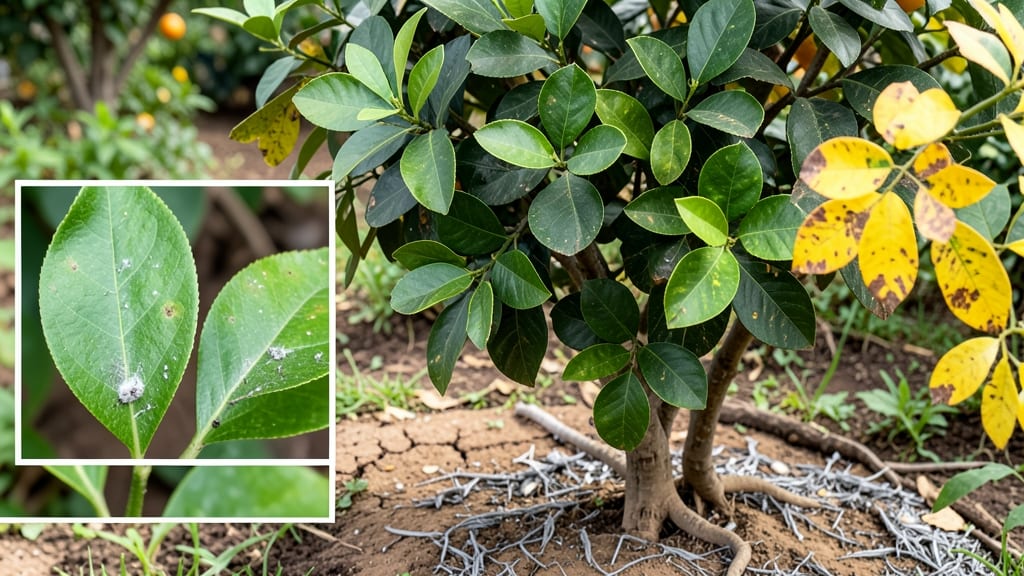
Your orange tree’s yellow leaves scream for attention—why is my orange tree’s leaves turning yellow? Here’s why. 🌱 Overwatering or nutrient deficiency are the top culprits, but pests and disease can sneak in too. The good news?
Most fixes take just a few minutes and can save your tree before it’s too late. Start by checking the soil: if it’s soggy, you’re overwatering. If dry and crumbly, it’s likely thirsty. Nutrient issues show up as yellowing between veins, while pests leave behind tiny webs or holes.
A quick soil test or leaf inspection will point you in the right direction—no guesswork needed. Once you pinpoint the problem, the fixes are simple: adjust watering, feed with citrus-specific fertilizer, or treat pests with neem oil.
I’ve revived multiple trees this way, and you can too—just act fast before the yellow spreads to the whole canopy. Prevention is easier than fixing: water deeply but infrequently, mulch to retain moisture, and fertilize every 3 months.
If the tree keeps struggling after 2 weeks, call in a local arborist—they’ll spot hidden issues like root rot or fungal infections before they worsen.
Root Causes Of Yellowing Leaves
When your citrus tree’s leaves start turning yellow, it’s often a cry for help from the roots—or the soil itself. Understanding the underlying triggers is key to saving your tree before the damage spreads.
Below, we break down the most common culprits, backed by science, so you can diagnose the issue like a pro. 🌱🔍
Citrus trees, like oranges, thrive in well-draining soil but are notoriously sensitive to excess moisture. When roots sit in soggy conditions for too long, they suffocate from a lack of oxygen—a condition called anaerobic stress. This triggers:
- Chlorosis (yellowing): The tree’s roots can’t absorb nutrients efficiently, leading to a breakdown of chlorophyll.
- Root rot: Fungal pathogens like Phytophthora or Pythium exploit waterlogged roots, cutting off nutrient flow.
- Nutrient leaching: Excess water washes away essential minerals (like nitrogen, iron, and magnesium) faster than the tree can replenish them.
💡 Pro Tip: Stick your finger 2–3 inches into the soil—if it’s damp, wait to water. If it’s bone-dry, you’ve likely been underwatering (another common issue!). Mulch with organic matter (like wood chips) to improve drainage and retain moisture without waterlogging.
Yellowing leaves often signal a mineral imbalance, where the tree can’t produce enough chlorophyll due to a lack of key nutrients. Here’s how to spot the difference:
| Nutrient Deficiency | Leaf Symptoms | Other Clues | Quick Fix |
|---|---|---|---|
| Nitrogen (N) | Yellowing starts on older leaves (bottom to top), with green veins. | Stunted growth, weak branches. | Apply balanced citrus fertilizer (e.g., 6-6-6) in spring. |
| Iron (Fe) | Yellowing between veins (interveinal chlorosis), often on new growth. | Common in alkaline soil (pH > 7.0). | Use chelated iron or acidify soil with sulfur. |
| Magnesium (Mg) | Yellowing starts between veins on older leaves, with brown patches. | Veins stay green until late stages. | Apply Epsom salt (1 tbsp/gallon of water) every 2 weeks. |
| Zinc (Zn) | Yellowing on young leaves, with small, curled leaves. | Poor fruit set, stunted shoots. | Use zinc sulfate (1 tsp/gallon) as a foliar spray. |
🌡️ Key Test: If leaves yellow evenly across the tree (not just new or old), test your soil’s pH. Citrus prefers 6.0–7.0—adjust with lime (to raise pH) or sulfur (to lower it).
Pathogens like citrus greening (HLB), anthracnose, or root rot can cause yellowing by disrupting the tree’s vascular system. Look for these red flags:
- Uneven yellowing: Spots or patches that spread asymmetrically.
- Black veins or streaks: Sign of Phytophthora or bacterial infections.
- Wilting or dieback: Leaves yellow and crisp, even with water.
- Sticky residue: Sap or mold on leaves (indicates pests/fungi).
🔥 Action Steps:
- Prune infected branches 6+ inches below the damage (sterilize tools with rubbing alcohol).
- Apply copper fungicide (for anthracnose) or neem oil (for greening).
- Improve airflow by thinning dense foliage.
Insects like aphids, scale, or spider mites drain nutrients from leaves, causing yellowing. Their damage is often localized and accompanied by:
- Sticky honeydew (aphids/scale).
- Fine webbing (spider mites).
- Black sooty mold (fungus growing on honeydew).
🎯 Treatment Plan:
- Spray with neem oil or insecticidal soap (repeat every 5–7 days).
- Introduce beneficial predators (ladybugs, lacewings).
- Hose off pests with strong water pressure (early morning).
Most yellowing issues start below ground or on a microscopic scale. The good news? Once you identify the root cause (literally or figuratively), fixes are often simple—whether it’s adjusting water, feeding the soil, or a targeted spray. 🚀 Next up: How to Reverse the Damage.
How to Fix Your Orange Tree
Now that you’ve pinpointed the root cause of your orange tree’s yellowing leaves—whether it’s overwatering, nutrient deficiency, or another issue—it’s time to take action! Below are practical, step-by-step solutions tailored to each common culprit, along with prevention tips to keep your tree thriving.
If your tree is drowning in excess moisture, act fast to save its roots.
🔥 Step 1: Stop Watering Immediately
- Pause all irrigation for at least 5–7 days to allow the soil to dry out.
- Check soil moisture by sticking your finger 2–3 inches deep—if it’s damp, wait longer.
🍳 Step 2: Improve Drainage
- Aerate the soil with a garden fork to break up compacted areas.
- Add organic matter: Mix in compost or aged manure (10–15%) to improve drainage.
- Raise the tree’s base: If in a pot, ensure it has drainage holes and elevate it on a saucer or gravel bed.
👨🍳 Step 3: Adjust Your Watering Routine
- Water deeply but infrequently: Soak the root zone (12–18 inches deep) every 7–10 days (adjust for climate).
- Water in the morning to reduce evaporation and fungal risks.
- Avoid wetting leaves to prevent disease.
🌡️ Prevention Tips
✔ Use a moisture meter to track soil conditions. ✔ Mulch around the base (2–3 inches of wood chips) to regulate moisture. ✔ Choose well-draining soil (sandy loam is ideal for citrus).
Yellowing leaves often signal a lack of key nutrients. Here’s how to replenish them:
📊 Step 1: Test Your Soil
- DIY test: Use a citrus-specific soil test kit (available at garden centers).
- Professional test: Send a sample to a local extension office for a full analysis (costs ~$20–$50).
💪 Step 2: Apply the Right Fertilizer
| Deficiency | Symptoms | Solution |
|---|---|---|
| Nitrogen (N) | Yellow leaves, stunted growth | Balanced citrus fertilizer (e.g., 6-6-6 or 8-3-9) every 4–6 weeks in growing season. |
| Iron (Fe) | Yellow between veins (chlorosis) | Chelated iron supplement (follow label rates) or Epsom salt (1 tbsp/gallon of water, spray leaves). |
| Magnesium (Mg) | Yellow patches, crispy edges | Epsom salt soak (1 oz/gallon of water, apply to soil monthly). |
| Zinc (Zn) | Small leaves, stunted new growth | Zinc sulfate (1 tsp/gallon of water, foliar spray or soil drench). |
🥗 Step 3: Boost Soil Health
- Add compost tea (brewed from aged compost) monthly for a nutrient boost.
- Use worm castings (1 cup per tree) to improve microbial activity.
- Avoid synthetic fertilizers if overused—they can burn roots.
✨ Prevention Tips
✔ Fertilize in stages: Split applications into 3–4 doses per season to avoid shock. ✔ Monitor pH: Citrus thrives in slightly acidic soil (pH 6.0–7.0).
Adjust with lime (to raise pH) or sulfur (to lower pH) if needed. ✔ Mulch with citrus-friendly amendments like pine needles or oak leaves.
If pests or pathogens are to blame, act swiftly to prevent spread.
🔪 Step 1: Identify the Invader
- Scale insects: Sticky residue (honeydew), white/brown bumps.
- Spider mites: Fine webbing, speckled leaves.
- Fungal issues: Black spots, powdery mildew, or leaf drop.
🛡️ Step 2: Treat Accordingly
| Problem | Solution |
|---|---|
| Scale | Neem oil spray (2 tbsp/gallon of water) or horticultural oil (apply when leaves are dry). |
| Spider mites | Blast off with water (forceful spray), then insecticidal soap (repeat weekly). |
| Fungal disease | Copper fungicide (follow label) or baking soda spray (1 tsp baking soda + 1 quart water + few drops of soap). |
🎯 Prevention Tips
✔ Inspect leaves weekly—catch infestations early! ✔ Encourage beneficial insects (ladybugs, lacewings) with native plants. ✔ Prune infected branches immediately and sterilize tools with rubbing alcohol.
Regardless of the cause, these universal tips will help your orange tree bounce back:
- Prune properly: Remove yellowed or diseased leaves to redirect energy.
- Sunlight: Ensure 6–8 hours of full sun daily (citrus is sun-hungry!).
- Winter protection: If in a cold climate, cover young trees or move potted ones indoors.
Pro Tip: 💡 Yellow leaves can also signal root rot—if the trunk is soft or mushy, your tree may need re-potting with fresh, sterile soil or even root pruning to remove diseased sections.
By addressing the issue now, you’ll help your orange tree recover—and prevent future yellowing! 🍊🌿
Frequently asked questions
Why do only the older leaves turn yellow first?
This is usually a sign of nitrogen deficiency or magnesium deficiency. Citrus trees move nutrients from older leaves to new growth when they're lacking key minerals. If you notice yellowing starting at the bottom of the tree with green veins, it's often nitrogen. For magnesium issues, you'll see yellow patches between veins on older leaves first.
Can I save my orange tree if the yellowing has spread to most leaves?
It depends on the cause! If it's overwatering, act immediately by stopping water and improving drainage. For nutrient deficiencies, apply targeted fertilizers and monitor progress. If the yellowing is uneven with black spots or wilting, you may have a fungal disease or root rot—prune affected areas and treat with copper fungicide. In severe cases, consult an arborist.
How often should I fertilize my orange tree to prevent yellow leaves?
For healthy citrus trees, apply a balanced citrus fertilizer (like 6-6-6) every 4-6 weeks during the growing season (spring through fall). Use half the recommended dose if your tree is in a pot. Avoid fertilizing in winter when the tree is dormant. Always water thoroughly after applying fertilizer to prevent root burn.
What's the difference between yellow leaves from overwatering vs. underwatering?
Overwatered trees show yellowing with soggy soil, often accompanied by mushy roots or a foul smell. Underwatered trees have dry, crispy leaf edges and soil that pulls away from the pot. Check by sticking your finger 2-3 inches into the soil—if it's damp, you're overwatering; if bone dry, you're underwatering.
Will Epsom salt help if my orange tree leaves are yellow?
Yes, if the yellowing is caused by a magnesium deficiency. Mix 1 tablespoon of Epsom salt per gallon of water and apply it to the soil monthly. For iron deficiencies (yellowing between veins), use chelated iron instead. Always test your soil first to confirm the deficiency before treating.