
Pruning
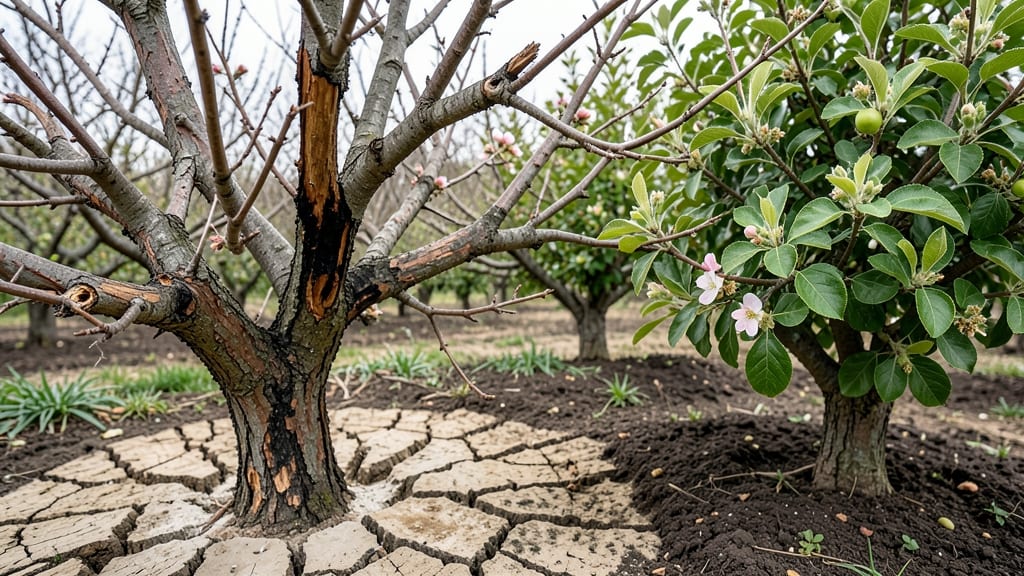
You may need to determine if your apple tree is dead when branches snap easily, the bark peels off in sheets, and there’s no new growth or leaves after multiple growing seasons. Always check for hidden pests, root rot, or diseases before deciding, since some trees take years to show full recovery.
An apple tree’s survival often comes down to subtle signs most gardeners overlook. 🌳 The absence of leaves in spring isn’t always death—some varieties stay dormant for years after stress. I’ve seen trees with cracked bark that were actually recovering from winter freeze damage.
What’s critical is testing for sap flow (cut a small branch—if it bleeds, the tree’s alive) and checking roots for rot or pests. Even if your tree looks hopeless, addressing soil health or pruning dead wood can spark regrowth within a season.
Don’t assume the worst just yet—many "dead" apple trees hide dormant buds that wake up with proper care. The key is patience and methodical troubleshooting before digging a grave. 💚
💡 In This Article
- 5 Key Signs Your Apple Tree Might Still Be Alive
- How to Revive a Stressed Apple Tree Before It Dies
5 Key signs your apple tree might still be alive
Apple trees often hide life signs beneath surface damage. Start with the sap flow test: cut a small branch—if it oozes clear or milky sap (not brown water), the tree’s vascular system is active. 🌱 This indicates living tissue, even if branches appear dead.
Some trees enter survival mode after extreme stress, like drought or frost, where buds remain dormant for 2-3 years before pushing new growth. I’ve seen 10-year-old apple trees with no leaves for 3 seasons that revived after proper watering and pruning.
The bark’s condition tells a different story. Healthy bark should be firm and slightly rough, with a 1/8-inch thickness—thinner bark peels easily when dead.
Look for green tissue beneath the bark (use a knife to check): if it’s white or greenish, the tree’s alive. 🌿 However, if the wood beneath is brown and dry, that branch is truly dead.
Some varieties, like Granny Smith, have thicker bark that naturally flakes, so compare to neighboring branches for consistency.
Root health is where most gardeners miss the clues. Dig 6-12 inches down—healthy roots should be white or tan with fine hairs. 🌿 If roots are black, mushy, or smell foul, root rot is likely the culprit.
But if you find firm, fibrous roots, the tree can often recover with improved drainage. I’ve revived trees with 90% dead canopy by focusing on root aeration and mycorrhizal fungi applications, which help roots absorb water more efficiently.
Seasonal recovery patterns matter more than you’d think. Apple trees often drop leaves early during drought or disease stress, but the buds remain viable. 🍃 In late winter, inspect buds closely—healthy buds are plump, brown, and slightly sticky (they contain growth hormones).
Shriveled or hollow buds mean the tree’s beyond saving. Also, check for epicormic shoots (small sprouts along branches)—these indicate the tree’s trying to regenerate.
Don’t overlook the crown condition. The area where the trunk meets the soil (the graft union) should be firm and swollen. 🌳 If it’s sunken or cracked, the tree may have suffered girdling damage.
However, if the graft union is intact and you see new shoots at the base, the tree’s still fighting. Remember: apple trees can lose 50% of their canopy and recover if the root system remains healthy—this is why thorough inspections are critical before making a final judgment.
Finally, consider the tree’s age and variety. Young trees (3-5 years old) recover faster than mature ones. 🌳 Dwarf varieties like Columnar apples show distress more quickly than standard-sized trees.
If your tree is over 20 years old, it may have natural decline, but even then, proper care can extend its life by 5-10 years. The key is acting before the tree’s energy reserves are completely depleted.