
Pruning
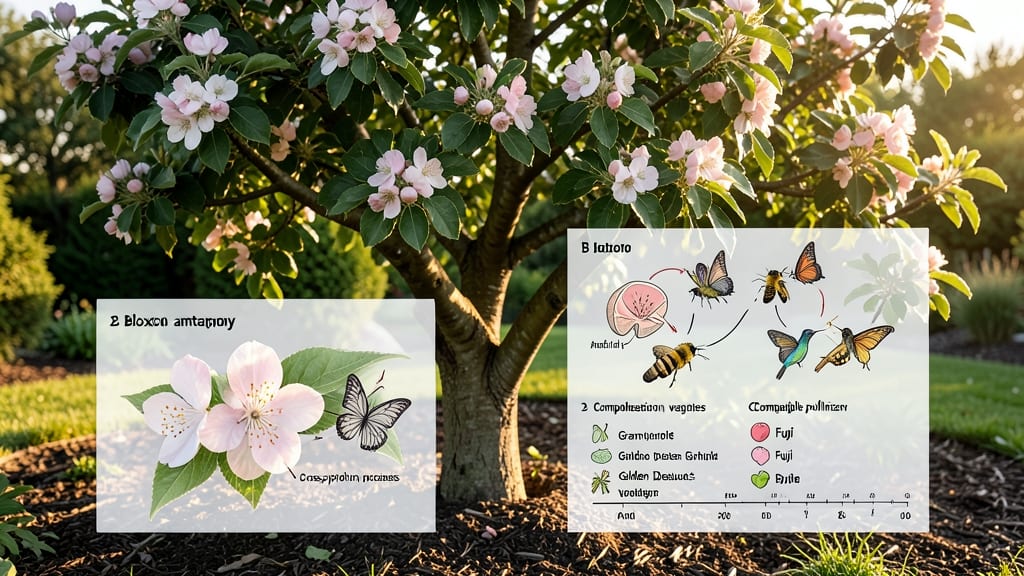
A granny smith apple tree pollination chart shows you need compatible varieties like Gala, Fuji, or Honeycrisp planted within 50 feet for successful fruit production. Late winter pruning improves airflow and bloom exposure, directly impacting pollination efficiency.
Understanding your Granny Smith apple tree pollination chart starts with recognizing that these trees are self-unfruitful, meaning they need another apple variety nearby to produce fruit. 🌸 The key is planting a compatible pollinator—like Gala or Fuji—that blooms at the same time.
This synchronization allows bees to transfer pollen effectively, leading to those juicy apples you love. I’ve found that spacing trees properly (within 50 feet) maximizes pollination success, while strategic pruning in late winter removes dead wood and opens the canopy for better bee access.
What many gardeners miss is how pruning timing affects pollination. Cutting back in late winter (before buds swell) prevents removing next year’s flower clusters, while also improving airflow—critical for both tree health and pollinator access.
A well-pruned Granny Smith tree not only produces more fruit but also develops stronger branches over time.
💡 In This Article
- Best Pollinating Apple Varieties for Granny Smith Trees
- Step-by-Step Pruning Schedule for Granny Smith Pollination Success
Best pollinating apple varieties for Granny Smith trees
Granny Smith apple trees are self-unfruitful, meaning their flowers produce little to no viable pollen for fruit development. This is why planting compatible varieties within 50 feet is essential—it creates a pollination network that mimics natural orchards.
The best partners like Gala, Fuji, or Honeycrisp share similar bloom times (typically late April to early May in most climates), allowing bees to efficiently transfer pollen between trees. 🌸
What makes these varieties ideal is their overlapping bloom windows. For example, Gala blooms about 3-5 days earlier than Granny Smith, while Honeycrisp aligns almost perfectly. This staggered timing ensures continuous pollen availability during the critical 7-10 day bloom period when bees are most active.
The pollen from these varieties contains the right genetic markers to trigger fruit set in Granny Smith flowers, resulting in those signature tart-sweet apples.
You might wonder why not just plant two Granny Smith trees? The answer lies in genetics—even different Granny Smith clones (like 'Granny Smith' vs. 'Granny Smith Improved') often produce incompatible pollen.
This is why commercial orchards plant 3-5 different varieties to guarantee pollination. The diversity creates redundancy in case of weather disruptions, like rain washing away pollen or cold snaps delaying blooms.
Consider these key factors when selecting pollinators:
- Bloom Time: Choose varieties with ±3-5 days overlap with Granny Smith
- Climate Match: Select cold-hardy types if you're in Zone 5 or below (e.g., McIntosh or Cortland)
- Fruit Characteristics: Pair with varieties that complement Granny Smith's tartness (e.g., Fuji's sweetness creates a natural balance in mixed orchards)
The physical structure of these trees also matters. Dwarf varieties like Fuji (which grows 8-12 feet tall) can be planted closer to Granny Smith's standard height (15-20 feet), while semi-dwarf Honeycrisp (which reaches 12-16 feet) provides mid-canopy pollination.
This vertical diversity ensures bees have access to flowers at multiple heights during their foraging flights.
One advanced tip: If you're in a high-pollination zone (like California's Central Valley), you can sometimes get away with planting just one pollinator variety.
However, in cooler climates (like the Pacific Northwest), planting two varieties (e.g., Gala + Fuji) creates a safety net against unpredictable weather patterns that might affect one variety's bloom timing. 💫