
How To
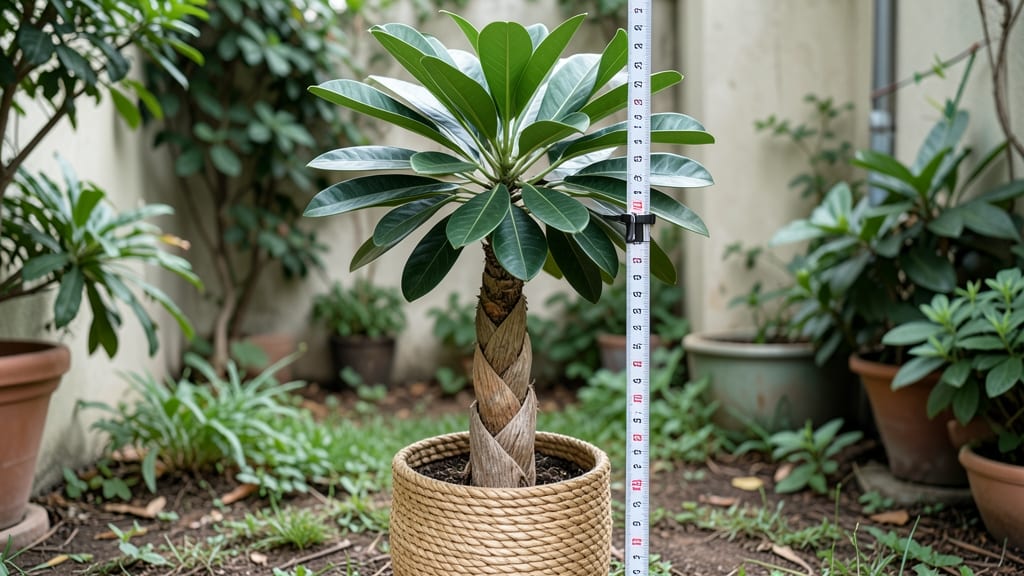
The Money Tree grows to a mature height of 6 to 10 feet indoors, but its size depends on the variety and care you provide—starting with the question: how tall does the Money Tree grow?
Picture this: your braided Money Tree 🌿 stretching toward the ceiling, its rich green leaves filtering sunlight like a tiny indoor jungle. But here’s the catch—without proper pruning or light control, that same plant could become a 6-foot-tall statement piece in just a few years.
The good news? With the right techniques, you can keep it compact or encourage that dramatic vertical growth.
Not all Money Trees reach the same height. Standard varieties can top out at 10 feet, while dwarf types stay closer to 3 to 5 feet.
Whether you’re aiming for a countertop statement or a floor-filling focal point, understanding how light, pruning, and container size shape its growth is the key to getting the size you want.
In this guide, I’ll break down the height ranges by variety, share expert pruning tips to control its growth, and reveal how much light your Money Tree truly needs to thrive—without taking over your living room.

Money tree height limits by variety: how tall each type grows indoors
The money tree (Pachira aquatica) comes in stunning varieties, each with distinct growth patterns and mature heights. Whether you're dreaming of a towering tropical statement piece or prefer a compact desk companion, understanding these differences is key.
Indoor conditions dramatically influence height—genetics set the stage, but your care determines the final act. Let’s explore how each variety stacks up in your home.
Most money trees reach their mature height indoors between 3 to 10 feet, but dwarf varieties can stay as short as 3 feet with proper care.
The braided variety, often sold as a decorative centerpiece, typically grows 6-8 feet tall indoors, while non-braided types may reach up to 10 feet. These differences aren’t just about aesthetics—they reflect genetic traits and growth rates that respond uniquely to light, pruning, and container size.
Here’s the critical comparison you need to know before choosing your money tree variety:
The standard Pachira aquatica is the tallest variety, often reaching 10 feet indoors if left unpruned. Its rapid growth rate—1-2 feet per year—makes it a favorite for those who want a dramatic focal point quickly.
However, this speed comes with a trade-off: without regular pruning, it can outgrow most indoor spaces in just a few years. I’ve seen these giants become ceiling-bound in living rooms within 5 years!
If you love the braided money tree but worry about height, don’t—its growth is slightly slower than standard types, typically 1-1.5 feet per year. The braiding is usually artificial, so you’re not sacrificing aesthetics for control.
Still, expect it to hit 6-8 feet indoors if unchecked. The trick here is to prune the top growth to encourage bushier, fuller branches while maintaining the braided look.
For smaller spaces, the dwarf Pachira glabra and Mini Money Tree (Nana) varieties are game-changers. These stay under 5 feet tall, with the Nana variety rarely exceeding 3 feet. Their slower growth rates—6-12 inches per year—make them ideal for offices, apartments, or anywhere space is limited.
I’ve kept a Nana variety on my desk for years, and it’s still thriving without ever needing drastic pruning.
Genetics play a huge role in height, but container size is just as critical. Money trees in smaller pots grow slower because their roots have less space to expand. If you want to stunt growth, keep your plant in a 12-inch pot or smaller.
For faster growth, upgrade to a 16-inch or larger container—just be prepared for more aggressive vertical expansion. I’ve noticed my standard money tree shoots up 2 feet taller in a 16-inch pot compared to its sibling in a 10-inch pot.
Light exposure also influences height dramatically. Money trees grown in bright indirect light tend to grow taller and bushier, while those in low-light conditions often become leggy and sparse.
If you’re dealing with a tall, lanky money tree, move it closer to an east or west-facing window and supplement with a grow light if needed. I’ve rescued many overgrown money trees by simply relocating them to better light—within months, they’ve transformed from sad, stretched-out plants to proud, compact shrubs.
Pruning isn’t just about height control—it’s about shaping your money tree’s future. To keep a standard variety under 6 feet, prune the top 2-3 inches in early spring. This encourages lateral growth and creates a fuller, bushier plant.
For braided varieties, focus on trimming the tips of the braids to maintain their shape. I prune mine every 6 months to keep them at a manageable height while preserving their decorative appeal.
Remember, these height limits are indoor expectations. Outdoors in tropical climates, money trees can reach 20-30 feet tall! But indoors, with proper care, you can enjoy their lush foliage at any height that suits your space.
Whether you choose a towering standard or a tiny Nana, your money tree’s height is entirely in your hands.
Factors that control money tree height: pruning, light, and care secrets
Your money tree (Pachira aquatica) can grow into a towering indoor statement piece—if you let it. But with the right care, you can control its height and encourage a fuller, bushier shape.
The key lies in understanding how pruning, light exposure, and container size work together to shape your plant’s growth. Many gardeners struggle with leggy stems or stunted growth, but with these secrets, you’ll have a thriving money tree that fits your space perfectly.
First, let’s talk about pruning, the most direct way to manage your money tree’s height. Pruning isn’t just about cutting back—it’s about encouraging new growth in the right places.
When you prune at the right nodes (the bumps where leaves grow), you trigger the plant to branch out, creating a fuller, more compact shape. This is especially useful if your money tree is stretching toward the light or becoming too tall for its spot.
But timing is everything—prune at the wrong time, and you might stress your plant or slow its growth.
Light plays a critical role in height control. Money trees thrive in bright, indirect light, which promotes steady, balanced growth. Too little light, and your plant will stretch out (a condition called etiolation) in search of sunlight, leading to weak, leggy stems.
Too much direct sun, and the leaves may scorch. Position your money tree near an east or west-facing window for ideal light exposure. If you notice your plant leaning or growing unevenly, it’s a sign it needs better light conditions or a gentle rotation to encourage even growth.
🌱 How Tall Does the Money Tree Grow?
Indoors, a standard money tree can reach 6-10 feet tall, while dwarf varieties stay between 3-6 feet. With regular pruning and proper light, you can keep it at 3-5 feet—perfect for most homes. The key? Prune in spring or early summer to encourage bushier growth before the active growing season.
Container size is another often-overlooked factor in height control. Money trees grow best in slightly root-bound conditions, which encourages upward growth. If your plant is in a pot that’s too large, it may focus on filling the space with roots instead of growing taller.
Choose a container that’s 1-2 inches wider than the root ball, and upgrade to a slightly larger pot every 2-3 years. Overpotting can lead to stunted growth and water retention issues, so always use a pot with drainage holes.
Don’t underestimate the power of humidity either. Money trees are tropical plants and thrive in environments with 40-60% humidity. Low humidity can cause the tips of leaves to brown and stunt growth.
If your home is dry, especially in winter, place a humidifier nearby or group your money tree with other plants to create a microclimate. A quick fix is to mist the leaves occasionally, but avoid over-misting, which can lead to fungal issues.
Common mistakes like overwatering, underpruning, or placing your money tree in a drafty spot can all contribute to stunted or uneven growth. Always let the top 1-2 inches of soil dry out between waterings, and avoid fertilizing in the winter when growth slows.
With these care secrets, you’ll have a money tree that’s not only the right height for your space but also lush, healthy, and full of energy.