
How To
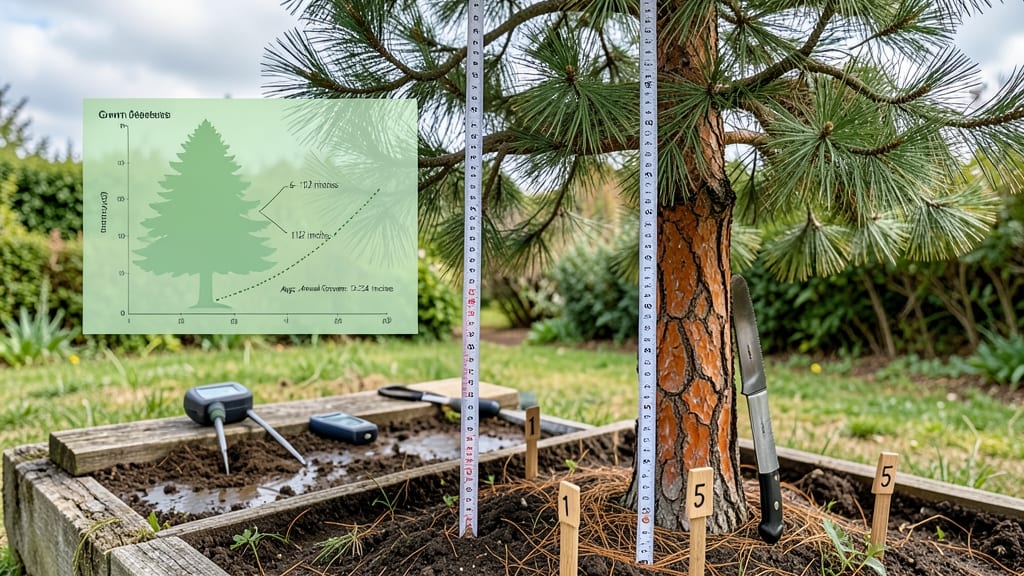
A pine tree’s annual growth rate depends on the species, soil, and climate—but knowing how tall it grows per year helps you plan for a backyard forest or a towering shade provider.
If you’ve ever wondered how quickly your pine tree will tower over your backyard—or whether that scraggly sapling will ever become a majestic giant—you’re in the right place.
Some varieties like the Ponderosa Pine shoot up 2–3 feet per year, while others, like the Bristlecone Pine, creep along at under an inch annually.
In this guide, I’ll break down species-specific growth rates, the fastest-growing options, and the care tricks to maximize height—so you can turn that tiny sapling into a 100-foot sentinel.

Pine tree annual growth rates by species: fastest vs slowest growers
Pine trees are iconic backyard giants, but their growth rates can surprise even seasoned gardeners. Some species shoot up like weeds, while others grow at a glacial pace. Understanding these differences helps you choose the right pine for your space and manage expectations.
Whether you're planting a fast-growing shade provider or a slow-growing specimen tree, knowing the growth rate is key to long-term success.
Growth rates depend on more than just species—climate, soil quality, and sunlight exposure all play critical roles. Coastal pines often grow faster due to milder winters, while mountain pines may struggle in hot, dry conditions.
Even the best-growing pines can stall if they lack nutrients or face pests. Let’s break down the fastest and slowest growers so you can plan your landscape with confidence.
🌲
How to maximize pine tree growth: soil, water, and sunlight tips
Pine trees thrive when given the right conditions, but many gardeners unknowingly stunt their growth with poor soil choices or inconsistent watering. The key to rapid, healthy growth lies in mimicking their natural acidic forest habitats—think well-draining, slightly acidic soil and deep but infrequent watering.
Even the fastest-growing species like Ponderosa Pine (2–3 ft/year) need these basics to reach their potential, while slower growers like White Pine (1–2 ft/year) benefit even more from optimal care.
Most pine trees crave full sun exposure (6+ hours daily), but their roots are shallow and sensitive to soggy conditions. A common mistake is overwatering young saplings, which can suffocate roots and invite fungal diseases.
Instead, focus on deep, infrequent watering—think 10–15 gallons every 7–10 days—and pair it with a 3-inch mulch layer to retain moisture while protecting roots from temperature swings.
- 1 Soil pH 4.5–6.0: Test your soil—pine trees hate alkaline conditions. Amend with peat moss or sulfur if your pH is above 6.0. Acid-loving species like Lodgepole Pine grow 30% faster in ideal soil.
- 2 Deep watering (not daily): Water slowly and deeply to encourage deep root growth. Avoid wetting needles—water at the base of the trunk instead. Drip irrigation is ideal for young trees.
- 3 Full sun (6+ hours): Ponderosa and Jack Pines grow 2x faster in full sun vs. partial shade. If your tree is in shade, supplement with a grow light for 4–6 hours daily during winter.
- 4 Prune in late winter: Remove dead or crossing branches to improve airflow. Avoid heavy pruning—it stresses the tree and slows growth. Use sterilized shears to prevent disease.
- 5 Fertilize lightly in spring: Use a balanced 10-10-10 fertilizer (1 cup per 10 sq ft) in March–April. Over-fertilizing burns roots—stick to one application per year for most species.
Pruning is often overlooked, but it’s crucial for healthy growth patterns. Focus on removing dead, diseased, or crowded branches in late winter or early spring, just before new growth begins.
Never prune more than 25% of the canopy at once—this can shock the tree and reduce its ability to photosynthesize. For young saplings, a light trim to encourage a strong central leader (main upright stem) will pay off in faster, straighter growth.
If your pine tree isn’t growing as expected, check for nutrient deficiencies. Yellowing needles often signal nitrogen deficiency, while stunted growth may point to phosphorus or potassium shortages. A simple soil test can reveal imbalances—amend with organic compost or slow-release granules as needed.
Remember, patience is key: even fast growers like Scotch Pine (1.5–2 ft/year) take decades to reach maturity.
For container-grown pines, repot every 2–3 years to refresh soil and accommodate root growth. Use a fast-draining mix (50% pine bark, 30% perlite, 20% peat moss) and ensure the pot has drainage holes.
Container pines grow slower than in-ground trees, but with consistent sunlight and proper watering, you can still see 1–1.5 ft of growth per year in ideal conditions.
With the right care, your pine tree can become a backyard centerpiece in no time. Start with acidic soil, deep watering, and full sun, then monitor its progress.
In just a few years, you’ll be rewarded with taller, healthier growth and a tree that’s truly the talk of the neighborhood. Happy growing! 🌲