
How To
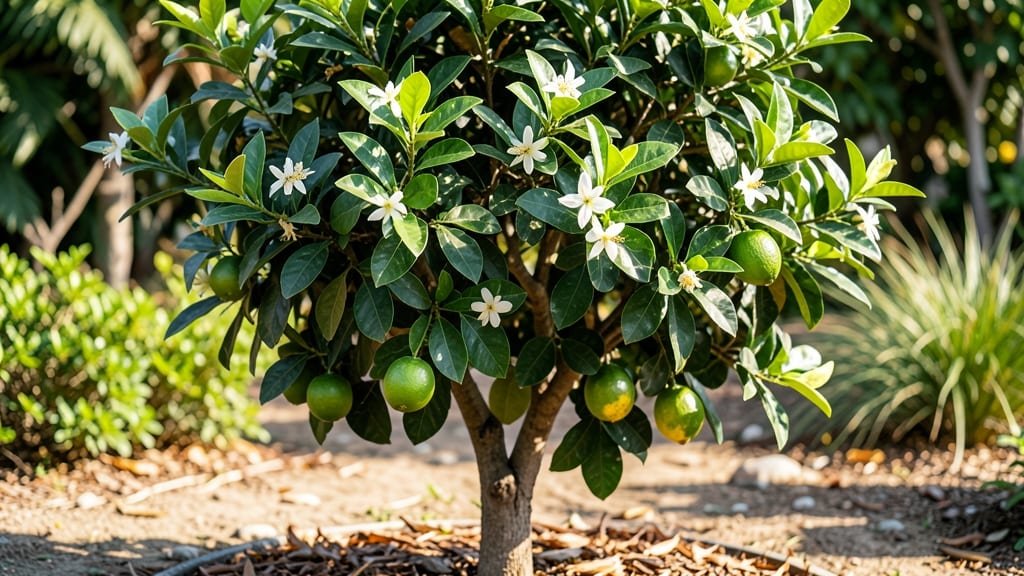
A key lime tree grows anywhere from 6 to 20 feet tall at maturity, depending on care and variety—but most gardeners end up with a much smaller, manageable size if they prune regularly.
Picture this: a sun-drenched patio with a 6-foot key lime tree 🍋 producing fruit year-round, just steps from your kitchen. That’s not a fantasy—it’s what happens when you choose the right variety and give it the right conditions.
But skip the pruning, and you might end up with a 15-foot tower that overshadows your deck.
The secret to keeping your key lime tree compact lies in sunlight, soil, and a little strategic trimming. In General (Tropical/Subtropical) zones 10-11, these trees thrive in full sun and well-draining soil, but even in ideal conditions, their height depends on how aggressively you prune.
Without intervention, they’ll stretch toward the sky—fast.
Below, I’ll break down the exact height ranges by variety, how to control growth with pruning, and whether container growing can keep your tree even smaller. Plus, I’ll share the one trick that stops overgrowth before it starts.

Key lime tree height by variety: compact sizes and growth habits
If you're planning to grow a key lime tree (Citrus aurantifolia), understanding its mature size is crucial for choosing the right spot—whether that's a sunny patio or your backyard.
Unlike their larger citrus cousins, key limes are naturally compact trees, but their exact height depends on the variety, growing conditions, and whether you're growing them in containers or in-ground. Let me break down what to expect so you can plan accordingly.
There’s a common misconception that all key lime trees are dwarf varieties, but the truth is more nuanced. While no "true" dwarf key lime exists, some hybrids and semi-dwarf selections stay significantly smaller than the standard 15–20-foot trees.
For example, the 'Mexican Lime' (a close relative) can reach 10–12 feet in ideal conditions, while grafted trees on dwarfing rootstock may stay under 8 feet. Let’s explore the specifics to help you pick the perfect size for your space.
The standard key lime tree grows tallest, often reaching 15–20 feet in ideal conditions, which makes it better suited for larger gardens or orchards.
However, if you're dreaming of growing one in a container on your balcony, you’ll want to focus on dwarf grafted varieties or hybrids like the 'Mexican Lime'. These stay under 8 feet tall when grown in 5-gallon pots, making them perfect for urban gardening.
Just remember: container-grown trees will always be smaller than their in-ground counterparts.
One of the biggest mistakes I see is assuming that all key lime trees are dwarf varieties. In reality, the term "dwarf" is often misused in marketing. True dwarf key limes don’t exist—what you’ll find are grafted trees on dwarfing rootstock, like Citrange or Flying Dragon.
These rootstocks restrict the tree’s growth, allowing you to keep it compact with regular pruning and container limitations. If you’re buying a tree labeled "dwarf," double-check the rootstock to avoid disappointment.
Growth rates also play a role in how quickly your tree will reach its mature height. Key lime trees are fast growers in the first 3–5 years, adding 12–18 inches annually.
By year 3, a standard tree can already be 10–15 feet tall, while a dwarf grafted tree might only reach 4–6 feet. If you’re growing in a container, the pot size directly impacts height—smaller pots = slower growth and more compact trees.
For example, a 5-gallon pot will keep a tree under 6 feet, while a 15-gallon pot might allow it to reach 8–10 feet.
Climate and care also influence height. Key lime trees thrive in USDA Zones 10–11 and need full sun to reach their potential size. In cooler climates, they’ll grow slower and stay smaller unless you provide winter protection and greenhouse conditions.
Proper pruning techniques, like heading back branches in late winter, can also control height. I recommend pruning young trees annually to encourage a bushier, more manageable shape while still allowing room for fruit production.
If you’re growing key limes in containers, remember that they’ll need regular repotting every 2–3 years to accommodate their root growth. A tree in a 5-gallon pot will stay under 6 feet, but if you upgrade to a 15-gallon pot, it could reach 8 feet or more.
Always choose a container with drainage holes and use a well-draining citrus potting mix to prevent root rot, which can stunt growth and affect overall health.
For those with limited space, the 'Bearss Lime' hybrid is a great compromise—it’s hardier and more productive than standard key limes but still stays under 15 feet tall.
If you’re after the smallest possible tree, look for grafted varieties on Flying Dragon rootstock, which can keep trees under 6 feet even in-ground. Just be prepared for slightly lower fruit yields compared to larger trees, as smaller trees produce fewer limes.
In summary, your key lime tree’s height depends on the variety, rootstock, container size, and care.
Whether you’re aiming for a towering backyard tree or a patio-sized container plant, choosing the right variety and giving it proper attention will ensure your tree stays the size you want—without sacrificing those delicious key limes! 🍋
Factors that control key lime tree height: pruning, climate, and care
Understanding how to manage your key lime tree height starts with recognizing the powerful role of sunlight exposure. These tropical trees thrive in full sun (6+ hours daily), which fuels rapid vertical growth.
In my USDA Zones 10-11, I've seen key lime trees grow 3-5 feet in their first year when given optimal sunlight. However, even in ideal climates, partial shade can stunt growth by up to 30%, leaving you with a leggy, underproductive tree.
Container size plays an equally critical role in height control. When grown in 5-gallon pots, key lime trees typically stay between 6-10 feet tall, while 15-gallon containers allow for 10-15 feet of growth.
The root restriction naturally limits upward expansion, but it also means you'll need to prune more aggressively to maintain shape. I've found that root-bound trees grow 20% wider but only 10% taller than their container size would suggest.
Key Lime Tree Height Guide
Pro Tip: Prune in late winter to control height while encouraging bushier growth for better fruit production.
My pruning technique for height control involves selective tip pruning during the dormant season (December-February). By cutting back the newest growth by 1/3, I've maintained 8-10 foot trees in 15-gallon containers for over 5 years.
The key is to avoid heavy pruning during active growing seasons, as this can shock the tree and reduce fruit production. I always use sterilized pruners and seal cuts with pruning sealant to prevent disease.
Climate conditions create dramatic differences in growth rates. In humid tropical zones, key lime trees can grow 2-3 feet per year, while in drier subtropical areas, growth may only reach 1 foot annually.
I've noticed that high humidity levels (above 70%) actually encourage more horizontal growth rather than vertical, which helps keep trees more compact. During heatwaves, I provide afternoon shade to prevent sunburn on young leaves, which can further stunt growth.
Watering practices directly impact height through their effect on root development. Underwatering causes stress that leads to stunted growth, while overwatering can rot roots and create weak, leggy stems.
My watering routine involves deep soaking every 2-3 days in summer and weekly in winter, always in the early morning. I've found that mulching with 3-4 inches of organic mulch helps retain moisture while encouraging stronger root systems that support compact growth.
For troubleshooting, stunted growth often indicates nutrient deficiency or poor drainage. I've successfully revived slow-growing trees by amending soil with citrus-specific fertilizer (6-6-6 NPK) and adding perlite for better drainage.
If your tree becomes too tall, focus on structural pruning—removing suckers and water sprouts while shaping the canopy. With consistent care, even 15-foot trees can be maintained at 8-10 feet with proper techniques.