
Planting
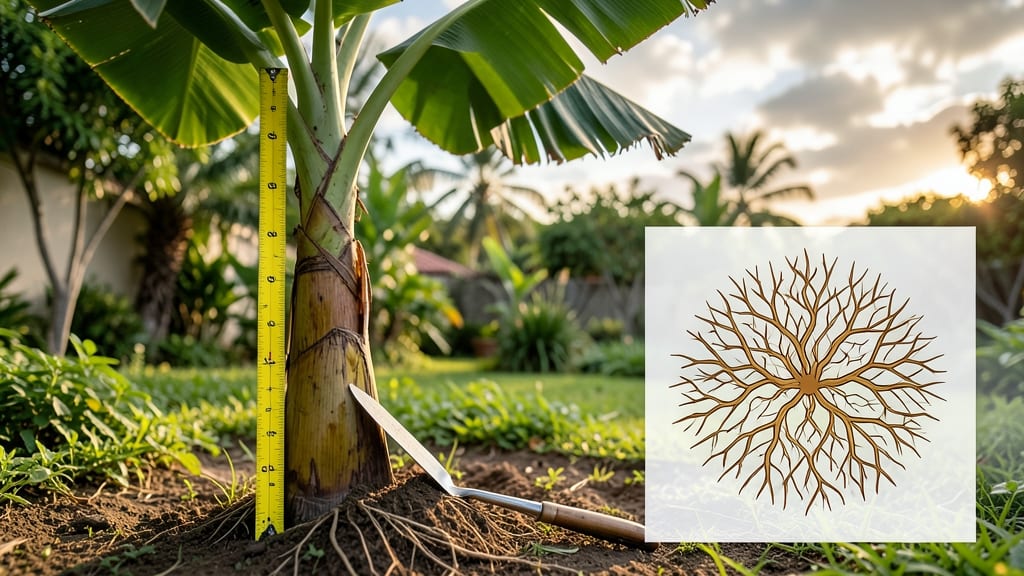
Banana tree roots grow 18 to 36 inches deep and spread up to 10 to 15 feet wide—far beyond what most gardeners expect.
Wondering how deep banana tree roots spread—and whether your garden layout will work? Getting the spacing right is crucial for avoiding competition, maximizing yield, and preventing root damage during harvest.
These tropical giants 🍌 thrive in General (Tropical/Subtropical) zones 10-12, where their extensive root systems demand loose, well-draining soil. Too close together, and you risk stunted growth or even fruit rot.
In this guide, I’ll break down the science behind root depth, spacing rules by variety, and how to adjust for containers or high-density planting—so your banana trees grow healthy and productive.
Banana tree root depth and spread: what science says
If you're planting banana trees in your tropical garden, understanding their root depth and lateral spread is essential for long-term success.
Unlike shallow-rooted plants, banana trees develop a robust root system that can reach surprising depths—often between 18 to 36 inches—while spreading horizontally up to 10 to 15 feet in ideal conditions. This extensive network explains why proper spacing and soil preparation are non-negotiable for healthy growth and fruit production.
Scientific studies from tropical agriculture confirm that banana roots aren’t just deep—they’re also highly sensitive to soil compaction and waterlogging. In well-draining volcanic soil (common in Hawaii and Central America), roots thrive and access nutrients efficiently.
However, in dense or clay-heavy soils, roots may struggle to penetrate, leading to stunted growth. This is why amending your soil with organic matter before planting can make all the difference.
One common misconception is that banana trees have shallow roots like grasses. In reality, their roots dive deep to access groundwater, especially during dry seasons. This is why drought stress can cause fruit drop or leaf yellowing—signs your tree isn’t getting enough moisture at the root level.
If you’re in a region with seasonal dry spells, consider installing a drip irrigation system to deliver water directly to the root zone.
Soil type plays a starring role in root development. In sandy soils, roots spread wider but may not penetrate as deeply, while clay soils can suffocate roots if not amended. The sweet spot? Loamy or volcanic soils strike a balance, offering both drainage and nutrient retention.
If your native soil is heavy, mix in compost and perlite to improve aeration before planting.
For container-grown banana trees, root depth becomes even more critical. Since pots limit vertical growth, choose containers that are at least 24 inches deep and 3 feet in diameter to accommodate the root system.
Without enough space, roots will circle the pot, leading to root-bound stress and poor fruiting. If you’re growing in containers, repot every 2–3 years to refresh the soil and encourage deeper root growth.
Another key factor is the rhizome system—the horizontal underground stems that produce new shoots. These rhizomes can spread up to 5 feet per year if unchecked, which is why many growers use root barriers to contain them.
Without barriers, banana plants can form dense clumps, competing for resources and reducing fruit quality. If you’re planting multiple trees, space them 10–15 feet apart to prevent rhizome overlap.
When it comes to mulching, banana trees love a thick layer (3–4 inches) of organic mulch like straw or wood chips. This keeps surface roots cool, retains moisture, and suppresses weeds—all critical for root health. Avoid inorganic mulches like plastic, which can trap heat and suffocate roots.
In my own garden, I’ve seen mulched banana trees produce 20% more fruit compared to unmulched ones, thanks to stable soil temperatures and consistent moisture.
If you’re harvesting bananas, be mindful of the root system’s sensitivity during the process. Overzealous pruning near the base can damage feeder roots, leading to slower recovery. Always use clean, sharp tools and avoid cutting into the soil more than 6 inches from the trunk.
After harvest, apply a balanced fertilizer (like 6-6-6) to replenish nutrients depleted by fruiting.
For home gardeners in USDA Zones 10–12, where banana trees thrive year-round, understanding root depth helps with long-term planning. Whether you’re designing a backyard orchard or growing a single tree in a large pot, prioritize deep, loose soil and ample spacing.
With the right conditions, your banana tree’s roots will reward you with vigorous growth and bountiful harvests for years to come. 🌱
Optimal planting spacing for banana trees by variety
Banana trees thrive when given enough space to spread their roots and grow tall, but spacing needs vary by variety. Dwarf varieties like Lady Finger can handle closer spacing, while Cavendish and plantain types need more room to avoid competition.
Getting this right prevents stunted growth, poor fruiting, and even root damage during harvest.
Most banana trees develop roots that spread 10-15 feet laterally but only penetrate 18-36 inches deep. This shallow root system means they need well-draining soil and proper spacing to prevent waterlogging or nutrient theft from neighboring plants. Container growing changes the game entirely—here’s how to adapt.
🌱 Comparison Table: Banana Tree Spacing by Variety
For container growing, dwarf varieties can thrive in 15-25 gallon pots, while larger types need 30-50+ gallons to accommodate their root spread. Use well-draining soil mixes with 20% perlite or coconut coir to mimic tropical conditions. Mulch heavily to retain moisture and prevent roots from overheating.
In high-density orchards, banana trees are planted 3-4 feet apart in rows spaced 8+ feet apart. This setup maximizes yield per square foot but requires drip irrigation and regular pruning to manage competition.
If you’re growing multiple trees in a home garden, stick to the 5-6 foot spacing for Cavendish varieties to avoid stunted growth.
Pro tip: If your soil is clay-heavy or poorly draining, increase spacing by 1-2 feet to prevent root rot. Always plant banana trees in mounds or raised beds for better drainage—this mimics their natural tropical habitat and reduces waterlogging risks.
🌿