
Trees
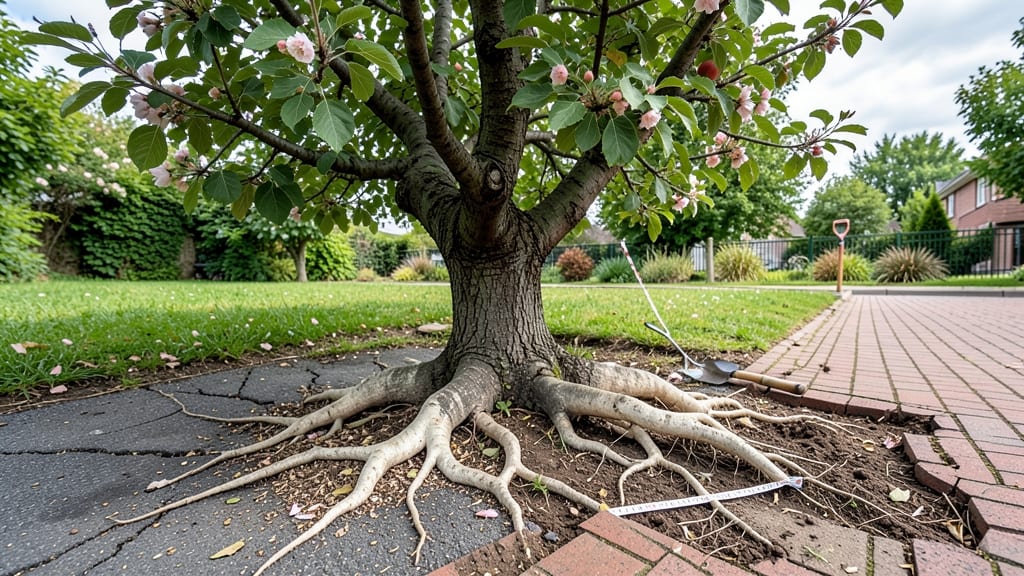
Apple tree roots do cause damage by spreading aggressively, lifting sidewalks or driveways, and competing with nearby plants for water and nutrients. Proper spacing and root management are key to minimizing issues.
Apple tree roots can spread far beyond the tree's canopy, often reaching 20-30 feet horizontally while growing 3-5 feet deep—especially in loose, nutrient-rich soil. 🌳 The lateral roots, which spread outward, are the main culprits for sidewalk heaving or foundation pressure, while the deep taproot competes aggressively with neighboring plants.
I've seen cases where apple trees planted too close to foundations cracked concrete over time, so understanding their growth patterns is crucial for long-term landscaping planning.
To protect your property, start with proper planting distance—ideally at least 20 feet from structures—and consider installing root barriers if space is limited. Regular root pruning can also redirect growth away from sensitive areas.
For small yards, dwarf apple varieties are a smarter choice, as their roots stay more contained while still producing fruit.
💡 In This Article
- How Apple Tree Roots Spread and Their Growth Depth
- Preventing Apple Tree Root Damage to Landscaping and Structures
How apple tree roots spread and their growth depth
Apple tree roots grow in two primary ways: a deep taproot and extensive lateral roots. The taproot can extend 3-5 feet deep, anchoring the tree and accessing groundwater, while lateral roots spread horizontally 20-30 feet or more from the trunk.
This wide spread is why apple trees often disrupt sidewalks or underground pipes—lateral roots seek moisture and nutrients, pushing through soil and concrete as they grow. 🌿 In clay-heavy soil, roots may grow shallower but wider, increasing surface damage risk.
The growth rate depends heavily on soil conditions. Loose, well-drained soil allows roots to penetrate deeper and spread faster, while compacted soil forces them to grow horizontally near the surface.
I've observed that apple trees in garden beds with mulch develop more aggressive lateral roots because the mulch retains moisture, encouraging outward expansion. The root-to-shoot ratio means that for every 1 foot of trunk height, roots can spread 2-3 feet outward—this explains why mature trees often outgrow their planting space.
Root damage often occurs when trees are planted too close to structures. A mature apple tree's root zone can cover an area 3-4 times larger than its canopy. For example, a tree with a 20-foot canopy might have roots extending 60 feet in diameter.
This is why landscapers recommend planting apple trees at least 20 feet from buildings and driveways—any closer risks foundation stress or cracked pavement as roots lift soil during seasonal growth cycles. 🏡
Seasonal growth patterns also play a role. Roots grow most aggressively in spring and early summer when soil moisture is high, which coincides with when new sidewalks or patios are installed.
I've seen cases where newly poured concrete cracked within months because apple tree roots were already established nearby, seeking moisture through the fresh concrete. The pressure exerted by expanding roots can lift 1-2 inches of pavement over time, creating dangerous trip hazards.
Soil type dramatically affects root behavior. Sandy soil allows roots to spread deeper but may not provide enough resistance to prevent surface heaving. In contrast, clay soil restricts downward growth, forcing roots to expand horizontally near the surface.
This is why apple trees in clay-heavy yards often cause more visible damage to walkways and foundations. The key is understanding your soil's composition before planting—amending compacted soil with organic matter can help redirect root growth downward where it's less problematic. 🌱
Another critical factor is the tree's age. Young apple trees have limited root spread, but their growth accelerates dramatically after 3-5 years. This rapid expansion phase is when most damage occurs to existing landscaping.
For example, a 5-year-old apple tree might have roots spreading 10-15 feet from the trunk, while a 15-year-old tree could have roots extending 30 feet or more. This growth trajectory explains why many homeowners experience damage years after planting.