
Pruning
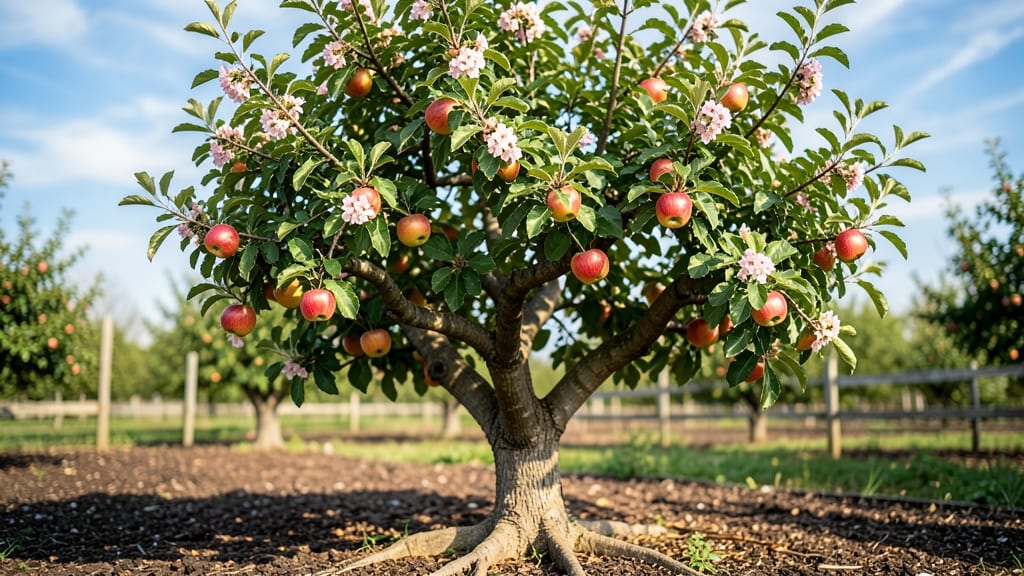
Honeycrisp apple trees grow best in USDA hardiness zones 3 through 8, where they handle winter temperatures down to -30°F (-34°C), though peak fruit production happens in zones 4 to 7 with consistent sunlight and well-draining soil.
Honeycrisp apples are prized for their crisp texture and sweet-tart flavor, but their success depends heavily on where you plant them. 🍏 These trees enter dormancy in colder months, allowing them to survive harsh winters in northern climates, but they need protection from late frosts in spring.
In zones 3 and 8, growers often use windbreaks or microclimate adjustments to shield the trees from extreme cold or heat stress. For the best harvest, aim for zones 4-7 where the climate balances cold tolerance with warm summers for proper fruit development.
If you're in a marginal zone, consider planting near a south-facing wall or using mulch to regulate soil temperature. This variety also benefits from cross-pollination, so planting a second apple tree nearby—like a Fuji or Gala—can significantly boost your yield.
The key is matching your local climate to the tree's needs, whether you're in the cold of Minnesota or the milder winters of Oregon.
💡 In This Article
- Honeycrisp Apple Tree Cold Hardiness Explained
- Best Regions and Microclimates for Growing Honeycrisp Apples
Honeycrisp apple tree cold hardiness explained
Honeycrisp apple trees survive winter through a process called endodormancy, where their metabolic activity slows dramatically. During dormancy, the tree’s cells produce antifreeze proteins that prevent ice crystals from forming in their tissues, allowing them to withstand temperatures as low as -30°F (-34°C).
This natural adaptation is why they thrive in zones 3–8, but the real magic happens in the bud structure. Flower buds, which form in late summer, contain specialized cells that remain flexible even when frozen, preventing damage that could ruin next year’s harvest.
The tree’s root system plays a critical role too—deeper roots insulate the trunk and absorb moisture from lower soil layers, which helps regulate internal temperatures. In zones 3 and 4, where winters are harshest, Honeycrisp trees often develop a thicker bark over time, acting like natural insulation.
However, young trees (under 3 years old) are more vulnerable and may need winter mulching with straw or wood chips to protect their roots from extreme cold snaps. 🌡️
Late-spring frosts pose a bigger threat than winter cold for Honeycrisp trees. The blooms open in early spring, and temperatures dropping below 28°F (-2°C) can kill flower buds before they pollinate.
This is why growers in zones 5–7 often use frost cloths or strategically place trees near heat-retaining structures like stone walls. The tree’s genetic makeup also influences frost tolerance—Honeycrisp’s parentage (a cross between Macoun and Honeygold) gives it a slight edge over some varieties in recovering from light frost damage.
Soil temperature matters just as much as air temperature. Honeycrisp trees prefer well-drained soil that doesn’t stay soggy, as waterlogged roots can freeze more easily. In colder zones, amending the soil with compost or sand improves drainage and insulates the roots.
The tree’s cambium layer (the growth layer between bark and wood) is particularly sensitive—if it freezes, the tree may produce fewer branches or smaller fruit the following year.
Here’s how the tree’s cold tolerance breaks down by zone:
- Zones 3–4: Survives -30°F (-34°C) but needs windbreaks and mulch for optimal growth.
- Zones 5–6: Handles -20°F (-29°C) with minimal protection, ideal for most U.S. growers.
- Zones 7–8: Tolerates down to 10°F (-12°C) but may struggle with heat stress in summer.
What most gardeners overlook is how sun exposure affects cold hardiness. Trees in full sun develop stronger bark and root systems, making them more resilient to winter damage. In shady spots, the same tree might produce smaller fruit or take longer to recover from frost.
This is why even in cold zones, south-facing locations are gold for Honeycrisp trees—more sunlight = better cold resistance. ❄️