
Trees
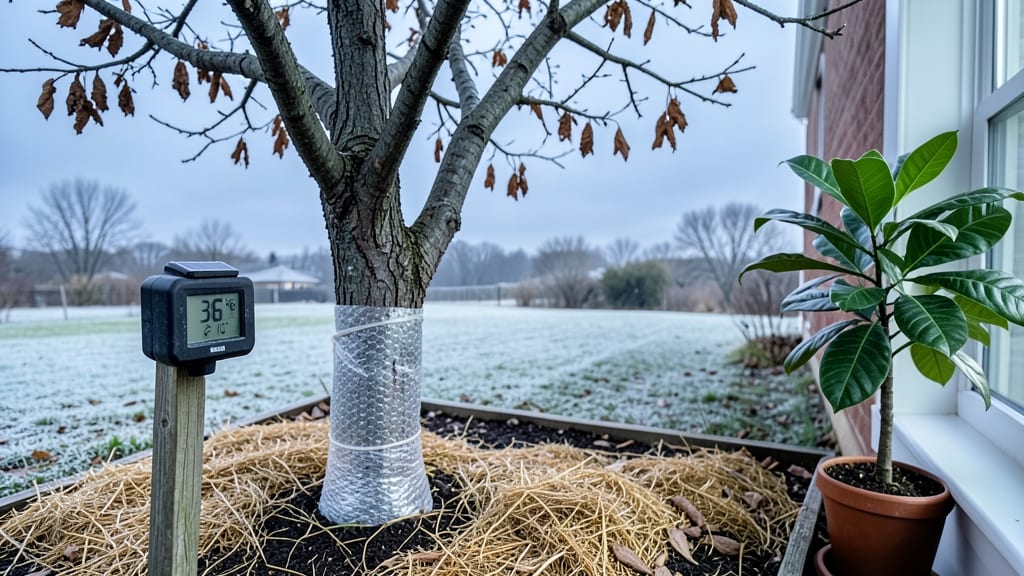
Mango trees can't survive winter in climates where temperatures drop below 30°F (-1°C), as frost destroys leaves and roots. Young trees are most at risk, though mature trees might recover from brief cold periods with proper protection like mulching or wrapping.
Mango trees thrive in tropical and subtropical climates, which means they're not built for cold winters. 🌱 When temperatures fall below 30°F (-1°C), the delicate leaves and shallow root systems suffer irreversible damage.
The USDA hardiness zones 10-12 are ideal for outdoor mango cultivation, while zones 9 and below require extra care during winter months. Even mature trees struggle in prolonged cold, though their thicker bark offers some protection compared to young specimens.
What's interesting is how quickly damage occurs—just a few hours of frost can kill new growth, while extended cold snaps threaten the entire plant. This is why gardeners in colder regions often treat their mango trees like seasonal projects, moving them indoors or providing intensive winter protection.
The key is understanding your local freeze patterns and preparing accordingly, whether that means installing heating cables or creating microclimates around the tree.
💡 In This Article
- Mango Tree Cold Tolerance: Understanding Freeze Damage Zones
- Winter Protection Strategies for Mango Trees in Cold Regions
Mango tree cold tolerance: understanding freeze damage zones
The critical threshold of 30°F (-1°C) isn't arbitrary—it's the point where ice crystals begin forming inside mango tree cells. These crystals rupture cell walls in leaves, stems, and roots, causing irreversible damage. The tree's vascular system gets clogged with ice, preventing water and nutrient transport.
This is why you'll often see mango leaves turning black within 24 hours of a hard freeze—it's not just wilting, but actual cellular death from frostbite.
Young mango trees are particularly vulnerable because their bark is thinner and their root systems haven't developed deep enough to access warmer soil layers.
A 20°F (-7°C) night can kill a young tree outright, while mature specimens might survive brief dips below 30°F (-1°C) if their trunk diameter exceeds 4 inches.
The root zone is especially critical—even if the air temperature stays above freezing, soil temperatures can drop 5-10°F colder, creating a hidden danger zone for underground roots.
USDA hardiness zones provide a useful framework for understanding risk. Mangoes thrive in zones 10-12, where winter lows rarely drop below 35°F (2°C). In zone 9, where winters occasionally reach 25°F (-4°C), trees need protection for 3-4 months annually.
The transition zones (8b-9a) are particularly challenging because they experience 100-200 frost-free days—just enough to keep the tree alive but not enough for reliable fruiting.
What makes this especially tricky is how quickly damage accumulates. A single night at 28°F (-2°C) might not kill a mature tree, but repeated cold snaps below 32°F (0°C) over several weeks will weaken it.
The tree's energy reserves get depleted trying to repair freeze damage, leaving it vulnerable to fungal infections and pests. This is why gardeners in marginal zones often see their mango trees produce fewer fruits each year—the plant is constantly playing catch-up from winter stress.
There's also a fascinating physiological response called "cold acclimation" that some tropical plants develop. While mangoes don't naturally acclimate like temperate species, they do show some tolerance when gradually exposed to cooler conditions.
This is why some gardeners in zone 9 report better survival rates when they start protecting their trees in late fall rather than waiting until the first frost. The gradual transition helps the tree prepare its cellular defenses, though it's still no match for prolonged sub-freezing temperatures.
Consider this visual comparison: In Florida's zone 10a, mango trees grow with minimal protection, while in California's zone 9b, the same tree might need 3 inches of mulch and a frost blanket to survive.
The difference comes down to how many nights per year drop below that critical 30°F (-1°C) threshold—and whether those cold snaps are brief or prolonged.