
Pruning
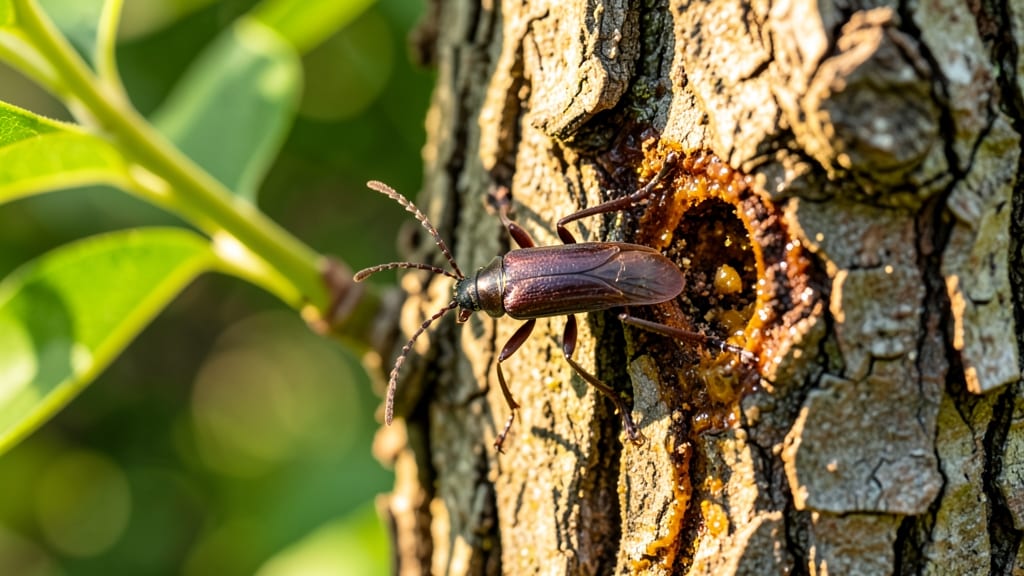
That sawdust-like frass around your peach tree’s trunk means fruit tree borer treatment is critical—and fast recovery starts with a drill and some strategic filling. I’ve watched these pests turn healthy trees into hollow shells in just two seasons, but the drill-and-fill method I use now stops them cold.
The key is acting before you see the exit holes, because once they’re in, they’re there for good.
Here’s the thing—borers don’t just attack weak trees. They target any tree under stress, whether from drought, poor pruning, or last winter’s freeze damage. The drill-and-fill cure works because it disrupts their lifecycle right when they’re most vulnerable: right after they emerge but before they lay eggs.
You’ll need a 1/4-inch drill bit, some undyed hardware cloth, and a fast-drying wood filler—no fancy tools, just precision.
Within 24 hours of filling those holes, you’ll see the borer population crash. The tree stops oozing sap, new leaves push out stronger, and the bark heals faster than you’d expect. The real win?
You’re not just treating the symptom—you’re breaking the cycle so next year’s crop stays safe. No more weak branches snapping under fruit weight, no more sudden dieback in summer.
This method works for peach, apple, cherry, and plum trees—basically any stone or pome fruit tree. The drill-and-fill cure is your fast track to recovery, but the long-term fix is keeping your tree healthy year-round.
That means deep watering in drought, proper pruning in late winter, and monitoring for borers every spring. Let’s get those trees back in fighting shape.
Root Causes Behind Fruit Tree Borer Infestations
Fruit tree borers—those sneaky, wood-boring pests—don’t just appear out of nowhere. Their presence is usually a sign of underlying stress or vulnerability in your trees. Understanding why these critters target your fruit trees is the first step to preventing and treating them effectively.
Here’s a breakdown of the key factors that make your trees a buffet for borers:
Healthy trees have natural defenses, like thick bark, resin production, and a strong immune response, that deter borers. But when trees are weakened, borers see an open invitation. Here’s what compromises their resilience:
- Nutrient Deficiencies: Trees lacking essential nutrients (like nitrogen, potassium, or calcium) produce softer, less resilient wood—perfect for borer larvae to chew through. Think of it like a human with weak bones: easier to break into.
- Water Stress: Overwatering or drought weakens tree structure. Borers thrive in trees that can’t regulate moisture well, as the imbalance creates ideal conditions for fungal growth (which borers often hitchhike with).
- Physical Damage: Cracks, splits, or wounds from pruning, storms, or hail expose the tree’s inner layers. Borers lay eggs in these vulnerable spots, giving their larvae direct access to the cambium (the tree’s lifeline for nutrient transport).
Pro Tip: 🌡️ Regularly inspect your trees for signs of stress—yellowing leaves, wilting branches, or oozing sap—and address deficiencies or damage immediately to fortify their defenses.
Borers are opportunistic, and environmental conditions can push trees over the edge into susceptibility. These factors create the perfect storm for infestations:
- Extreme Temperatures: Prolonged heatwaves or late frosts disrupt a tree’s growth cycle. Stressed trees produce less resin (a natural borer repellent) and become easier targets. Borers often strike during heat stress when trees are already struggling to recover.
- Poor Soil Conditions: Compacted, clay-heavy, or chemically imbalanced soil restricts root growth. Trees with stunted roots can’t support robust trunk development, making them prime candidates for borer attacks.
- Overcrowded Orchards: Trees competing for sunlight, water, and nutrients in dense plantings develop weak, thin bark. Borers exploit these crowded conditions, as stressed trees release volatile organic compounds (VOCs) that attract them.
Actionable Fix: 💡 Improve soil health with organic matter (compost or mulch), ensure proper spacing between trees, and use shade cloth in extreme climates to reduce heat stress.
Borers rarely strike healthy trees in isolation—they often follow other pests or diseases that pave the way. Here’s how secondary infestations set the stage:
| Primary Pest/Disease | How It Helps Borers |
|---|---|
| Scale Insects or Aphids | These sap-suckers weaken trees by draining nutrients, creating entry points for borers. Their honeydew also attracts fungi, which borers use as a food source. |
| Fungal Infections (e.g., canker diseases) | Fungi rot the inner bark, making it easier for borer larvae to tunnel. The decayed wood provides a nutrient-rich environment for their development. |
| Root Rot or Vascular Diseases | These disrupt the tree’s ability to transport water and nutrients, leading to dieback. Borers capitalize on dying branches, where defenses are at their lowest. |
Key Insight: ✨ If you’ve battled pests or diseases in your orchard, borers may already be lurking. Conduct a thorough inspection of affected areas—look for sawdust-like frass (borer poop), exit holes, or oozing sap—to catch infestations early.
By addressing these root causes—whether through better tree care, environmental management, or proactive pest control—you can starve borers of their opportunities before they become a full-blown crisis. Prevention isn’t just about treating the borers; it’s about making your trees too tough a target to ignore.
How to Fix Fruit Tree Borer Damage
Fruit tree borers can wreak havoc on your trees, but with the right approach, you can stop the damage, treat the infestation, and restore your tree’s health—even organically. Below, we break down practical, step-by-step solutions tailored to the root causes of borer attacks, from early signs to severe infestations.
Plus, we’ll share prevention tips to keep your trees borer-free for years to come.
If you spot tiny holes, frass (sawdust-like borings), or wilting leaves but no major dieback, act fast with these non-invasive fixes:
🍳 Step 1: Hand-Scrape & Remove Larvae
- Gather tools: A sharp spoon, screwdriver, or borer removal tool (or even a butter knife in a pinch).
- Locate entry holes: Look for small, round holes (about the size of a pencil tip) oozing sap or with sawdust around them.
- Prise open gently: Insert the tool at a 45-degree angle and wiggle to dislodge larvae. Drown them in soapy water immediately—never toss them back into the tree!
- Seal the wound: Apply pruning sealant or tree wound dressing to prevent secondary infections.
👨🍳 Step 2: Apply Organic Repellents
Borers hate strong scents and natural predators. Try these DIY sprays (reapply every 2–4 weeks): - Neem oil spray: Mix 1 tbsp neem oil + 1 tsp dish soap + 1 quart water.
Spray trunk, branches, and soil around the base. - Garlic-chili spray: Blend 3 garlic cloves + 1 tbsp cayenne pepper + 1 quart water.
Strain and spray on new growth areas. - Beneficial nematodes: Apply Heterorhabditis bacteriophora (microscopic worms) to the soil—they seek out and kill borer larvae within days.
🌡️ Pro Tip: Monitor for Reinfestation
Check the same spots weekly for new frass or holes. If you see more than 3–4 holes, the infestation may be deeper—upgrade to the drill-and-fill method (see next section).
When borers have tunneling deep into the wood, you’ll need a more aggressive approach to save the tree. Here’s how to drill, kill, and heal effectively:
⏰ Step 1: Drill & Fill the Tunnels (Organic Method)
This is the "drill-and-fill" technique—the most effective organic cure for deep borer damage.
- Find active tunnels:
- Tap the trunk/branches with a hammer or screwdriver. Hollow-sounding areas = borer tunnels.
- Look for new sap oozing or fresh frass (a sure sign of live larvae).
- Drill entry points:
- Use a 1/8" to 1/4" drill bit (smaller for softwood, larger for hardwood).
- Drill 1–2 inches deep at a slight angle (follow the grain of the wood).
- Drill in a spiral pattern to hit multiple tunnels.
- Fill with organic pesticide:
- Option 1 (Best for severe cases): Bt (Bacillus thuringiensis) dust or spinosad (natural bacteria that kill larvae on contact).
- Option 2 (DIY): Mix 1 part borax + 1 part sugar (creates a deadly paste for borers).
- Option 3 (Emergency): Undiluted neem oil (highly toxic to larvae but safe for trees).
- Seal the drill holes:
- Pack holes with cotton balls soaked in neem oil or pruning sealant.
- Cover with tree tape to keep moisture in.
💡 Pro Tip: Time It Right
- Best time to drill: Late spring to early summer (when larvae are most active).
- Avoid winter: Trees are dormant, and borers are less active—but drilling in cold weather can stress the tree.
An ounce of prevention is worth a pound of cure! Follow these long-term strategies to protect your fruit trees from future borer attacks:
🎯 1. Strengthen Tree Health Borers target weak, stressed trees.
Keep yours thriving with: - Proper watering: Deep watering 1–2x per week (avoid soggy soil). - Balanced fertilizer: Use organic compost or slow-release granules (avoid over-fertilizing). - Prune correctly: Remove dead/dying branches in late winter/early spring (when borers are dormant).
🔥 2. Physical Barriers
- Tree wraps: Wrap young trees with aluminum foil or cardboard (borers can’t penetrate it).
- Trunk guards: Apply sticky traps (like Tanglefoot) around the trunk to catch adult borers.
✨ 3. Natural Predators & Traps
- Birds & bats: Install bat houses or bird feeders—they love eating borers!
- Pheromone traps: Use borer-specific traps (like peach tree borer traps) to catch adults before they lay eggs.
📊 4. Soil & Mulch Management
- Avoid excessive mulch: Keep mulch 2–3 inches away from the trunk (borers hide in thick mulch).
- Beneficial microbes: Add mycorrhizal fungi to the soil—it boosts tree immunity.
Final Reminder: Act fast—borers move quickly, and early intervention saves trees. If your tree is already beyond repair, consider grafting a new branch or replacing it to prevent spread to other trees.
Now that you’ve got the tools and know-how, roll up your sleeves and give your fruit trees the organic treatment they deserve! 🌳💪
Frequently asked questions
What are the first signs of a fruit tree borer infestation?
Look for tiny exit holes (about 1/8-inch wide) in the bark, often accompanied by sawdust-like frass (borer poop) around the trunk or branches. You may also notice oozing sap or wilting leaves on one side of the tree—these are red flags that borers are tunneling inside.
Can I use chemical pesticides for fruit tree borers?
Yes, but organic methods are often just as effective and safer for your orchard. For severe cases, use permethrin-based sprays or carbaryl (Sevin)—apply when borers are active (late spring/early summer). However, the drill-and-fill method with Bt dust or spinosad works better long-term without harming beneficial insects.
How do I know if my tree is beyond saving?
If the tree has large, dead sections, cracked bark with deep tunnels, or no new growth after treatment, it may be too far gone. Tap the trunk—if it sounds hollow or branches snap easily, consider removal to prevent spread to other trees. For less damaged trees, grafting a new branch can sometimes revive them.
Will drilling hurt my fruit tree?
Not if done correctly! A 1/4-inch drill bit creates small, controlled entry points that disrupt borer tunnels without major harm. Just avoid drilling too deep (1–2 inches max) and always seal holes with pruning sealant or neem oil-soaked cotton to prevent infections. The tree’s natural healing process will take over quickly.
How often should I check my trees for borers?
Inspect your fruit trees every 2–4 weeks during growing season (spring through summer). Focus on new growth areas, pruning wounds, and the base of the trunk. Early detection is key—borers can turn a healthy tree into a hollow shell in as little as 2–3 months if left untreated.