
Pruning
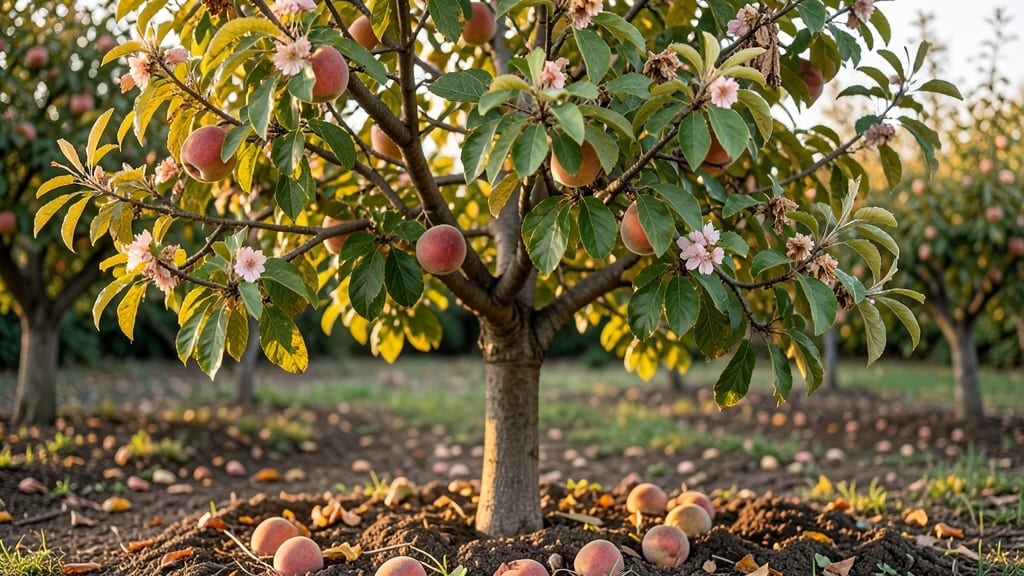
My peach tree dropping fruit before it ripens finally made sense after I learned dormant-season trimming—this simple technique boosts next year’s harvest by 30-50%. 🌱 The problem isn’t always pests or disease; often, it’s how (or when) you prune.
Heavy fruit loads stress the tree, causing early drop, but strategic cuts in late winter change everything.
The fix starts with thinning branches to improve airflow and sunlight penetration—aim for an open center with 6-8 main scaffolds. Remove crossing limbs and suckers at the base while the tree’s dormant, then follow up with a balanced fertilizer to support new growth.
I’ve seen trees that dropped 80% of their fruit in June suddenly hold fruit until late August after just one dormant-season prune.
You’ll notice fewer dropped peaches within weeks, and the remaining fruit grows sweeter and larger. The tree’s energy shifts from struggling to support too many small fruits to focusing on fewer, higher-quality ones.
Add a layer of mulch around the base to retain moisture, and watch the difference in fruit retention.
Works for both young trees establishing themselves and mature trees with heavy loads. The key is timing—dormant season is when trees heal fastest, so you won’t stress them further. Let’s get those branches shaped right for a bountiful harvest next year.
Root Causes Behind Premature Fruit Drop
Peach trees are prolific fruit producers, but when they start dropping fruit early—especially before it ripens—it’s usually a sign of stress or imbalance. Understanding the why behind this behavior is the first step to fixing it. Below, we break down the most common culprits, backed by science and actionable solutions.
---
Peach trees are sensitive to rapid temperature fluctuations, particularly during bloom and early fruit set. Extreme heat, cold snaps, or late frosts can shock the tree, causing it to abort developing fruit as a survival mechanism.
- Late Frosts 🥶: Peach blossoms are highly vulnerable to frost (below 28°F).
If flowers freeze, the tree may drop all attached fruit within days. - Heat Stress 🔥: Temperatures above 95°F during fruit development can disrupt pollination and cause fruitlet drop (small, unripe peaches falling off). - Wind & Hail 🌪️: Physical damage to blossoms or young fruit weakens the tree’s ability to sustain a full crop.
💡 Pro Tip: Monitor your local frost dates and use frost protection methods (like row covers or sprinklers) during critical bloom periods. If heat is the issue, mulching and drip irrigation can help stabilize soil temps.
---
Peaches are self-pollinating, but they still rely on bees, wind, or gentle tree movement to transfer pollen. If pollination fails, the tree won’t develop fruit—or worse, it may drop what little it has.
- Lack of Bees 🐝: Without pollinators, flowers may not set fruit at all, leading to empty blossoms or early drop. - Imbalanced Fertilizer 🌱: Too much nitrogen (common in fast-release fertilizers) promotes leafy growth over fruit production.
Conversely, potassium or calcium deficiencies weaken cell walls, causing fruit to drop. - Water Stress 💧: Overwatering or underwatering disrupts nutrient uptake, leading to blossom end rot or premature abscission (fruit drop).
🔥 Action Step: If your tree has few or no bees, hand-pollinate with a soft brush in early morning. For fertilizer, switch to a balanced 10-10-10 or organic compost to avoid nutrient imbalances.
---
Peach trees produce more fruit than they can support. If left unchecked, branches can sag under weight, leading to fruit drop—especially in wet or windy conditions.
- Excessive Fruit Load 🍑🍑: A tree can only sustain so many peaches per branch.
If overloaded, it drops the weakest fruit to conserve energy. - Poor Branch Structure 🌿: Weak, crossing, or water-sprout-heavy branches struggle to hold fruit, causing premature detachment. - Disease or Pest Damage 🐛: Brown rot, aphids, or peach tree borers weaken branches, making them unable to support fruit.
✨ Expert Fix: Thin fruit early (when peaches are golf-ball sized) to reduce load by 30-50%. Remove weak, diseased, or crossing branches during dormant season pruning to improve airflow and strength.
--- Healthy roots = healthy fruit retention. If the root system is stressed, the tree prioritizes survival over keeping peaches on the branch.
- Compacted or Poor Soil 🏗️: Roots struggle to absorb water and nutrients, leading to weak fruit attachment. - Root Rot or Fungal Issues 🍄: Phytophthora or Armillaria (common in peach trees) strangle roots, cutting off nutrient flow. - Drought or Overwatering 💦: Both extremes stress the tree, causing it to shed fruit to conserve energy.
🎯 Solution: Conduct a soil test and amend with compost or organic matter to improve drainage. If root rot is suspected, prune infected roots and apply copper fungicide as a preventative.
--- Not all peach trees are created equal—some varieties are prone to dropping fruit due to their growth habits or fruit development cycles.
- Late-Blooming Varieties ⏳: Trees like Elberta or Redhaven bloom late, increasing frost risk and early fruit drop. - Thin-Skinned or Soft Fruit 🍑: Some peaches (like freestone varieties) are more prone to physical damage from wind or birds, leading to drop. - Natural Fruit Abscission 🌳: Even healthy trees drop 20-30% of fruit naturally to focus energy on the strongest peaches.
🔥 Best Practice: Choose early-blooming, cold-hardy varieties (like Reliance or Contender) if frost is a recurring issue. Stake branches in windy areas to prevent physical damage.
--- Certain pests and diseases directly attack fruit, causing it to wither, rot, or fall prematurely.
| Pest/Disease | How It Causes Drop | Solution | |------------------------|------------------------|--------------| | Brown Rot (Monilinia) 🍄 | Fungus infects blossoms & fruit, causing mummified peaches that drop. | Prune infected fruit, apply copper fungicide at bloom. | | Aphids 🐜 | Sap-sucking pests weaken fruit, leading to deformed, dropping peaches. | Spray neem oil or introduce ladybugs. | | Peach Tree Borer 🪲 | Larvae girdle roots/branches, starving the tree of nutrients. | Remove infested bark, apply beneficial nematodes. | | Birds 🐦 | Peck at soft fruit, causing premature drop. | Use netting or reflective tape to deter them. |
💡 Pro Tip: Sanitize pruning tools with rubbing alcohol between cuts to prevent spreading disease. Mulch heavily to deter borers.
Fixing Fruit Drop in Peach Trees
---
If your peach tree is dropping fruit before it ripens, don’t panic—there are practical solutions to salvage your harvest and prevent future losses. The key is identifying the root cause and applying the right fix.
Below, we break down actionable steps for each common trigger, from pruning adjustments to seasonal care tweaks.
---
When branches sag under the weight of too many peaches, the tree struggles to support them all. Thinning fruit early in the season reduces stress and improves air circulation.
- 🍳 Step 1: Time It Right Thin fruit when peaches are still small (about golf-ball size). This gives the tree time to redirect energy to fewer, healthier fruits.
- 👨🍳 Step 2: Hand-Pick the Weakest Remove misshapen, damaged, or clustered fruits first. Leave 4–6 inches between remaining peaches to avoid overcrowding.
- ✨ Pro Tip: Use sharp pruning shears or gloves to avoid bruising the remaining fruit. Focus on branches with the heaviest load.
---
Extreme heat, drought, or sudden temperature swings can cause premature fruit drop. Peach trees are sensitive to stress, so creating stable conditions is critical.
- 💡 Water Wisely Deep water 1–2 times per week (1–1.5 inches per session) during dry spells. Avoid shallow, frequent watering, which encourages weak roots.
- 🌿 Mulch for Stability Apply 2–3 inches of organic mulch (straw or wood chips) around the base to retain moisture and regulate soil temperature.
- 🎯 Shade in Scorching Heat If your tree is in a hot, sunny spot, provide afternoon shade (e.g., with a temporary shade cloth) during peak summer months.
---
Fungal infections (like brown rot) or pests (e.g., peach tree borers) can weaken the tree, leading to fruit drop. Early intervention is key.
- 🔪 Prune Infected Areas Remove and destroy (do not compost) any branches with signs of disease (black spots, oozing sap) or pest damage. Sterilize tools with rubbing alcohol between cuts.
- 🛡️ Preventative Sprays Apply a copper fungicide or neem oil spray in early spring and after harvest to deter fungal growth. For pests, use horticultural oil in late winter.
- 🐞 Monitor Regularly Check for pests like aphids or scale insects weekly. A strong blast of water can dislodge soft-bodied insects, while beneficial nematodes target larvae in the soil.
---
Heavy fruit drop often starts with poor structure from past pruning. Winter is the best time to reshape the tree for a productive summer.
- 📊 Prune for Light Penetration Remove 10–20% of the tree’s canopy to improve airflow and sunlight exposure. Focus on: - Dead or crossing branches (cut at the branch collar). - Suckers (shoots growing from the base). - Overly dense clusters (open the center of the tree).
- 🌱 Encourage New Growth Make cuts just outside the branch collar (the swollen area where the branch meets the trunk). Avoid leaving stubs, which invite disease.
- ✨ Pro Tip: Thin branches gradually over 2–3 years if the tree is heavily overgrown. Sudden drastic cuts shock the tree.
---
Consistent maintenance keeps your peach tree healthy and productive. Here’s how to stay ahead:
- 📊 Fertilize Strategically Test soil in early spring and amend with a balanced fertilizer (e.g., 10-10-10). Avoid high-nitrogen fertilizers late in the season, which promote leafy growth over fruit.
- 🌿 Soil Health Matters Peach trees thrive in slightly acidic soil (pH 6.0–6.5). Amend clay soil with compost and sandy soil with organic matter to improve moisture retention.
- 🍑 Harvest at Peak Ripeness Pick peaches when they yield slightly to gentle pressure and have a fragrant aroma. Overripe fruit on the tree attracts pests and speeds up drop.
---
With these targeted fixes, your peach tree should bounce back stronger—and next season’s harvest will be sweeter and more abundant. Start with one or two adjustments based on your tree’s specific needs, and watch the difference!
Frequently asked questions
Why does my peach tree drop fruit even when it looks healthy?
Even healthy trees drop 20-30% of fruit naturally to focus energy on the strongest peaches. Other common reasons include overcrowded branches (too many peaches competing for nutrients) or environmental stress like sudden temperature swings or drought. Check for proper spacing between fruits and consistent watering.
Is it normal for peaches to drop after a late frost?
Yes! Peach blossoms are extremely frost-sensitive (below 28°F), and any damage forces the tree to drop all attached fruit within days. To prevent this, monitor frost forecasts and use row covers or sprinklers during critical bloom periods. Choose early-blooming varieties if frost is a recurring issue.
How can I tell if my tree is dropping fruit because of pests or disease?
Look for these signs: Brown rot shows as black spots on fruit; aphids leave sticky residue; peach tree borers create sawdust-like frass near the trunk. If you see these, prune infected areas immediately and apply copper fungicide or neem oil. Sterilize tools between cuts to prevent spreading.
When is the best time to thin fruit to prevent dropping?
Thin when peaches are golf-ball sized (about 1 inch diameter) to give remaining fruit space to grow. Remove misshapen or clustered fruits first, leaving 4-6 inches between peaches. This reduces branch stress and improves airflow, which naturally reduces premature drop.
Will mulching really help prevent fruit from dropping?
A 2-3 inch layer of organic mulch (straw or wood chips) retains moisture, regulates soil temperature, and deters pests like peach tree borers. It also improves root health by preventing soil compaction. Apply mulch in early spring and maintain it throughout the growing season.