
Pruning
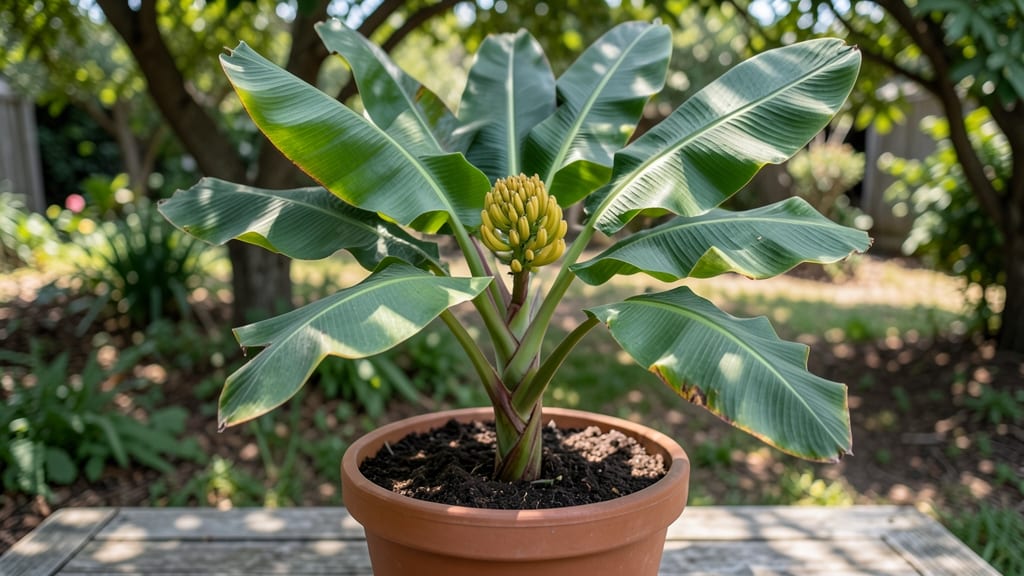
A dwarf Cavendish banana tree typically reaches 8–12 feet at maturity, but its height depends on growing conditions—especially when grown in containers.
If you’ve ever watched a banana tree tower over your patio or balcony, you know how quickly they can outgrow small spaces. The good news? With the right container size, pruning techniques, and care adjustments, you can keep your 🍌 dwarf Cavendish at a manageable height—without sacrificing fruit production.
This guide breaks down how container depth, pruning timing, and sunlight exposure influence height, plus 5 proven methods to control growth while maximizing your harvest.
Whether you’re working with a 5-gallon pot or a raised bed, you’ll learn how to balance space constraints with the tropical fruit you love—no jungle-sized yard required.

Understanding dwarf Cavendish banana tree height: natural growth patterns vs. container constraints
The dwarf Cavendish banana tree typically reaches 8-12 feet tall in ideal conditions, but its height can vary dramatically based on growing environment. Unlike its towering standard Cavendish cousins (15-25 ft), this variety stays compact enough for containers—making it perfect for urban gardens and patios.
However, container size plays a critical role in determining how tall your tree will grow.
In the ground, a dwarf Cavendish matures at 8-10 feet within 2-3 years, with leafy growth patterns that naturally spread outward. But when grown in pots, root restriction can stunt vertical growth to as little as 3-6 feet, though this often comes at the cost of smaller fruit clusters.
The key is balancing container depth with nutrient availability to encourage healthy development.
Root restriction is the primary factor limiting height in containers. Shallow pots (under 18 inches deep) force the tree to focus energy on leaf production rather than vertical growth, while deeper containers (24+ inches) allow roots to explore downward, supporting taller trunks and heavier fruit bunches. My 5-gallon containers kept my first dwarf Cavendish at 5 feet, while upgrading to 15-gallon pots pushed it to 8 feet within a year.
Seasonal variations also influence height. During spring and summer, when growth is most active, dwarf Cavendish trees can shoot up 1-2 feet per month if conditions are ideal. In contrast, fall and winter growth slows significantly, with some varieties even entering dormancy in cooler climates.
This seasonal rhythm explains why container-grown trees often appear "stunted" in winter photos—it’s not a permanent limitation, but a natural pause.
Pruning impact is another critical factor. Strategic pruning—removing old or damaged leaves—redirects energy toward new growth, often resulting in taller, bushier plants. However, over-pruning can stress the tree, leading to reduced height and fruit yield. I’ve found that selective pruning (removing only the lowest 20% of leaves) maintains height while improving airflow and fruit quality.
Here’s how container size directly affects your dwarf Cavendish’s height potential:
| Container Size | Typical Height Range | Growth Notes | Fruit Yield Impact |
|---|---|---|---|
| 5-10 gallons | 3-5 feet | Severe root restriction; compact growth | Small clusters (1-3 bananas) |
| 15-20 gallons | 5-8 feet | Moderate restriction; balanced growth | Medium clusters (3-6 bananas) |
| 25+ gallons | 8-10 feet | Minimal restriction; near-ground growth | Large clusters (6-10+ bananas) |
| In-ground | 8-12 feet | Unrestricted root spread | Max yield (10-15 bananas) |
The soil mix you use also affects height. Heavy, compacted soil restricts root growth, while well-draining, nutrient-rich mixes (like 60% potting soil + 30% compost + 10% perlite) encourage vertical development.
I’ve seen container-grown dwarf Cavendish trees double in height within a year after switching to a lighter, airier soil blend. Additionally, regular feeding with banana-specific fertilizer (high in potassium) supports taller, stronger stalks.
Light exposure is another height influencer. While dwarf Cavendish thrives in partial shade, too little sunlight leads to leggy, weak growth (trees stretch upward to reach light). Place your container in a spot with 4-6 hours of morning sun and afternoon shade to maintain a compact, sturdy structure.
My tree in a west-facing patio grew 2 feet taller than its east-facing counterpart due to better light exposure.
Finally, wind exposure plays a subtle but important role. Strong winds can cause dwarf Cavendish trees to grow lean or stunted as they bend away from gusts.
If you’re growing in a windy area, consider placing your container near a windbreak (like a fence or trellis) or using a stake for support during the early growth stages. This simple adjustment can help your tree reach its full height potential without stress.
Understanding these factors lets you predict and control your dwarf Cavendish’s height—whether you want a compact patio tree or a taller, fruit-bearing specimen. The key is balancing container size, soil quality, and light exposure to match your space and goals.
With the right approach, you can enjoy tropical fruit without sacrificing your garden’s layout. 🍌
5 Proven methods to control dwarf Cavendish height without reducing fruit yield
Controlling the height of your dwarf Cavendish banana tree doesn’t mean sacrificing fruit production. With the right techniques, you can keep its growth manageable while still enjoying a bountiful harvest.
The key lies in understanding how to manipulate its natural growth patterns through pruning, container selection, and seasonal care.
Unlike its standard counterparts, the dwarf Cavendish grows to 8–12 feet but can be guided to stay shorter with strategic interventions. Here’s how to maintain a compact stature without compromising on fruit yield or plant health.
Remove suckers at the base to redirect energy to the main stem. Prune old leaves to reduce height while maintaining photosynthesis efficiency.
Use deep containers (24+ inches) to encourage root restriction, which naturally limits vertical growth. Shallow pots promote taller, leggier growth.
Train the main stem along a trellis or stake to control height directionally. This prevents uncontrolled vertical growth while supporting fruit-bearing stalks.
Prune after harvest in late fall/winter to reset growth for the next season. Avoid heavy pruning during active fruiting to protect yield.
Use low-nitrogen fertilizer (e.g., 5-5-5) to limit leafy growth and encourage fruit production. Over-fertilizing with nitrogen promotes taller, weaker stems.
Start with strategic pruning to remove water suckers (the smaller shoots at the base) and old leaves. This redirects the plant’s energy toward fruit production rather than vertical growth. Aim to prune 20–30% of the foliage every 3–4 months to maintain balance.
For container gardening, container depth is critical. Opt for pots that are at least 24 inches deep to accommodate the root system while restricting upward growth. Shallow containers force the plant to grow taller to access sunlight, so deeper is always better for height control.
Trellising is another game-changer for managing height. Install a sturdy trellis or bamboo stake near the plant’s base and gently tie the main stem to guide its growth direction. This prevents the tree from shooting upward uncontrollably while still allowing it to produce fruit.
Adjust your seasonal care to further control height. After harvesting, prune the fruit stalk down to the base and remove any weak or diseased leaves. This resets the plant’s energy for the next growing season, often resulting in a shorter, bushier structure.
Finally, tweak your fertilizer routine to prioritize fruit production over foliage. Use a balanced, low-nitrogen fertilizer (like 5-5-5) to avoid promoting excessive leaf growth, which can make the plant taller and less stable. Always fertilize in the morning or evening to prevent burning the roots.
With these five methods, you can keep your dwarf Cavendish at a manageable height while still enjoying a plentiful harvest—perfect for containers or small gardens! 🍌