
Pruning
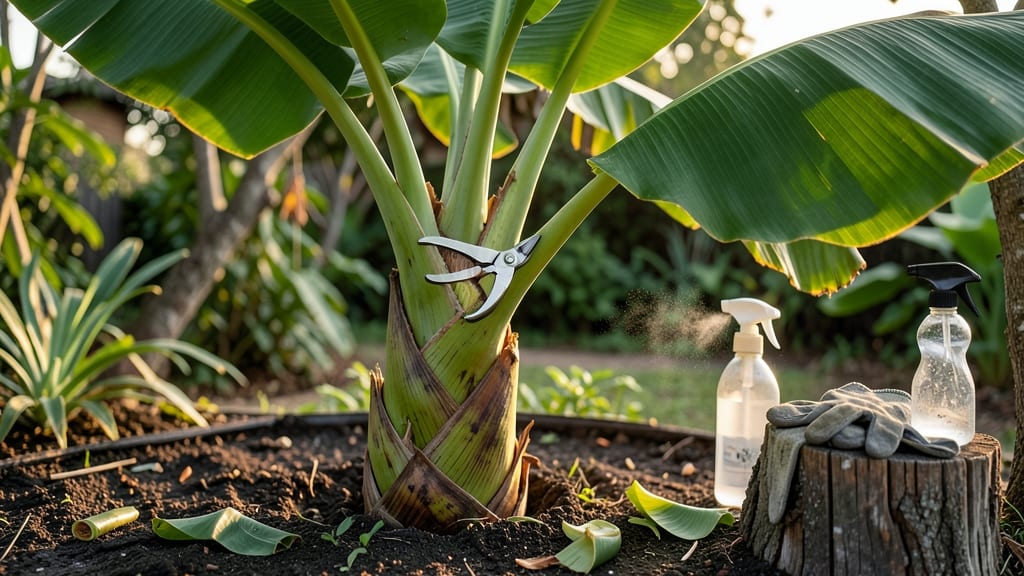
Banana tree trimming isn't just about keeping your plant from looking like a jungle—it’s the secret to bigger fruit and a stronger plant. ✂️ I’ve watched my banana tree grow from a scraggly 6-foot oddity to a productive, 12-foot powerhouse, all because I learned when and how to trim.
The right cuts encourage new growth, redirect energy toward fruit, and prevent disease by improving airflow.
You’ll need just three basic tools: sharp pruning shears, gloves (trust me, those fronds pack a punch), and a disinfectant for your tools. Timing matters too—prune older fronds after they’ve fruited in late winter or early spring, and remove dead or yellowing leaves year-round.
This keeps your tree focused on producing new shoots and fruit rather than maintaining dead growth.
Start by cutting back the largest, oldest fronds at the base, leaving the younger, healthier ones to take over. For suckers (those baby shoots at the base), keep just one or two of the strongest—this prevents overcrowding and ensures your tree puts its energy where it counts.
Within weeks, you’ll see fresh green growth sprout, and by summer, you’ll have a tree that’s both taller and more fruitful than ever.
Common mistakes? Pruning too late in the season or cutting into the trunk itself. Avoid both—your banana tree will thank you with glossy leaves, sturdy stems, and a bounty of fruit.
The best part? This method works for both dwarf and standard banana varieties, whether you’re growing in pots or in the ground.
📚 In This Guide
- What you need
- Instructions
- Tips and common mistakes
- Wrapping up and next steps
What you need
- ● Pruning shears or loppers: Opt for bypass pruners (sharp, clean cuts) or loppers (for thicker stems). Disinfect blades with rubbing alcohol to prevent disease spread. 🌿
- ● Gloves: Heavy-duty gardening gloves (cut-resistant) to protect against thorns and sap.
- ● Safety glasses: Protect your eyes from debris—banana tree fronds can be sharp!
- ○ Disposable pruning bags or bucket: A 5-gallon bucket or mesh bag to collect trimmings (optional but handy for composting).
- ○ Pruning sealant (optional): A tree wound sealant (like Tanglefoot) to coat large cuts and prevent pests/disease.
- ● Extension pole: A 6–10 ft gardening pole with a saw attachment for hard-to-reach fronds.
- ● Hose or spray bottle: To rinse tools between cuts and keep sap from clogging blades.
- ● Marking twine or flags: For labeling sections if you’re pruning for training or propagation.
- ● Compost bin: Prep a spot to toss trimmings—banana pseudostems decompose quickly!
- ● Check the weather: Trim on a dry, cloudy day (avoid midday sun to reduce stress on the plant).
- ● Wear long sleeves/pants: Banana sap can irritate skin—better safe than sorry!
- ● Have a plan: Sketch a rough outline of what you’ll remove (see our step-by-step guide for reference).
Step-by-step guide to pruning your banana tree
Here's how to trim your banana tree for better fruit production and manageable height.
✂️ Step 1: Identify the Right Time to Prune
Prune your banana tree in early spring before new growth begins—this gives the plant time to recover before summer heat. You'll know it's time when you see fresh, bright green shoots emerging from the base. Avoid pruning during flowering or fruiting, as this stresses the plant and can reduce yield.
If you live in a warm climate, you can trim after harvest, but wait until the fruit has fully ripened and fallen. Never prune when frost is forecasted—banana trees are tropical and can't tolerate cold. Watch for new suckers (small shoots) at the base; these indicate the tree is ready for maintenance.
✂️ Step 2: Gather Tools and Safety Gear
Use sharp, clean pruning shears or a pruning saw for thicker stems. Disinfect your tools with rubbing alcohol before and after use to prevent disease spread. Wear gloves—banana tree sap can irritate skin, and the fronds have sharp edges.
Have a bucket ready to collect debris, and lay down cardboard or a tarp underneath the tree to catch fallen leaves. This makes cleanup easier and protects your lawn or garden bed. Avoid using dull tools—they crush stems instead of making clean cuts, which invites infections.
✂️ Step 3: Remove Dead or Damaged Fronds
Start by cutting off any brown, yellow, or brittle fronds at their base. These dead leaves drain energy from the plant. Look for fronds that are completely dry or have large holes from pests. Use a clean, upward motion with your pruners to avoid tearing the stem.
Leave only the healthiest, greenest fronds—typically 3-5 mature ones per tree. These provide energy for fruit production. If a frond is mostly green but has a few brown spots, leave it unless it’s severely damaged. You’ll see a neat, upright silhouette after removing the dead growth.
✂️ Step 4: Trim Suckers for Height Control
Banana trees produce suckers (new shoots) at the base. To control height, remove all but one or two strong suckers—keep the largest, healthiest one for future growth. Cut suckers at the soil line with a clean, sharp blade to prevent splintering.
If you want multiple trees, leave two suckers but prune the rest. Overcrowding weakens the main plant. You’ll notice the remaining suckers thicken and green up within weeks. Never pull suckers by hand—this damages the root system and stresses the plant.
✂️ Step 5: Thin Out Overcrowded Fronds
If your banana tree has too many fronds (more than 5-6), thin them out to improve airflow and sunlight penetration. Focus on inner fronds that block light from reaching the center. Cut these at the base, leaving a small stub (about ½ inch) to prevent water from pooling.
After thinning, step back and check for balanced light exposure. The center of the tree should now receive direct sunlight for at least 4-6 hours daily. This encourages stronger growth and better fruit production. Avoid over-trimming—banana trees need plenty of foliage to photosynthesize.
Tips & tricks for perfect banana tree trimming
Between us, these small adjustments make all the difference in keeping your banana tree healthy and productive.
Timing is Everything: Early spring is ideal, but if you miss it, don't stress—just avoid pruning during flowering or fruiting. The key is to look for those fresh green shoots at the base; they're nature's way of saying "it's time." I've learned this the hard way after seeing stressed plants when I pruned at the wrong time.
Tool Prep Matters: Sharp tools aren't just about ease—they're about plant health. Dull shears tear stems, creating wounds that invite disease. I always disinfect my tools with rubbing alcohol before and after use, even when switching between plants. This simple step saved my banana tree from a fungal infection last season.
Frond Selection Strategy: When deciding which fronds to keep, focus on the healthiest 3-5. Look for vibrant green color and sturdy stems—these are your energy producers. I've found that leaving slightly imperfect fronds (with just a few brown spots) actually helps the tree retain more moisture, which is especially helpful in hot climates.
Sucker Management Secret: That soil line cut for suckers is more important than you might think. Cutting too high leaves a vulnerable stem, while cutting too low damages the root system. I use a small marker on my pruners to ensure consistent cuts right at the soil level—this small detail makes a big difference in recovery time.
Pro Tips for Banana Tree Trimming
- Between us, these small adjustments make all the difference in keeping your banana tree healthy and productive.
- Timing is Everything: Early spring is ideal, but if you miss it, don't stress—just avoid pruning during flowering or fruiting.
- Tool Prep Matters: Sharp tools aren't just about ease—they're about plant health.
Frequently asked questions
Got questions about trimming your banana tree? You’re not alone! Here are some of the most common concerns—plus clear, actionable answers to keep your plant thriving.
When is the best time to trim a banana tree?
Trim your banana tree after it’s finished fruiting (late winter or early spring in most climates). Avoid pruning during cold months—wait until new shoots emerge for a healthier regrowth. If your tree is overgrown but not fruiting, light trimming can be done anytime, but prioritize post-harvest for best results.
How do I trim a banana tree without killing it?
Never cut more than ⅓ of the plant at once! Focus on removing dead or damaged leaves (yellow/brown fronds) and thinning crowded foliage. Use sharp, sterilized tools to prevent disease. For large cuts, seal with pruning paste to avoid sap loss. Pro tip: Trim at a 45° angle to encourage faster healing.
Will trimming my banana tree increase fruit production?
Yes—but only if done correctly! Pruning redirects energy to new growth and flower production. Remove old, unproductive stems (over 3–4 years old) to boost younger, fruit-bearing shoots. Just avoid over-trimming; balance is key! For dwarf varieties, light pruning can even improve fruit size.
Can I trim banana tree leaves while they’re still green?
Green leaves are still photosynthesizing—trim them only if they’re blocking sunlight or crowding new growth. Focus on dry, yellow, or diseased leaves first. If you must trim green fronds, cut them at the base (not mid-stem) to minimize stress. Warning: Removing too many green leaves weakens the plant.
What should I do with the cut banana leaves?
Don’t toss them! Use them as mulch around the base (decomposes quickly), compost them, or repurpose for crafts (like leaf prints). If leaves are diseased, bag and discard them immediately to prevent spreading. Freshly cut fronds can also be used as temporary shade for seedlings!
Wrapping up and next steps
Trimming your banana tree isn’t just about keeping it tidy—it’s a game-changer for healthier growth, better fruit production, and easier maintenance! 🌱 By following the right techniques, you’ll encourage stronger stems, larger bunches of bananas, and a more manageable plant height.
Whether you’re a seasoned gardener or just starting out, these steps make the process simple and rewarding.
Ready to give your banana tree the care it deserves? Grab your pruners, roll up your sleeves, and get trimming! 🌟 Start with one section at a time, and soon you’ll see the difference in your lush, fruitful banana tree. Happy pruning!