
Pruning
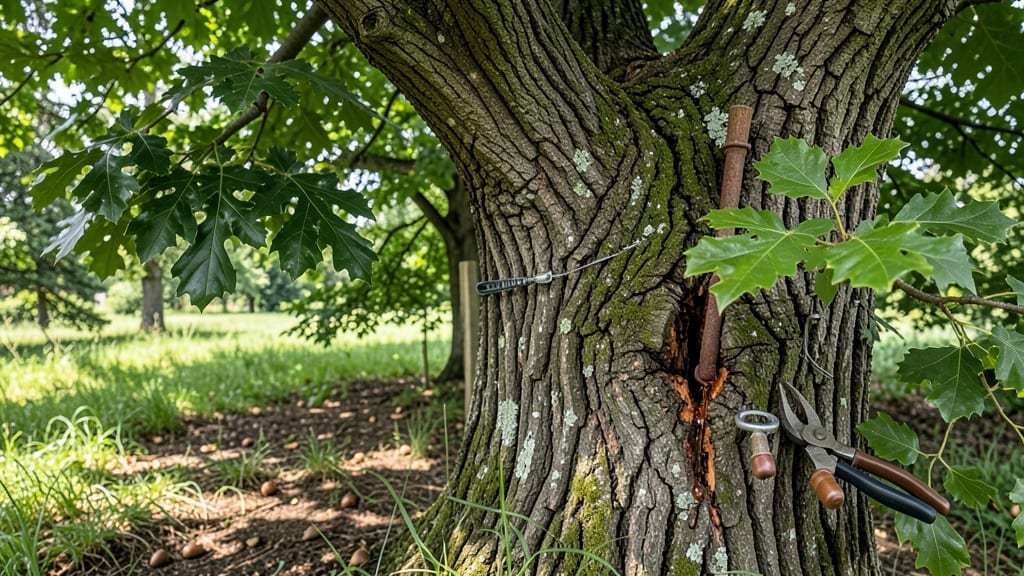
Yes, screwing into a tree can damage it by disrupting sap flow, creating entry points for pests and disease, and weakening its structural integrity—especially in young or stressed trees. Use lag bolts, proper spacing, and avoid sapwood when possible to minimize harm.
When you drill into a tree, you're essentially creating wounds that disrupt its natural defense system.
The cambium layer, which transports nutrients and water, gets compromised, slowing growth and making the tree more vulnerable. 🌳 Even small holes can invite fungal infections or insect infestations over time, particularly in species like willows or fruit trees with thinner bark.
The key is using the right hardware—lag bolts distribute pressure better than screws—and placing them in the heartwood (older, less active wood) rather than the living sapwood.
Season also matters: spring and summer are riskier because active sap flow means more damage. For oak or maple trees, I recommend pre-drilling pilot holes to prevent splitting, while fruit trees often need special tree-friendly screws designed to minimize trauma.
Always research your specific tree species—some, like birch, are more resilient than others.
💡 In This Article
- How Tree Anatomy Affects Damage from Screws
- Safe Screwing Techniques for Trees Without Harm
How tree anatomy affects damage from screws
The tree's inner workings are far more complex than most realize. The cambium layer, a thin but vital growth zone just beneath the bark, acts like a tree's circulatory system, producing new cells for growth and repair.
When you screw into a tree, you disrupt this delicate layer, creating wounds that can take years to heal—or never fully recover. 🌿 For example, a 3/8-inch screw can damage up to 1/2 inch of cambium tissue on either side of the hole, effectively starving that section of nutrients.
Sap flow is another critical factor. Trees transport water and nutrients through their xylem vessels, and any interruption creates pressure imbalances. In species like maple or birch, this can lead to bleeding sap for weeks, weakening the tree's ability to photosynthesize.
The heartwood (older, non-living wood) is safer for screws, but the sapwood (active growth layer) should be avoided entirely—it's where most nutrient transport occurs.
Pests and diseases exploit these wounds like open invitations. Bark beetles, for instance, detect fresh screw holes within minutes and lay eggs in the damaged wood.
Fungal spores, carried by wind or insects, can establish infections that rot the tree from the inside out. 🌱 A 2016 study in Arboriculture & Urban Forestry found that trees with mechanical wounds were 3x more likely to develop decay within five years compared to undamaged trees.
Tree species play a huge role in vulnerability. Oak trees, with their dense wood, can handle screws better than fruit trees like apple or cherry, whose thinner bark and softer wood make them far more susceptible to damage.
Even the tree's age matters—a 20-year-old oak may recover from a single screw hole, while a 10-year-old maple could suffer permanent growth stunting.
Seasonal timing compounds the risk. Spring and summer, when sap is flowing rapidly, make trees most vulnerable to screw damage. The cambium is most active during these months, so any disruption causes maximum harm.
In contrast, winter screws (when sap flow slows) create less immediate damage, though they still pose long-term risks for pests and disease.
Visual clues can help assess damage. Look for resin bleeding (common in pines), cracked bark, or discolored wood around screw holes—these are clear signs of stress.
Some trees may even develop compartmentalization zones, where the tree walls off damaged areas with new growth, but this process can take years and still leave the tree weakened.