
Propagation
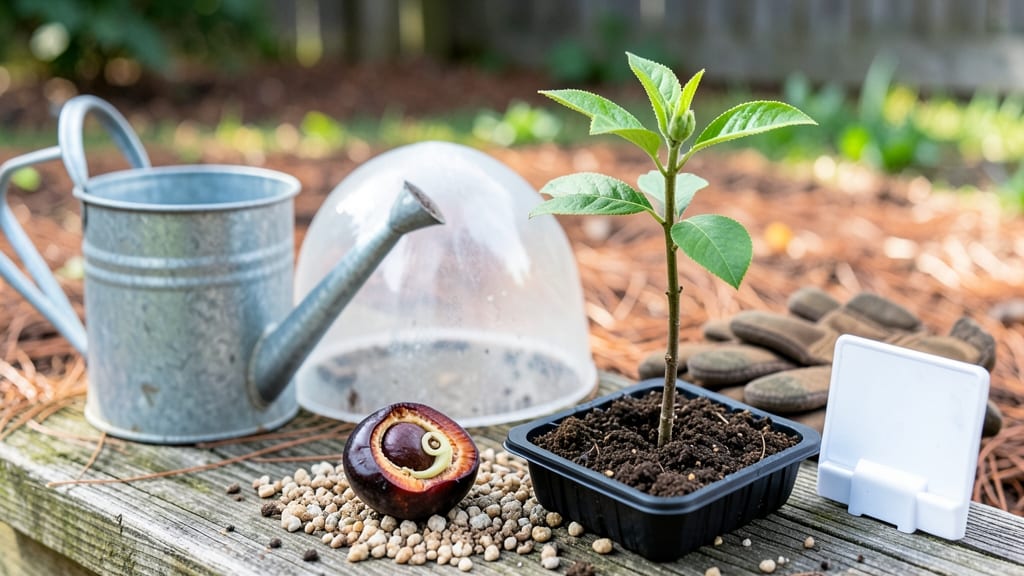
Yes, you can start a peach tree from a peach pit, but success rates are extremely low—typically under 5%—due to thick seed coats and strict dormancy requirements. The process involves extracting the pit, drying it thoroughly, then subjecting it to 3-4 months of cold stratification before planting in well-draining soil.
While it's possible to grow a peach tree from a seed, the odds are stacked against you—most store-bought peaches are hybrids bred for fruit quality, not propagation. 🌱 The thick, hard shell of a peach pit acts as a natural barrier, and without proper stratification (mimicking winter conditions), the seed simply won't sprout.
Even if it does, the resulting tree may not produce fruit true to the parent plant, as peach seeds often revert to wild characteristics. I recommend trying this experiment with heirloom varieties, where genetic consistency is less critical, and always use multiple pits to improve your chances.
Once you've cold-stratified your pit, planting depth matters—bury it about 1 inch deep in loose, sandy soil to encourage root development. Keep the soil consistently moist but never soggy, as excess water can trigger rot before germination.
Patience is key here; some seeds take months to crack open, and the first shoots are often fragile. If you're serious about growing peaches, grafting onto a rootstock is far more reliable, but the seed method adds a fun, unpredictable twist to your gardening adventures.
💡 In This Article
- Why Peach Pit Germination Fails: Seed Biology and Challenges
- Step-by-Step Peach Pit Germination Guide for Gardeners
Why peach pit germination fails: seed biology and challenges
The peach pit's thick, stony shell isn't just for protecting the seed—it's a biological barrier designed to prevent premature germination. This hard seed coat, called the endocarp, contains layers of lignified cells that resist water absorption, a trait that helps seeds survive in dry conditions.
Without mechanical scarification (like nicking the shell) or prolonged moisture exposure, the seed remains dormant. 🌱 Most gardeners overlook this: even after cold stratification, unscarified pits often fail to absorb enough water to trigger metabolic activity, leaving them "asleep" in the soil.
Temperature plays a critical role in breaking dormancy. Peach seeds require 60-86°F for metabolic activation, but they first need cold stratification to mimic winter conditions. This process—typically 3-4 months at 35-45°F—softens the seed coat and breaks down growth inhibitors naturally present in the seed.
Without this step, germination rates drop below 1%. The science here is fascinating: cold stratification triggers hormonal changes, specifically increasing gibberellins (plant growth hormones) while reducing abscisic acid (which suppresses germination).
Genetic variability is another hurdle. Commercial peaches are grafted hybrids bred for specific traits—sweetness, disease resistance, or fruit size—none of which reliably transfer to seed-grown trees. The resulting seedlings often revert to wild-type characteristics, producing small, tart fruit or even inedible varieties.
This is why professional orchards never rely on seed propagation; they use rootstocks and grafting to maintain consistency. 🌿 For home gardeners, this means your peach tree might look nothing like the parent plant, but that's part of the fun—it's a gamble with nature!
Moisture balance is equally critical. Too little water prevents the seed from swelling and cracking, while too much can cause anaerobic conditions that trigger mold or rot. The ideal soil moisture for germination is 60-70% humidity around the seed, achieved by keeping the planting medium consistently damp but not waterlogged.
A common mistake is using heavy clay soil, which holds excess moisture and suffocates the seed. Instead, opt for a sandy loam mix with 50% perlite or vermiculite to improve aeration and drainage.
Even with perfect conditions, peach seeds often fail due to internal dormancy mechanisms. Some seeds contain chemical inhibitors that prevent germination until they've experienced specific environmental cues. For peaches, this means not just cold stratification, but also light exposure during germination.
Many seeds won't sprout unless they're planted shallowly enough to receive some sunlight, which triggers the production of chlorophyll and kickstarts growth. 🌱 This dual requirement—cold + light—explains why some gardeners see no results even after months of stratification.
Lastly, consider the age of your pit. Fresh seeds germinate at rates up to 10%, but viability drops dramatically after 6 months of storage. The longer you wait, the more the seed's internal structures degrade, reducing its ability to produce a viable seedling.
This is why I always recommend using pits from freshly harvested fruit—even if they're not commercially grown. The fresher the seed, the higher your chances of success, though the odds remain slim.