
Propagation
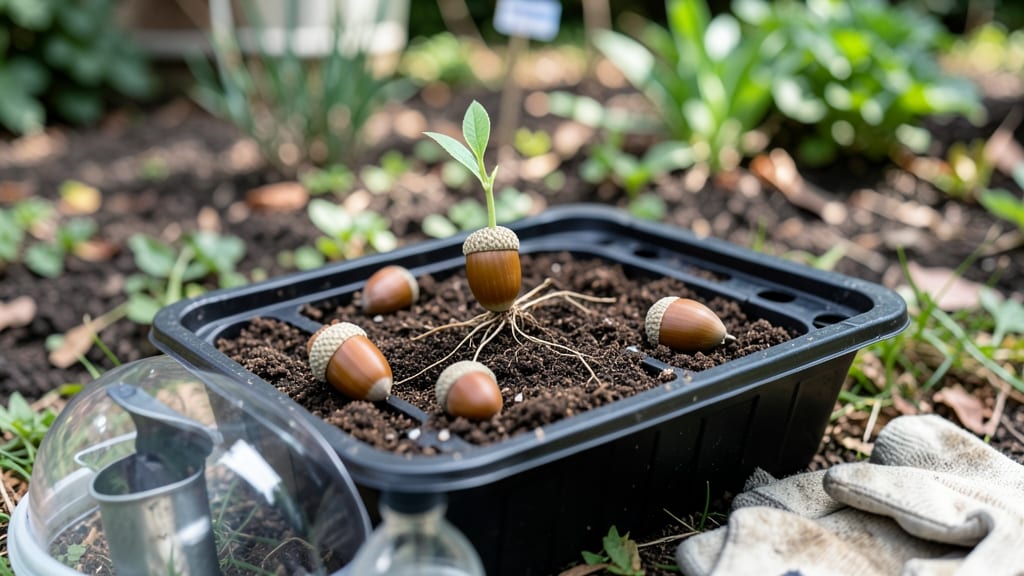
Oak tree seed germination takes patience, but the payoff is worth it—imagine growing a mighty red oak from a tiny acorn. 🌰 The secret lies in cold stratification, a process that mimics winter's natural dormancy period, breaking the seed's stubborn hold on life. Without it, most acorns will simply refuse to sprout, leaving you staring at a pile of potential instead of a thriving seedling.
Start by collecting fresh acorns in fall, then store them in a damp mix of peat moss and sand for 12-16 weeks in your fridge. The key is keeping them consistently moist but not soggy—think of it like a damp sponge, not a swamp.
After stratification, plant them just ½ inch deep in well-draining soil, and keep them in a sunny spot where temperatures hover around 60-70°F. Germination can take 6-12 weeks, but don't give up if nothing happens in the first month.
What you'll end up with is a slow but steady growth spurt that turns into a sturdy young oak. The first true leaves will be broad and lobed, a dead giveaway that your patience paid off.
These seedlings are tough—once established, they'll outlast many garden plants—but getting them to that point requires consistency, especially with moisture and light.
If you're in a hurry, avoid the temptation to rush stratification or plant too deeply—both mistakes smother the tiny root systems. Instead, think of this as a long-term investment: oak trees live for centuries, and your first successful sprout could be standing long after you're gone.
The real magic happens in the waiting, not the doing.
📚 In This Guide
- What you need
- Instructions
- Tips and common mistakes
- Wrapping up and next steps
What you need
- ● Oak acorns: Fresh, mature acorns (preferably from white oak Quercus alba or red oak Quercus rubra). Aim for 5–10 seeds for best results.
- ● Cold-stratification setup: Small paper towels or dampened peat moss (enough to wrap each acorn).
- ● A ziplock bag or airtight container (like a mason jar with a lid).
- ● Growing medium: Well-draining potting mix (e.g., 50% peat moss + 50% perlite/sand). A 4–6 inch pot per seedling works well.
- ● Spray bottle (for gentle watering).
- ● Small pots or seed trays (with drainage holes).
- ● Grow lights or sunny windowsill (6+ hours of light daily).
- ● Seedling heat mat (70–75°F) to speed up germination.
- ● Humidity dome or plastic wrap to retain moisture.
- ● pH meter (ideal soil pH: 6.0–7.0).
- ● Fertilizer (balanced 10-10-10 or slow-release oak-specific formula).
- ● Label markers (to track planting dates!).
Step-by-step guide to cold-stratifying oak tree seeds
Here's how to break dormancy and get those stubborn acorns sprouting reliably.
🌱 Step 1: Collect and Prepare Acorns
Harvest acorns in fall when they've fallen naturally—these have the highest viability. Remove any that show insect holes or soft spots, as they won't germinate. I like to soak them in lukewarm water for 24 hours first to soften the outer shell slightly. This isn't required but helps with stubborn varieties like white oaks.
After soaking, place the acorns on a paper towel and let them dry completely. You'll know they're ready when the shell feels firm again to the touch. Store them in a breathable container—like a mesh bag—until stratification. The key here is preventing mold while maintaining airflow.
💧 Step 2: Stratify in Moistened Growing Medium
Fill a container with a mix of 50% perlite and 50% peat moss—this provides both drainage and moisture retention. Moisten it until damp but not soggy (a squeeze should release a few drops). Place the acorns about 1 inch deep, spacing them 2 inches apart to prevent crowding.
Cover the container with plastic wrap and poke small holes for ventilation. This creates a humid microclimate while preventing rot. Store the container in your refrigerator's crisper drawer where temperatures stay between 35-45°F. Check monthly—if the medium dries out, mist lightly with water at room temperature.
⏰ Step 3: Monitor Stratification Progress
After 6-8 weeks, begin checking for germination signs. Look for tiny white roots emerging from the acorn's base—this is your cue that stratification worked. I like to gently lift the plastic wrap weekly to inspect without disturbing the seeds. If you see mold developing, remove affected acorns immediately and increase airflow.
Don't rush this process. Some red oak varieties may germinate in 4 weeks, while white oaks can take 12 weeks. The key is patience—consistent cold exposure breaks dormancy. Once roots reach ½ inch long, it's time to transition to warmer conditions.
☀️ Step 4: Transition to Warmth and Light
Move the stratified acorns to a warm spot (65-75°F) with bright, indirect light. I use a seedling heat mat set to 70°F for the first week to encourage shoot emergence. Keep the growing medium moist but never waterlogged—oaks hate soggy roots at this stage.
Within 2-4 weeks, you should see the first true leaves appear above the soil line. This is when you'll know the seedlings are ready for individual pots. The leaves will look delicate at first, but they'll harden as the plant matures. Watch for leggy growth—a sign the light isn't sufficient—and adjust placement immediately.
🪴 Step 5: Pot Up and Maintain Young Seedlings
Once seedlings have 2-3 sets of true leaves, transplant them into 3-inch pots with well-draining soil. Oak seedlings are sensitive to root disturbance, so I use the "slip and dip" method: slide the seedling out with its root ball intact, then dip the roots in water before planting. This preserves moisture and minimizes shock.
Place the pots in partial shade for the first month to acclimate. Gradually introduce more sunlight over 2 weeks
Tips & tricks for perfect oak seedling growth
Breaking dormancy in oak seeds takes patience—and these insider tips will help you maximize success without common pitfalls.
Shell Prep Matters: For particularly thick-shelled white oak varieties, extend the 24-hour soak to 48 hours if needed. The goal is to soften the shell just enough to allow moisture penetration without damaging the embryo inside. After soaking, pat them dry thoroughly—any residual moisture trapped in the container during storage will encourage mold growth. I've found that using a paper towel to blot each acorn individually works best for even drying.
Medium Mix Precision: The 50% perlite to 50% peat moss ratio is ideal, but if you're working with limited supplies, you can substitute perlite with coarse sand or even vermiculite. The critical factor is maintaining that balance of drainage and moisture retention. Before planting, squeeze a handful of the moistened mix—it should feel like a damp sponge, not a dripping wet rag. This consistency prevents both root rot and dehydration during the cold stratification period.
Refrigerator Placement Strategy: The crisper drawer's 35-45°F range is perfect, but not all refrigerators maintain even temperatures. Place your container on the middle shelf of the crisper drawer rather than the door shelf, which can experience temperature fluctuations when opened. I also recommend labeling your container with the date—this helps track the 6-8 week timeline without guesswork. If your fridge runs cooler than 35°F, consider using a seedling heat mat set to low (around 34°F) for consistent conditions.
Germination Timing Clues: When checking for those first white roots at the 6-8 week mark, look for the acorn to feel slightly heavier—this indicates moisture absorption through the softened shell. The roots should be firm but pliable, not mushy. If you're working with red oaks, you might see germination as early as 4 weeks, but don't be discouraged if white oaks take the full 12 weeks. The key is consistency in moisture and temperature throughout the entire stratification period.
Pro Tips for Oak Tree Seed Germination
- Breaking dormancy in oak seeds takes patience—and these insider tips will help you maximize success without common pitfalls.
- Shell Prep Matters: For particularly thick-shelled white oak varieties, extend the 24-hour soak to 48 hours if needed.
- Medium Mix Precision: The 50% perlite to 50% peat moss ratio is ideal, but if you're working with limited supplies, you can substitute perlite with coarse sand or even vermiculite.
Frequently asked questions
Got questions about germinating oak tree seeds? You’re not alone—this process can feel tricky! Below, we’ve tackled the most common concerns to help you grow those cold-stratified sprouts with confidence.
How long does it take for oak seeds to germinate after cold stratification?
With proper cold stratification (6–8 weeks in a moist, chilled environment), oak seeds typically germinate within 2–6 weeks after removing them from the fridge. Some stubborn varieties (like white oaks) may take longer—be patient! Monitor moisture levels and warmth (65–75°F) to speed things up.
Do I need to soak oak seeds before cold stratification?
No soaking is required! Oak seeds have hard, impermeable shells—cold stratification naturally softens them over time. Simply place them in a damp paper towel or peat moss, seal in a bag, and refrigerate. Soaking risks mold or premature rotting, so skip this step entirely.
What if my oak seeds don’t germinate after cold stratification?
Don’t give up! Try these fixes:
- Check moisture: Seeds should stay damp (not soggy) during stratification.
- Verify stratification time: Some oaks need up to 12 weeks—extend if needed.
- Test viability: Cut open a seed—if it’s greenish inside, it’s still good.
- Use a heat mat (70–80°F) after stratification to encourage sprouting.
Can I germinate oak seeds indoors without cold stratification?
Cold stratification is essential for breaking oak seed dormancy. Without it, germination rates drop to near 0%. If you’re short on time, try sandpaper scarification (lightly sanding the seed coat) as a backup, but combine it with warmth (75°F) for best results.
How do I transplant oak seedlings once they sprout?
Wait until seedlings have 2–3 true leaves (not just the initial seed leaf) and are 3–4 inches tall. Use a well-draining mix (50% peat/50% perlite) and keep soil moist. Harden off seedlings by gradually exposing them to outdoor conditions over 1–2 weeks before planting outdoors in spring.
Pro Tip: Label your seeds!
Oak seedlings look similar at first—label each pot with the species (e.g., white oak, red oak) and date. This helps track growth rates and ensures you’re nurturing the right tree for your climate.
Wrapping up and next steps
Growing oak tree seeds from scratch is a rewarding journey that blends patience with nature’s magic! 🌱 By mastering cold stratification and providing the right conditions, you can coax those stubborn acorns into thriving saplings in just 6 weeks.
Whether you’re a gardening newbie or a seasoned green thumb, every sprout you nurture is a step toward a future forest—one tiny root at a time.
Ready to take the next step? Plant your first batch this fall and watch your garden transform. Share your progress with fellow plant enthusiasts or dive deeper into oak tree care—your green legacy starts now!