
Size
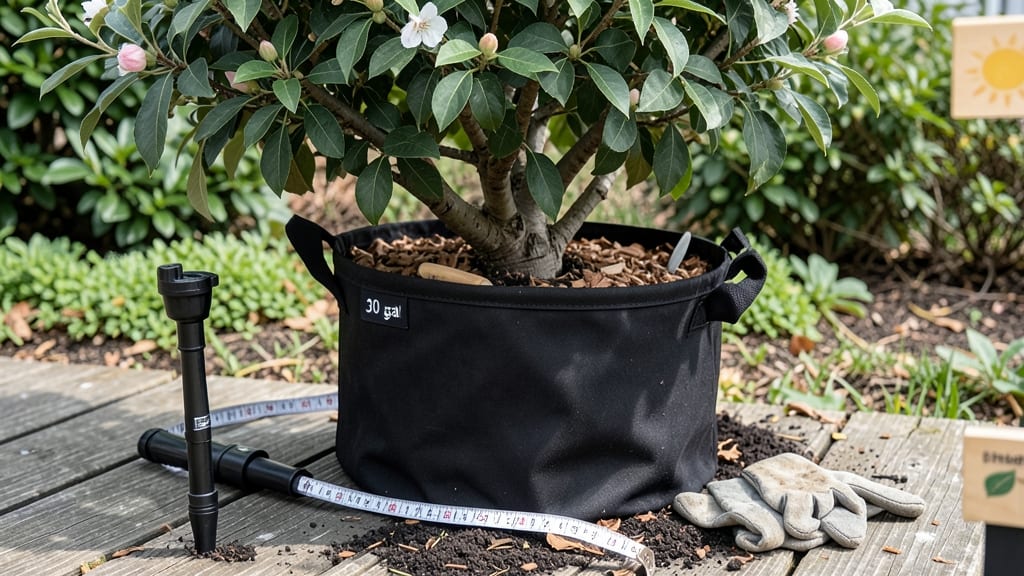
A 30-gallon tree size might seem small, but its mature height can transform your yard from cozy to overwhelming in just a few years.
Picture this: You plant a 🌳 Crape Myrtle in April, expecting a pretty accent plant—only to watch it shoot up to 25 feet by summer. That’s the kind of surprise you want to avoid when space is limited.
Not all container trees grow into giants. Some, like Dwarf Ficus or Japanese Maples, stay under 15 feet even at maturity, making them perfect for patios or small gardens. The key is knowing which species fit your vision before you buy.
Below, I break down 15+ common trees by their growth habits—fast vs. slow—and how to estimate their future size so you can plan your landscape with confidence.

30-Gallon tree size at maturity: height ranges by fast-growing vs slow-growing species
A 30-gallon container tree gives you flexibility, but its mature height determines whether it thrives in your yard or outgrows it. Fast-growing species like Crape Myrtle can reach 20-30 feet in 5-10 years, while slow growers such as Japanese Maple stay under 15 feet for decades.
The key is matching the tree’s growth habit to your space—whether it’s a small urban patio or a rural backyard.
Your yard size and sunlight conditions also play a role. For example, a Redbud tree (15-20 ft) fits neatly in a medium-sized yard with full sun, while a Weeping Willow (30-50 ft) needs space and moisture.
Below, we break down 15+ popular 30-gallon trees, their mature heights, and growth rates to help you plan for long-term success.
| Tree Species | Mature Height (ft) | Growth Rate | Best For | Sunlight Needs | ||||||||||||||||||||
|---|---|---|---|---|---|---|---|---|---|---|---|---|---|---|---|---|---|---|---|---|---|---|---|---|
| Crape Myrtle | 15–25 ft | Fast (3–5 ft/year) | Urban yards, patios | Full sun | ||||||||||||||||||||
| Japanese Maple | 6–15 ft | Slow (1–2 ft/year) | Small gardens, containers | Partial shade | ||||||||||||||||||||
| Redbud | 15–20 ft | Moderate (2–3 ft/year) | Woodland edges, medium yards | Full sun to partial shade | ||||||||||||||||||||
| Weeping Willow | 30–50 ft | Very fast (5–8 ft/year) | Large properties, ponds | Full sun | ||||||||||||||||||||
| Dwarf Ficus | 8–12 ft | Slow (1–2 ft/year) | Containers, patios | Indoor/outdoor (bright light) | ||||||||||||||||||||
| Ornamental Pear | 20–30 ft | Moderate (2–4 ft/year) | Urban landscapes, streets | Full sun | ||||||||||||||||||||
| Serviceberry | 15–25 ft | Moderate (2–3 ft/year) | Small yards, wildlife gardens | Full sun to partial shade | ||||||||||||||||||||
| Dogwood | 15–25 ft | Slow (1–2 ft/year) | Shady gardens, woodland | Partial shade | ||||||||||||||||||||
| Eastern Redbud | 10–20 ft | Moderate (2 ft/year) | Small spaces, borders | Full sun to partial shade | ||||||||||||||||||||
| Semi-Dwarf Apple | 12–18 ft | Moderate (2–3 ft/year) | Home orchards, containers | Full sun | ||||||||||||||||||||
| Magnolia | 20–30 ft | Slow (1–2 ft/year) | Specimen planting, large yards | Full sun to partial shade | ||||||||||||||||||||
| Tree Type | Root-Ball Size | Mature Height | Canopy Spread | Spacing Needs |
|---|---|---|---|---|
| Upright (e.g., Crape Myrtle) | 12–18" | 15–25 ft | 10–15 ft | 10–12 ft from structures |
| Weeping (e.g., Willow) | 15–20" | 15–25 ft | 20–30 ft | 15–20 ft from buildings |
| Multi-Trunk (e.g., Dogwood) | 10–14" | 10–15 ft | 8–12 ft | 8–10 ft from borders |
| Dwarf (e.g., Japanese Maple) | 8–12" | 6–12 ft | 6–10 ft | 5–7 ft from paths |
Growth habit plays a critical role in spacing. Upright trees like redbuds or crabapples grow vertically, requiring 10–12 feet of vertical clearance. Weeping varieties, such as weeping cherry, spread horizontally, needing 15–20 feet of ground space. Multi-trunk trees (e.g., serviceberry) have a wider base but shorter height, ideal for small yards with 8–10 feet of clearance.
Always factor in overhead utilities—power lines or roofs may limit your choices.
Use a simple spacing calculator to plan: measure your available space, then subtract 2 feet for each side of the tree’s mature canopy. For example, a 20-foot-wide weeping tree needs 24 feet of total space (20 ft + 2 ft on each side).
Sketch your layout to avoid overcrowding, which stresses roots and reduces airflow. Pro tip: Plant in groups of 3–5 trees for a natural, balanced look—just ensure each has its own root zone.
Don’t forget to research growth rates. Fast-growing trees like leucadendron or silky oak can add 3–5 feet per year, while slow growers like Japanese maple gain only 6–12 inches annually.
Adjust your timeline accordingly—some trees may need 5–10 years to reach their full size. For urban gardens, opt for slow-growing species to minimize future pruning needs.
Finally, consider pruning potential. Some trees (e.g., ornamental pear) tolerate heavy pruning to control size, while others (e.g., birch) are sensitive. If you’re unsure, ask your nursery for pruning tips or consult a local arborist.
With the right species selection and spacing plan, your 30-gallon tree will thrive for decades without outgrowing its welcome.