
Pruning
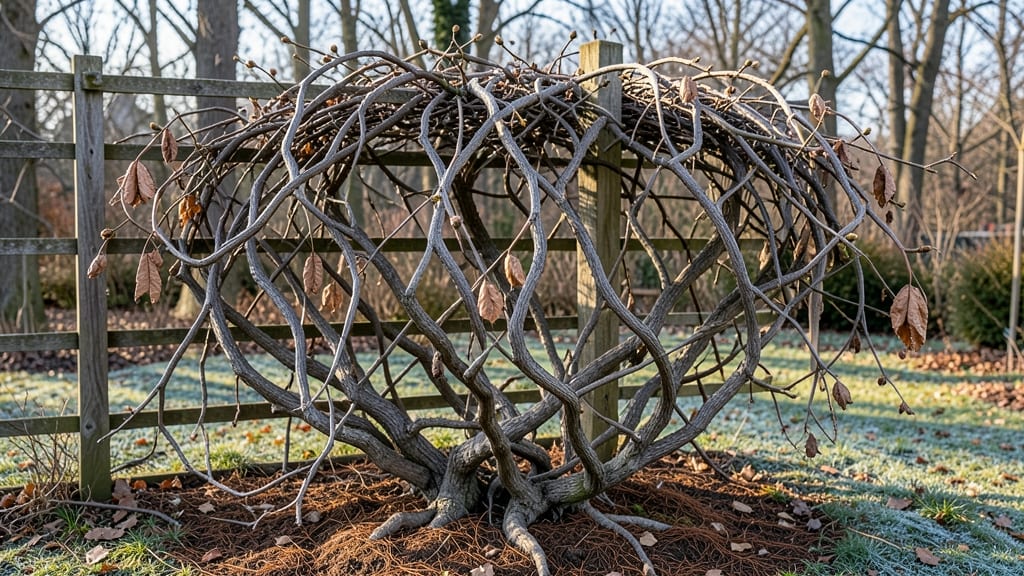
Winter’s the perfect time to prune the wisteria tree in winter—when those bare branches reveal every twist and turn. ✂️ I’ve pruned mine for years, and this dormant-season approach is how I get vibrant spring blooms instead of tangled vines.
The key? Cutting back 30-50% of last year’s growth while the tree sleeps—but timing and technique make all the difference.
You’ll need sharp pruners, a ladder (unless your tree is small), and a clear day when temps stay above freezing. The goal isn’t to shape the tree but to open up the canopy so sunlight reaches the center, where next year’s flowers form.
I mark my cuts with a piece of tape first—trust me, you’ll thank yourself later when you’re not second-guessing every snip.
By early spring, you’ll see fresh green shoots pushing through, thicker and stronger than before. The blooms arrive earlier, last longer, and the whole tree looks like it’s been given a spa day.
Plus, winter pruning means no messy sap or pests to deal with—just clean cuts and happy growth ahead.
Works for both mature trees and young plants, though smaller wisterias need gentler pruning. If you’re in a harsh winter zone, wrap young trunks in burlap to protect them from cracking winds. Here’s how to do it without turning your garden into a jungle of overgrown vines.
📚 In This Guide
- What you need
- Instructions
- Tips and common mistakes
- Wrapping up and next steps
What you need
- ● Pruning shears – Bypass pruners (sharp, 6–8" blades) for clean cuts on small branches.
- ● Loppers – Long-handled (20–24") for thicker branches (½"–1.5" diameter).
- ● Pruning saw – Curved-tooth saw for branches over 1.5" thick (avoid tearing bark).
- ● Gloves – Heavy-duty, cut-resistant (wisteria thorns are no joke!).
- ● Disinfectant (70% rubbing alcohol or bleach solution) – 1 part bleach to 9 parts water to sterilize tools between cuts.
- ○ Rope or twine – 3/8"–½" thick for tying branches during training (optional but helpful).
- ○ Sharpie or pruning sealant – For marking cuts (optional, but useful for large wounds).
- ● Ladder – Sturdy, extendable (12–16' tall) for high branches.
- ● Safety glasses – Protect your eyes from debris (especially when sawing!).
- ● Garden hose – For rinsing tools post-pruning.
- ● Pruning guide or ruler – To measure branch lengths accurately (helpful for beginners).
- ● Compost bin or bag – For collecting pruned branches (great for mulch!).
Step-by-Step instructions for pruning wisteria in winter
Winter’s the perfect time to shape your wisteria—here’s how to do it right for lush spring blooms.
✂️ Step 1: Choose the Right Tools and Timing
Grab a pair of sharp pruning shears (cleaned with rubbing alcohol) and loppers for thicker branches. Prune on a dry, frost-free day between late winter and early spring—after the worst cold snaps but before buds swell. I always check the forecast first; pruning during a warm spell followed by a freeze stresses the plant.
Wisteria’s dormant season is your window—this is when the plant conserves energy, so it can focus on new growth instead of healing wounds. If you wait until buds break, you’ll cut off potential blooms. Look for bare branches with no green to confirm dormancy.
✂️ Step 2: Remove Dead, Weak, or Crossing Branches
Start by eliminating any dead wood (branches that snap easily or have no bark). Next, cut out thin, leggy growth that never thickens—these are energy vampires. I also remove branches growing toward the center of the plant; they’ll rub against each other and create wounds.
Make cuts just outside the bud union (the swollen area where leaves or flowers emerge). Angle the cut slightly downward to prevent water from pooling. If a branch is thicker than your shears, use loppers and make the cut on the underside of the branch to avoid tearing the bark.
✂️ Step 3: Thin Out Overcrowded Areas
Wisteria’s natural growth habit is vigorous, so it’s easy to end up with a tangled mess. Step back and look for clusters of branches growing in the same direction. Remove every other branch, starting with the smallest, to improve airflow and sunlight penetration. This isn’t about drastic cuts—think of it as creating a scaffold for future growth.
Here’s the thing—wisteria blooms on new wood, so you want to encourage strong, outward-facing branches. If you see a branch growing straight up, cut it back by one-third to force it to bush out. You’ll know you’re on the right track when the plant’s structure looks open and airy.
✂️ Step 4: Shape the Tree for Optimal Bloom Display
Now’s the time to guide the plant’s shape. Wisteria thrives with horizontal branches, so gently bend younger stems into a U-shape and secure them with soft ties if needed. Older branches won’t bend, but you can prune them to encourage new growth in the right direction.
For a tree form, focus on 3-5 main branches spaced evenly around the trunk. Prune back any suckers growing from the base—these compete with the main structure. If your wisteria is climbing a trellis, trim back the longest vines to 12-18 inches from the support to encourage bushier growth.
🌱 Step 5: Clean Up and Prepare for Spring
After pruning, rake up and dispose of all clippings—don’t leave them on the ground, as they can harbor pests. Now’s also the time to apply a balanced fertilizer (like 10-10-10) around the base of the plant. I sprinkle it in a 6-inch ring and water it in lightly to wake up the roots.
Finally, inspect the cuts for any rough edges or tears. If you see any, smooth them out with your shears. A clean cut heals faster and reduces the risk of disease. By the time spring arrives, your wisteria will be ready to burst into bloom—just wait for those fragrant purple clusters to appear!
Tips & tricks for perfect winter wisteria pruning
Here's what I've learned after years of shaping wisteria—these little details make all the difference for spring blooms.
Timing is Everything: That "dry, frost-free day" window is crucial—it's not just about avoiding freeze damage. I've found that pruning on a cloudy morning gives you the best light to see what you're cutting. The plant's sap flows slower in cooler morning temperatures, so cuts heal faster. Also, avoid pruning if rain is forecast within 24 hours—the wet conditions can invite fungal infections to those fresh cuts.
The One-Third Rule: When you see those vertical branches in Step 3, cutting back by one-third isn't arbitrary—it's based on how wisteria naturally grows. This amount of reduction forces the plant to put energy into developing lateral branches rather than continuing upward growth. I've seen wisteria double its bloom production after applying this rule consistently for three years. For thicker branches, make your cut just outside the bud union, but don't be afraid to make slightly longer cuts if needed to achieve that one-third reduction.
Shape with Purpose: That "3-5 main branches" guideline in Step 4 isn't just about aesthetics—it's about creating an open structure that lets sunlight and air circulate. I like to visualize the plant like an umbrella: you want those main branches spreading outward to catch light, with smaller branches filling in the gaps. For climbing wisteria, those 12-18 inches from the trellis should be your target for trimming back—this encourages the plant to send out multiple growth points rather than one long vine.
Clean Cuts Matter: The final inspection for rough edges in Step 5 is where many people cut corners, but smooth cuts make all the difference. Use your pruning shears to shave down any jagged edges—this isn't just about looks, it's about preventing entry points for diseases. I keep a small bottle of rubbing alcohol with me to wipe my tools between cuts on different branches, which helps prevent spreading any potential pathogens. For larger branches, make your cut on the underside to avoid tearing the bark as you saw down.
Pro Tips for Wisteria Tree In Winter
- Here's what I've learned after years of shaping wisteria—these little details make all the difference for spring blooms.
- Timing is Everything: That "dry, frost-free day" window is crucial—it's not just about avoiding freeze damage.
- The One-Third Rule: When you see those vertical branches in Step 3, cutting back by one-third isn't arbitrary—it's based on how wisteria naturally grows.
Frequently asked questions
Got questions about keeping your wisteria thriving through winter? Here are some common concerns—and expert answers—to help you prune with confidence!
When is the absolute best time to prune wisteria in winter?
Prune wisteria during its dormant season, ideally between late winter (February) and early spring (March), before new growth appears. This timing minimizes stress and encourages robust spring blooms. Avoid pruning after buds form—you’ll risk cutting off next year’s flowers!
How much can I safely cut back my wisteria tree?
You can trim up to ⅓ of the plant’s total growth per year, but avoid aggressive cuts. Focus on removing dead, weak, or crossing branches first. For established wisteria, thinning out older stems (especially those over 3 years old) promotes airflow and healthier blooms. Never remove more than 20% in one season!
What if my wisteria looks dead after winter—should I panic?
Wisteria often appears bare and leafless in winter, but it’s not dead! Check for green buds or slight swelling on branches—these signal life. If branches are completely dry and brittle, they’re likely dead and can be pruned away. Give it time; new growth should emerge by late spring.
Will pruning in winter reduce next year’s flowers?
Not if done correctly! Pruning old wood (last year’s growth) in winter encourages more flowers by redirecting energy to new, vigorous stems. However, avoid cutting back current year’s growth—this is where next year’s blooms form. Focus on shaping and thinning for optimal airflow.
What’s a good alternative if my wisteria won’t survive winter?
If your wisteria struggles in cold climates, consider hardier alternatives like:
- Japanese Wisteria (Wisteria floribunda) (more cold-tolerant than Chinese varieties)
- Clematis (similar vines, easier to manage)
- Honeysuckle (fragrant, low-maintenance blooms)
Pro Tip:
Mark branches with colored tape before pruning to track growth patterns. This helps you identify old vs. new wood and ensures you’re cutting back safely. Revisit your notes in spring to assess progress!
Wrapping up and next steps
Winter is the perfect time to unlock your wisteria tree’s spring bloom potential—and with the right pruning techniques, you’re setting the stage for a stunning floral display. Remember, patience and precision pay off: focus on shaping, thinning, and removing dead growth while leaving the healthy framework intact.
Your efforts now will reward you with lush, vibrant blooms come spring!
Ready to take action? Grab your tools, put on your gloves, and schedule that pruning session before the first buds even peek through. Start planning your winter wisteria pruning today! 🌿✨