
How To
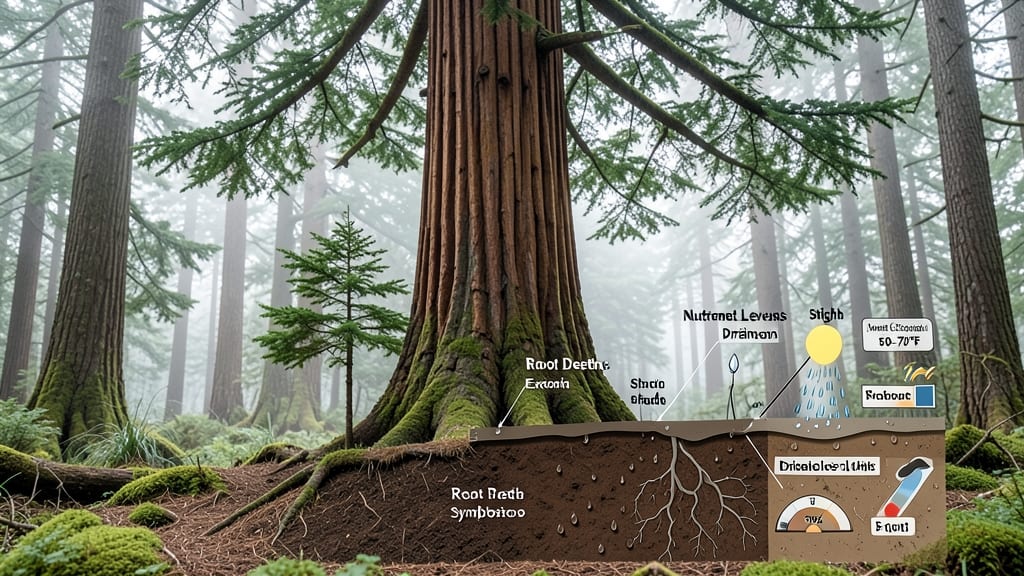
The factors that might affect how tall a coast redwood tree can grow include soil quality, water availability, climate conditions, sunlight exposure, and competition from surrounding vegetation. Deep, nutrient-rich soil and foggy coastal climates maximize growth potential, while drought or poor drainage can stunt development significantly.
A coast redwood's towering height—often exceeding 300 feet—depends heavily on its growing conditions. 🌲 These trees thrive in well-drained, acidic soils rich in organic matter, where their extensive root systems can spread widely to access moisture and nutrients.
Coastal fog provides a natural water source, reducing reliance on deep groundwater, while dense canopies block sunlight for competing plants. Even small changes in elevation or nearby vegetation can alter growth rates, making site selection critical for foresters and gardeners alike.
What's fascinating is how redwoods adapt to their environment. In ideal conditions, they can grow 3-4 feet per year in height, but stress from competition or poor soil slows this dramatically.
For example, redwoods in inland areas often grow shorter due to less fog and more seasonal drought. Understanding these factors helps predict growth and plan conservation efforts effectively.
💡 In This Article
- How Soil Composition and Water Impact Coast Redwood Growth
- Climate and Competition Factors for Optimal Redwood Height
How soil composition and water impact coast redwood growth
Coast redwoods (Sequoia sempervirens) develop specialized root systems that spread laterally rather than deeply, allowing them to access vast areas for water and nutrients. Their shallow but extensive roots—often spanning up to 100 feet in diameter—thrive in deep, well-drained soils with high organic content.
Ideal coastal soils have a slightly acidic pH (5.0-6.5) and retain moisture without becoming waterlogged, creating perfect conditions for rapid vertical growth. In contrast, compacted or clay-heavy soils restrict root expansion, forcing trees to invest energy in root development rather than height.
The water retention capacity of redwood soil is critical—these trees can absorb up to 500 gallons of water daily during peak growth seasons. Coastal fog plays a vital role here, providing a passive water source that reduces reliance on deep groundwater.
In drier inland regions, redwoods grow significantly shorter because their roots struggle to access sufficient moisture, often resulting in stunted growth rates of just 1-2 feet per year compared to 3-4 feet in optimal coastal conditions.
The tree's ability to photosynthesize efficiently in low-light conditions also depends on consistent moisture levels.
Nutrient absorption is another key factor—redwoods prefer soils rich in nitrogen, phosphorus, and potassium. Coastal soils naturally accumulate these nutrients from decomposed plant matter and marine deposits. When planted in nutrient-poor soils, redwoods exhibit slower growth and weaker structural integrity.
For example, redwoods in restored forest areas often show 20-30% faster growth when amended with compost or organic mulch compared to untreated sites. This nutrient boost directly translates to taller, healthier trees over time.
One often-overlooked aspect is soil aeration—redwood roots require oxygen to function efficiently. Compacted soils reduce oxygen availability, leading to root stress and reduced growth. In urban or developed areas, where soil compaction is common, redwoods may develop shallow root systems that limit their height potential.
Foresters address this by aerating soil or planting in raised beds to improve root development. The contrast between ideal and suboptimal soil conditions highlights why native redwood forests remain the tallest specimens in the world.
Consider these soil-related growth factors in action:
- Optimal soil: Deep, acidic, well-drained with 5-10% organic matter → 3-4 feet annual growth
- Poor soil: Compacted, nutrient-poor, or waterlogged → 1-2 feet annual growth
- Foggy coastal climate: Reduces water stress by 40-50% compared to inland areas
The interplay between soil composition and water availability creates a growth environment where redwoods can reach their full potential—making soil health the foundation of their legendary height. 🌿