
Plants
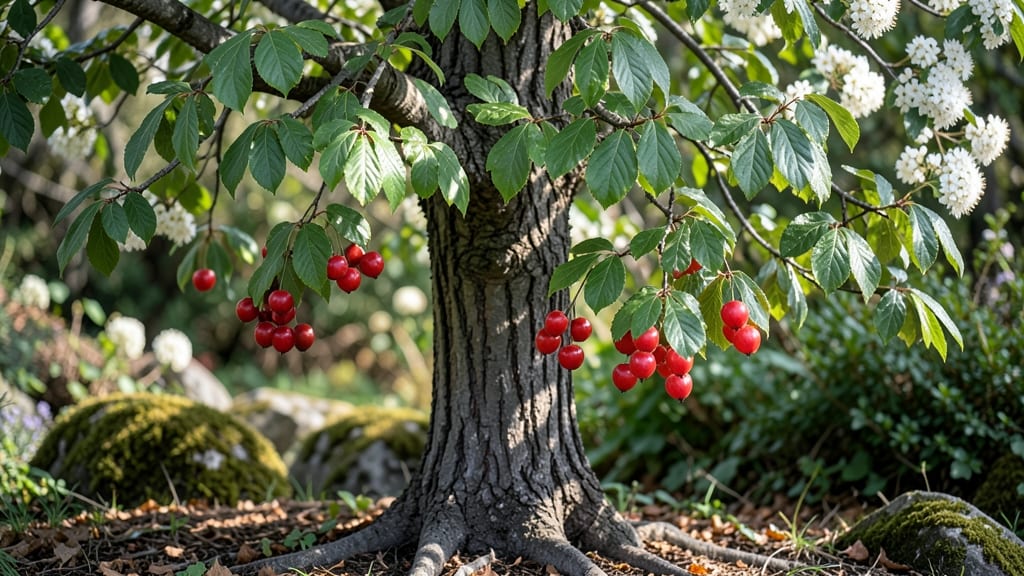
A rowan tree looks like a slender, upright tree with glossy oval leaves that have jagged edges, delicate white or pink spring flowers, and bright red or orange berry clusters that resemble tiny apples. Its bark starts smooth and gray but develops deep cracks as it ages, typically growing 15–30 feet tall.
A rowan tree's most striking feature is its berry clusters, which remain on the branches through winter, making them a reliable identification marker. 🍎 These berries are toxic to humans but attract birds, which help spread the seeds.
The tree's leaves turn vibrant yellow or orange in fall, creating a stunning seasonal display. Unlike similar trees, rowan berries grow in dense, drooping clusters rather than flat-topped arrangements, and its leaves are more elongated with finer serrations.
The bark is another key identifier—young trees have smooth, silvery-gray bark that develops deep vertical fissures as they mature, creating a rugged texture. This contrasts with mountain ash, which has more horizontal bark ridges.
Rowan trees thrive in cooler climates, often found in woodlands or as ornamental plants in gardens, where their seasonal color changes make them a favorite.
💡 In This Article
- Identifying Rowan Tree Features by Season
- Rowan Tree vs. Similar-Looking Species
Identifying rowan tree features by season
In spring, rowan trees burst into life with delicate white or pale pink blossoms that grow in small clusters along the branches. These flowers, measuring about 0.5 inches wide, have five petals with a subtle, almost sweet fragrance that attracts pollinators like bees and butterflies.
The blossoms appear before the leaves fully emerge, creating a stunning visual contrast against the emerging green foliage. 🌸 This early bloom period is a key identification feature, as many similar trees bloom later in the season.
By summer, the tree's leaves reach their full glory—glossy, oval-shaped, and 1-3 inches long with finely serrated edges that create a saw-like appearance. When crushed, the leaves release a faint, slightly bitter aroma, which helps distinguish them from other species.
The leaves grow in an alternating pattern along the branches, creating a layered, lush canopy that provides shade. During this season, the tree also develops its signature berry clusters, starting as small green buds that gradually turn bright red or orange as they ripen.
Fall transforms the rowan tree into a fiery spectacle as its leaves shift from green to vibrant yellow, orange, or deep red hues. This color change occurs due to the breakdown of chlorophyll, revealing the underlying pigments like carotenoids and anthocyanins.
The berries, now fully mature, remain clustered on the branches, providing a striking contrast against the autumn foliage. Unlike many trees that drop their leaves in fall, rowan berries stay attached through winter, offering a reliable identification marker even when the tree is bare. 🍂
Winter reveals the rowan tree's bark and berries as the primary identification features. Young trees have smooth, grayish bark that resembles elephant skin, but as the tree matures, the bark develops deep, vertical fissures that create a rugged, textured appearance.
These fissures are more pronounced than the horizontal ridges found on mountain ash trees. The berries, which remain on the branches, are a bright red or orange and resemble small apples, though they are toxic to humans.
Birds, however, love them and often feast on the berries during colder months, helping to disperse the seeds.
The rowan tree's upright, slender growth habit also sets it apart, typically reaching 15-30 feet tall with a spread of about 10-15 feet. Its branches often grow in a slightly weeping manner, especially when laden with berries, giving the tree a graceful, almost elegant appearance.
This growth pattern, combined with its seasonal changes, makes the rowan tree a standout feature in any landscape, whether in a woodland setting or a carefully curated garden. 🌲
What makes the rowan tree truly unique is its ability to offer visual interest throughout all four seasons. From the delicate spring blossoms to the fiery fall foliage and the persistent winter berries, each stage provides distinct clues for identification.
This seasonal versatility is one reason why rowan trees are so beloved in both natural and cultivated settings, offering year-round beauty and ecological benefits. 🌟