
Plants
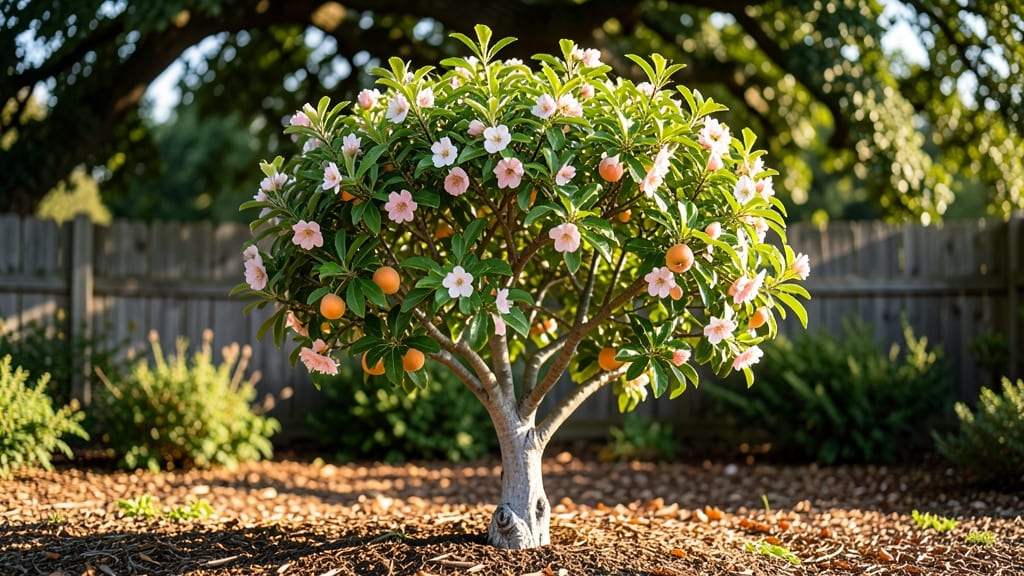
A nectarine tree looks like a smaller, smooth-skinned version of a peach tree, with glossy green leaves that resemble almond-shaped peach foliage. Its bark is grayish-brown and furrowed, while mature fruit features a velvety, freestone pit and vibrant red, orange, or yellow hues when ripe.
A nectarine tree's most striking feature is its smooth, hairless fruit—unlike peaches, which have fuzzy skins. 🌿 The leaves, often slightly darker green, grow in clusters along slender branches, creating a lush canopy that's easier to spot from a distance than peach trees.
The bark develops deep furrows as the tree matures, giving it a rugged, textured appearance that contrasts with the fruit's delicate surface.
When identifying nectarines, focus on the fruit's blush color—ripe nectarines develop a soft, velvety sheen rather than the waxy finish of peaches. The stems also tend to be slightly thicker, and the fruit often hangs lower on the branches due to its slightly heavier weight.
These subtle differences become more apparent once you know what to look for in the tree's overall structure.
💡 In This Article
- Nectarine Tree Leaf, Bark, and Branch Identification
- How to Spot Ripe Nectarines on the Tree
Nectarine tree leaf, bark, and branch identification
Nectarine trees share a striking similarity with peach trees but reveal key differences when you examine their anatomy up close.
The leaves are the first giveaway—they're typically 1-2 inches longer than peach leaves, with a smoother, slightly darker green hue and serrated edges that curve gently like a crescent moon. 🌿 What sets them apart is the leaf's surface: nectarine leaves have a subtle waxy coating that makes them feel slightly slick to the touch, while peach leaves have a more matte finish.
The bark tells another story. Young nectarine trees have smooth, silvery-gray bark that gradually develops deep, diamond-shaped furrows as they mature—similar to peach trees but often more pronounced by age 10 years.
The branches themselves are slender and slightly more flexible, growing at sharper angles (around 45-60 degrees) compared to peach branches, which tend to spread wider. This structural difference affects how the fruit hangs: nectarines cluster tighter near the branch tips, creating a denser canopy.
Seasonal changes offer additional clues. In spring, nectarine trees bloom with delicate white or pale pink flowers that appear slightly later than peach blossoms (typically 7-10 days delay).
The flowers have a subtle fragrance that's less sweet than peaches, with petals that last about 5-7 days before falling. 🌸 This delayed bloom cycle often results in fruit ripening 1-2 weeks after peaches in the same region—a key factor for gardeners planning harvests.
One advanced identifier is the leaf arrangement: nectarine leaves grow in alternating patterns along the branches, with each leaf connected by a short, hairless stem. Peach trees sometimes develop small hairs along these stems, especially in younger trees.
The undersides of nectarine leaves also have a faint bluish tint when viewed against light, a trait shared with other stone fruits like plums but more pronounced in nectarines.
For accurate identification, examine these three zones simultaneously: the leaf shape and texture, the bark pattern, and the branch angles. Together, they create a distinctive silhouette that becomes easier to recognize after your first season observing the tree.
The combination of smooth fruit and these anatomical features makes nectarine trees instantly distinguishable from their fuzzy-skinned cousins once you know what to look for.
Pro tip: Run your fingers along a branch during the growing season. Nectarine branches have a slightly rougher texture due to tiny, raised lenticels (pores) that appear as tiny bumps, while peach branches feel smoother. This subtle difference becomes more apparent when comparing side-by-side with a known peach tree. 🌱