
Pests and Diseases
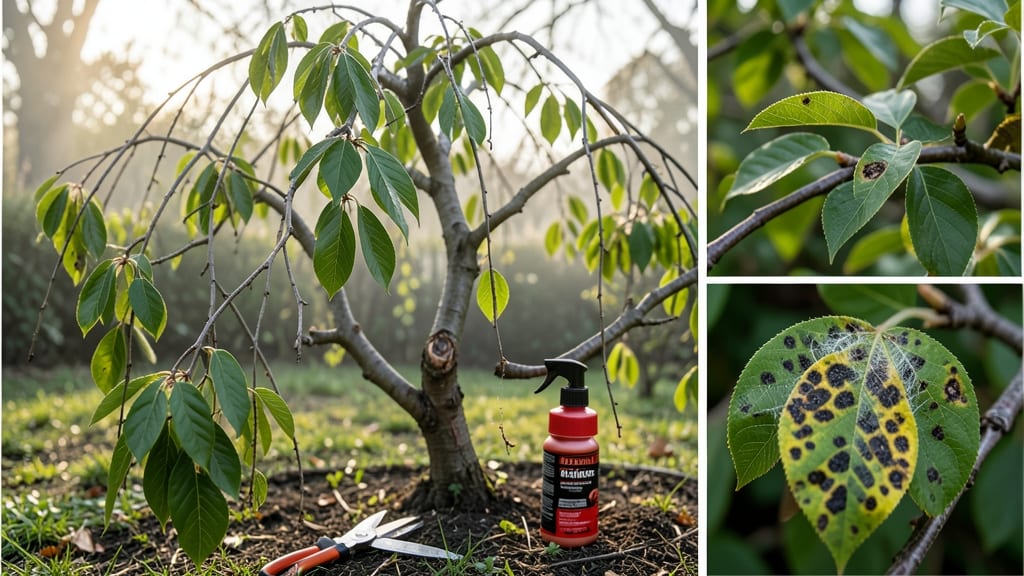
Silky bark scorch and canker are the silent killers of weeping cherry trees—🌳 but I’ve saved mine by catching these diseases early. The first sign? Dark, sunken cankers on the bark or sudden leaf scorch in late summer.
These fungal infections spread fast if you ignore them, but with the right approach, you can stop them before they take over.
Most cases start with wounds from pruning or storm damage, where spores land and take hold. My tree’s cankers appeared after I pruned too late in the season—now I wait until dormant season and sterilize tools between cuts.
The key is acting fast: if you see oozing cankers or dead branches, remove them immediately and dispose of them in the trash (not compost).
For existing infections, a mix of copper fungicide and pruning out diseased wood works best. I apply the fungicide in early spring and again after rain, and within a year, my tree’s new growth stayed healthy.
The secret? Consistency—don’t skip treatments, even if the tree looks fine. Prevention is easier than cure, and a little effort now saves years of struggle.
This method works for silky bark scorch, bacterial canker, and even powdery mildew—just adjust the timing and treatment. Whether you’re dealing with a young sapling or a mature tree, early action makes all the difference. Let’s get your cherry tree back to its stunning, weeping glory.
Root Causes of Cherry Tree Decline
Weeping cherry trees (Prunus serrulata) are beloved for their delicate pink blossoms and graceful branches, but when disease strikes—like silky bark scorch or canker—their health can unravel quickly.
Understanding why these issues develop is the first step to prevention and treatment. Below, we break down the key culprits behind cherry tree diseases, backed by science and actionable insights.
Fungal pathogens are the primary cause of silky bark scorch and canker diseases in weeping cherry trees. These microscopic organisms thrive in warm, humid conditions and exploit weak spots in the tree’s bark or wounds from pruning.
- Silky Bark Scorch (Leucostoma spp.):
This fungus enters through pruning cuts or bark injuries, producing dark, sunken cankers that ooze gum-like resin. The name "silky" refers to the white, cottony fungal growth that appears in moist conditions. Infected branches may wither and die back, giving the tree a "scorched" look.
- Canker Diseases (Botryosphaeria or Cytospora spp.):
These fungi create oval-shaped cankers with cracked or sunken bark, often accompanied by gum exudation. Unlike silky scorch, cankers may girdle (completely encircle) branches, cutting off nutrient flow and killing the affected limb.
💡 Pro Tip: Fungal spores spread via rain, wind, or contaminated tools. Always sterilize pruners with 70% isopropyl alcohol or a 10% bleach solution between cuts to prevent cross-contamination.
Cherry trees under stress are far more susceptible to fungal infections. Environmental factors create the perfect storm for disease by compromising the tree’s natural resistance.
| Stressor | How It Affects the Tree | Actionable Fix |
|---|---|---|
| 🌊 Excess Moisture | Prolonged wetness keeps fungal spores active and softens bark, making it easier for pathogens to penetrate. | Improve drainage with organic mulch (3–4 inches) and avoid overhead watering. |
| ☀️ Sun Scorch | Intense afternoon sun dries and cracks bark, creating entry points for fungi. Weakened bark is less able to resist infections. | Plant in partial shade or use lightweight tree wrap in winter to protect bark. |
| 🌡️ Temperature Fluctuations | Rapid temperature swings (e.g., freezing nights followed by warm days) stress the tree, reducing its ability to heal wounds. | Apply antitranspirant sprays in late summer to reduce moisture loss and protect bark. |
| 🍄 Poor Air Circulation | Dense foliage or crowded plantings trap humidity, creating a fungal-friendly microclimate. | Prune to open the canopy and space trees 15–20 feet apart for airflow. |
Any injury to the bark—whether from pruning, hail, or wildlife—acts as a gateway for fungal spores. Weeping cherry trees, with their thin, delicate bark, are especially vulnerable.
- Improper Pruning:
Cutting too close to the branch collar (the swollen area where the branch meets the trunk) or leaving jagged edges creates slow-healing wounds. Fungi like Cytospora exploit these gaps within days.
- Mechanical Injury:
Lawnmowers, string trimmers, or even bird pecking can strip bark, exposing the cambium layer (the tree’s growth tissue). Without this protective barrier, pathogens invade effortlessly.
- Animal Damage:
Rabbits, deer, or rodents may girdle young trees by chewing bark, while squirrels can scratch the trunk while foraging. These wounds rarely heal and become infection hotspots.
✨ Prevention Tip: Seal pruning wounds immediately with pruning sealant (like Tanglefoot Tree Wound Pruning Sealer) or apply a copper-based fungicide to deter fungal colonization.
🔥 Key Takeaway: Most cherry tree diseases start with a combination of stress, injury, and fungal exposure. By addressing these root causes—whether through proper pruning, environmental adjustments, or fungal prevention—you can drastically reduce the risk of silky scorch and canker.
How to Fix It Naturally
Reviving your weeping cherry tree starts with identifying the root cause—whether it’s silky bark scorch, canker disease, or environmental stress. Below are practical, step-by-step solutions tailored to each issue, plus prevention tips to keep your tree thriving. Let’s get your tree back to its blooming best!
Silky bark scorch (caused by Silk Disease or Pseudomonas) thrives in wet, warm conditions. Here’s how to stop the spread and revitalize your tree:
🔥 Step 1: Prune Infected Branches Immediately
- 👨🍳 Remove infected limbs (brown, oozing, or dead branches) at least 6–12 inches below the damage to prevent spread.
- ⏰ Do this in early spring or late fall when the tree is dormant.
- 🔪 Sterilize pruners between cuts with 70% rubbing alcohol or a 10% bleach solution (1 part bleach to 9 parts water).
🌡️ Step 2: Improve Airflow and Reduce Moisture
- ✂️ Thin out dense foliage to allow sunlight and air circulation.
- 💡 Avoid overhead watering—use drip irrigation or soaker hoses to keep leaves dry.
- 🌧️ Water in the early morning so foliage dries by evening.
🛡️ Step 3: Apply Copper or Bactericide Sprays
- 🍄 Use a copper fungicide (like Copper Sulfate or Copper Hydroxide) every 2–3 weeks during spring and summer.
- 💊 For severe cases, try a bactericide (e.g., Copper Octanoate) labeled for bacterial leaf scorch.
- 🌿 Follow label instructions—overuse can harm the tree.
💡 Pro Tip:
If your tree is young or weak, consider mulching with wood chips (2–3 inches deep) to insulate roots and reduce soil-borne bacteria.
Cankers (from Nectria or Botryosphaeria fungi) create sunken, oozing wounds. Early action is key!
🔪 Step 1: Excise and Disinfect Cankers
- 👨🍳 Cut out cankers with a sterilized pruner, removing healthy tissue around the edges (about ¼ inch beyond the visible damage).
- 🔄 Burn or bag infected wood—do not compost it to prevent reinfection.
- 🛡️ Seal pruning wounds with pruning paint or wound dressing (optional but helps young trees).
🌧️ Step 2: Promote Healing with Proper Care
- 💧 Water deeply but infrequently—overwatering stresses the tree.
- 🌿 Fertilize lightly in early spring with a balanced, slow-release fertilizer (10-10-10).
- 🌳 Avoid heavy pruning—only remove dead or diseased branches to reduce stress.
💊 Step 3: Apply Fungicidal Sprays (If Needed)
- 🍄 Use a fungicide like Propiconazole or Myclobutanil before bud break (early spring) and after heavy rains.
- 🌿 For organic options, try neem oil or baking soda spray (1 tbsp baking soda + 1 tsp oil + 1 gallon water).
💡 Pro Tip:
Monitor for re-infection—if cankers return, your tree may be chronically stressed. Consider root inspection for deeper issues like root rot.
The best cure? A strong, resilient tree! Follow these long-term strategies to prevent diseases from taking hold:
| Problem | Prevention Fix | When to Do It |
|---|---|---|
| Poor airflow | Thin canopy, space trees 15–20 ft apart | Early spring or fall |
| Overwatering | Upgrade to drip irrigation | Install before summer |
| Nutrient deficiency | Test soil, add compost or slow-release fertilizer | Early spring & fall |
| Pests (aphids, scale) | Spray with horticultural oil | Late winter or early spring |
| Compacted soil | Aerate soil, mulch with wood chips | Early spring |
✨ Bonus: Boost Tree Immunity
- 🍃 Apply a seaweed extract fertilizer (like Maxicrop) 2–3 times a year—it enhances natural defenses.
- 🌿 Avoid wounding the bark—use sharp tools and prune correctly to prevent entry points for pathogens.
Final Thought: With consistent care, most weeping cherry trees recover well from disease. Act fast for silky scorch, prune aggressively for cankers, and keep your tree healthy year-round. Your blooming beauty will thank you! 🌸🌿
Frequently asked questions
What are the first signs of silky bark scorch on my weeping cherry?
Look for dark, sunken cankers on the bark that may ooze gum-like resin. You’ll also notice brown, dead patches on leaves that appear suddenly, often in late summer. The fungus creates a white, cottony growth in moist conditions near infected areas. Act fast—remove affected branches immediately to stop the spread!
Can I save my weeping cherry if cankers have already girdled branches?
Yes, but you must act quickly! Cut out the entire girdled branch (including 6–12 inches of healthy tissue below the canker) using sterilized pruners. Seal the wound with pruning paint and apply copper fungicide to prevent further spread. If the trunk is affected, consult an arborist—some cases may require professional intervention.
How often should I apply fungicide to prevent cherry tree diseases?
Apply copper fungicide or bactericide every 2–3 weeks during spring and summer (the peak fungal growth period). For organic options, use neem oil or baking soda spray monthly. Always follow label instructions—overuse can harm your tree. Timing matters most: treat before rain to give the spray time to work.
Will mulching help prevent weeping cherry diseases?
Apply 2–3 inches of wood chips around the base (keep mulch 6 inches away from the trunk) to improve drainage and reduce soil-borne pathogens. Organic mulch also insulates roots and retains moisture without creating fungal-friendly wet conditions. Replenish annually for best results.
Can I still enjoy blossoms if my tree has had canker disease?
Yes! With proper care, your tree can recover and bloom again. Focus on removing all infected wood, improving airflow, and applying fungicide. Healthy trees produce vibrant pink blossoms within 2–3 years. Just avoid heavy pruning during bloom season to reduce stress. Your patience will pay off with stunning spring flowers!