
Flowers
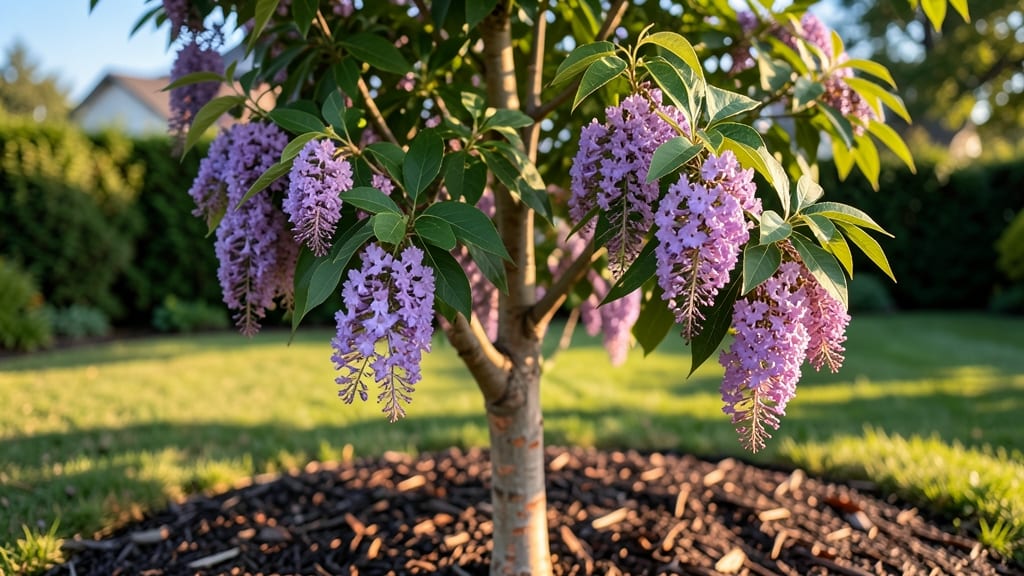
Those cascading purple clusters turn heads every spring. 🌿 Purple-flowering trees like jacaranda, purple leaf plum, or crape myrtle create vertical drama that transforms any garden into a pollinator paradise.
The moment I planted my first jacaranda, my neighborhood became a stop on the spring color tour—neighbors now ask which tree it is. These trees thrive in full sun with well-draining soil, making them perfect for warm climates.
Jacarandas bloom spectacularly in zones 7-10, while purple leaf plums handle cooler zones 3-8. Their height ranges from 15 to 30 feet, so they work as stunning focal points or border accents. The contrast of purple against green foliage or white flowers creates eye-catching visuals.
You'll love how they attract bees, butterflies, and hummingbirds while adding year-round interest. Even when not in bloom, their unique bark and foliage keep gardens vibrant. The fragrance of some varieties adds another sensory layer that makes your outdoor space unforgettable.
For small gardens, dwarf varieties or strategic placement near patios create impact without overwhelming space. These trees aren't just beautiful—they're the statement piece your garden deserves. Let's explore how to make them shine in your landscape!
📚 In This Guide
- What you need
- Instructions
- Tips and common mistakes
- Wrapping up and next steps
What you need
- ● Tree of choice: A purple-flowering tree like Cercis canadensis (Eastern Redbud), Lagerstroemia (Crape Myrtle), or Paulownia tomentosa (Empress Tree). Choose a healthy, disease-free specimen (1–3 years old for best results).
- ● Planting hole: Twice as wide and deep as the root ball (use a shovel or trenching tool).
- ● Native soil or amended mix: 50% native soil + 50% compost or well-draining potting mix (avoid heavy clay unless amended).
- ● Organic mulch: 2–3 inches of shredded bark, wood chips, or pine straw (keep mulch away from the trunk).
- ● Slow-release fertilizer: A balanced, organic option (e.g., 10-10-10 or compost tea) to boost early growth.
- ● Garden gloves (to protect your hands from thorns or rough bark).
- ● Shovel or spade (for digging the planting hole).
- ● Garden trowel (for adjusting roots or adding soil).
- ● Watering can or hose with a gentle spray nozzle (for post-planting hydration).
- ● Pruning shears (to trim dead branches or shape the tree if needed).
- ● Measuring tape (to ensure proper spacing from structures or other plants).
- ● Epsom salt (1 tbsp dissolved in water) for magnesium-rich soil (great for flowering trees).
- ● Tree stakes & ties (if planting in windy areas or soft soil).
- ● Drip irrigation system (for consistent moisture, especially in dry climates).
- ● Pollinator-friendly companion plants (e.g., lavender, coneflowers, or milkweed) to attract bees and butterflies.
- ● Tree guard or barrier (to protect young trees from deer or pets).
How to select and plant a stunning purple-blooming tree for vertical impact
Here's how to choose and establish a showstopping purple-flowering tree that transforms any landscape into a pollinator magnet.
🌱 Step 1: Identify the Right Species for Your Climate
Start by matching your hardiness zone to these top purple cluster performers. For zones 4-8, the Purple Smoke Tree (Cotinus coggygria) delivers feathery purple plumes that persist for months. In zones 5-9, Lilac (Syringa vulgaris) varieties like 'Negligence' produce dense purple blooms with intoxicating fragrance. Southern gardeners (zones 7-10) should consider Crape Myrtle (Lagerstroemia) cultivars like 'Natchez' with its lavender-purple clusters.
Check local nurseries for disease-resistant cultivars—some lilacs, for example, are bred to resist powdery mildew that can defoliate plants by mid-summer. I always verify the mature height (some crape myrtles reach 30 feet) to ensure it fits your space. Purple smoke trees typically stay 10-15 feet, while lilacs max out around 12 feet.
🌿 Step 2: Prepare the Planting Site for Optimal Growth
Choose a location with full sun exposure (at least 6 hours daily) for best flowering performance. Purple cluster trees thrive in well-draining soil with a pH between 6.0-7.5. Before planting, amend heavy clay soil with 2-3 inches of compost mixed into the top 12 inches of the hole. For sandy soils, incorporate 20% organic matter like leaf mold.
Dig a hole twice as wide as the root ball but only as deep as the container's drainage holes. This prevents root damage from being buried too deeply. I always loosen the root ball slightly at planting to encourage outward root growth rather than circling roots that strangle the tree later. Water the hole thoroughly before placing the tree in.
☀️ Step 3: Plant and Establish for Maximum Vertical Impact
Position the tree so the top of the root ball sits 1-2 inches above ground level—this prevents waterlogging and potential rot. Backfill with native soil mixed with your compost amendment, tamping gently as you go. Create a 2-inch deep watering basin around the base to direct irrigation.
Water deeply immediately after planting to eliminate air pockets, then maintain 1-2 inches of soil moisture for the first 4-6 weeks. Purple cluster trees need consistent moisture during their first season to establish strong root systems. Mulch with 2-3 inches of shredded bark (keeping it 6 inches away from the trunk) to retain moisture and regulate soil temperature.
✂️ Step 4: Prune Strategically for Year-Round Interest
Prune immediately after flowering to maintain shape and encourage next year's blooms. For purple smoke trees, remove 1/3 of last year's growth in late winter to stimulate new purple foliage growth. Lilacs bloom on old wood, so prune right after flowers fade to avoid cutting off next year's buds. Crape myrtles benefit from selective thinning of crossing branches to improve air circulation.
Watch for signs of stress like yellowing leaves or stunted growth—these often indicate overwatering or poor drainage. Purple cluster trees are generally low-maintenance but reward attentive care with 3-4 weeks of dramatic purple blooms that attract butterflies, bees, and hummingbirds. Fertilize lightly in early spring with a balanced 10-10-10 formula to support vigorous growth without excessive foliage at the expense of flowers.
Tips & tricks for perfect purple cluster trees
These pro strategies will help you transform your garden into a vibrant purple paradise that thrives for years.
Species Selection: When choosing between Purple Smoke Tree, Lilac, or Crape Myrtle, consider more than just color. Purple Smoke Trees offer year-round interest with their feathery purple foliage, while Lilacs provide that classic intoxicating fragrance. For maximum vertical drama, opt for multi-stemmed Crape Myrtles—they create stunning layered canopies that attract pollinators from all directions.
Site Preparation: The 6 hours of full sun requirement is non-negotiable for optimal flowering, but don't stop there. Test your soil pH before planting—most purple cluster trees prefer the neutral range of 6.0-7.5. If your soil tests acidic, add pelletized lime to raise the pH gradually. For clay-heavy soils, mix in 20% organic matter like composted leaves or well-rotted manure to improve drainage without compromising moisture retention.
Planting Depth: Positioning the root ball 1-2 inches above ground level might seem counterintuitive, but this small adjustment prevents waterlogging and potential root rot. I've seen too many newly planted trees suffer from being buried too deeply—roots need oxygen to establish properly. After planting, create that 2-inch watering basin and fill it completely to encourage roots to grow outward rather than circling.
Pruning Precision: That 1/3 reduction of last year's growth for Purple Smoke Trees isn't arbitrary—it stimulates vigorous new growth while maintaining the tree's natural shape. For Lilacs, always prune after flowering to preserve next year's buds. I recommend using sharp bypass pruners and making clean cuts just above outward-facing buds to encourage healthy regrowth. The key is patience—proper pruning now means fewer headaches later when your tree reaches maturity.
Pro Tips for Tree With Purple Cluster Flowers
- These pro strategies will help you transform your garden into a vibrant purple paradise that thrives for years.
- Species Selection: When choosing between Purple Smoke Tree, Lilac, or Crape Myrtle, consider more than just color.
- Site Preparation: The 6 hours of full sun requirement is non-negotiable for optimal flowering, but don't stop there.
Frequently asked questions
Got questions about adding a tree with purple cluster flowers to your garden? You’re not alone! Here are answers to the most common queries—from care tips to troubleshooting—so you can confidently bring home this pollinator magnet.
What’s the best tree with purple flowers for small yards?
If space is tight, consider the Crapemyrtle (Lagerstroemia) or Japanese Snowbell (Styrax japonicus). Both offer stunning purple blooms in compact forms, thriving in containers or tight spots. Just ensure they get 6+ hours of sun and well-draining soil!
When do these trees bloom, and how long do the flowers last?
Most purple-clustered trees bloom in late spring to early summer, with some (like Viburnum) reblooming in fall. Flowers typically last 4–6 weeks, but deadheading spent blooms can encourage a second flush. Pro tip: Prune after blooming to maintain shape and prolong flowering.
Are these trees good for attracting bees and butterflies?
Trees like Purple Smoke Bush (Cotinus) and Weigela are pollinator powerhouses. Their dense clusters provide nectar and shelter for bees, butterflies, and hummingbirds. For maximum impact, plant near native wildflowers to create a buzz-worthy ecosystem!
How do I protect my tree from pests or diseases?
Most purple-flowering trees are low-maintenance, but watch for aphids, spider mites, or fungal spots (common in humid climates). Preventative care: Water at the base (not leaves), mulch to retain moisture, and apply neem oil if pests appear. Prune out diseased branches promptly!
Can I grow a purple-flowering tree from seed or cutting?
While possible, grafted nursery trees are your best bet for vibrant blooms. Seeds often produce weaker, less predictable varieties. If propagating, use softwood cuttings in summer with rooting hormone for success. Patience is key—grafted trees may take 2–3 years to flower!
What are some purple-flowering alternatives if my soil is clay-heavy?
Try Redbud (Cercis canadensis) or Eastern Red Cedar (Juniperus virginiana ‘Glauca’)—both tolerate clay and offer purple-tinged blooms. Amend soil with compost or sand to improve drainage, or opt for container growing for better control. Bonus: These trees also handle drought once established!
Wrapping up and next steps
Transforming your garden into a vibrant haven for pollinators is easier—and more rewarding—than you think! 🌸 Trees like the purple cluster flower varieties (think Callistemon, Lagerstroemia, or Weigela) bring bold color, vertical interest, and a feast for bees, butterflies, and hummingbirds.
Whether you’re a beginner or a seasoned gardener, these stunning plants prove that beauty and biodiversity go hand in hand.
Ready to take the next step? Start small: pick one tree, research its care needs, and plant it this season. Watch as your garden buzzes with life—and your confidence grows too! 🌿✨