
Trees
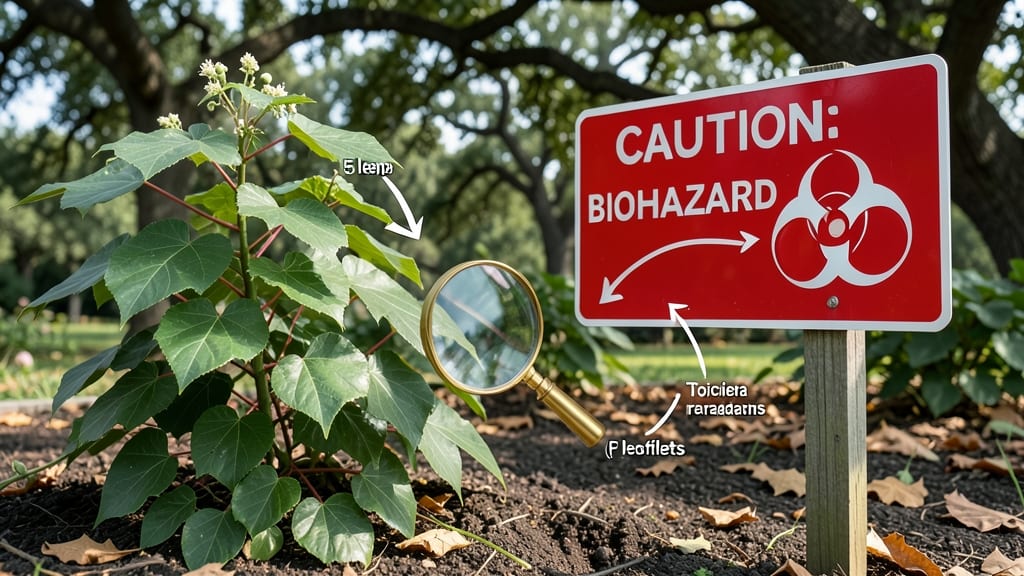
That tree that looks like poison ivy leaves in your yard might not be poison ivy—and knowing the difference could save you a rash. 🌿 I’ve spent years untangling these look-alikes, and the key isn’t just the leaf shape but how they grow, their stems, and whether they produce berries.
One wrong guess could mean itching for weeks.
Poison ivy’s leaves grow in clusters of three with smooth edges, but its look-alikes—like Virginia creeper or box elder—have five leaflets or toothed edges. The real giveaway? Poison ivy’s stems are hairless and shiny, while safe alternatives often have fuzzy stems or different leaf arrangements.
A quick rub test (with gloves!) can reveal milky sap in some harmless plants.
You’ll learn to spot these plants from a distance, avoiding accidental brushes that lead to blisters. Regional differences matter too—Virginia creeper thrives in the South, while box elder dominates the Midwest. By the end, you’ll confidently identify and enjoy these plants without fear.
No more second-guessing that bush in your backyard. This guide cuts through the confusion so you can garden (or hike) with peace of mind. Let’s get those plants properly identified—safely and for good.
Nature’s Deceptive Leaf Mimicry
When a tree’s foliage bears an uncanny resemblance to poison ivy’s Toxicodendron radicans, it’s rarely a coincidence—it’s the result of evolutionary strategies, ecological adaptations, or even human intervention.
Below, we break down the key reasons why some trees mimic the look of poison ivy leaves, from survival tactics to botanical quirks.
Some trees have developed leaf shapes that resemble poison ivy as a defense mechanism against herbivores. Here’s how it works:
- 🐇 Predator Deterrence: Poison ivy’s toxic oils (urushiol) make it unpalatable to deer, rabbits, and insects. Trees with similar leaf shapes may trick browsers into avoiding them, even if they’re harmless. This is called Batesian mimicry, where a harmless species copies a toxic one for protection.
- 🌳 Canopy Competition: In dense forests, trees with poison ivy-like leaves may gain a competitive edge by deterring animals from nibbling on younger, more vulnerable shoots. For example, the Boxelder Maple (Acer negundo) has compound leaves that can fool casual observers into thinking they’re poison ivy.
Pro Tip: 💡 Check leaf arrangement! Poison ivy leaves grow in clusters of 3 (remember: "Leaves of three, let it be"). Most mimic trees have 5+ leaflets or alternate patterns.
Some trees thrive in the same habitats as poison ivy—disturbed soils, edges of forests, and sunny clearings—and evolve similar traits to outcompete rivals.
- 🌱 Sunlight Adaptations: Poison ivy flourishes in full sun, and trees like the Virginia Creeper (Parthenocissus quinquefolia) have palmate leaves that can be mistaken for its look-alike. Both species maximize photosynthesis in bright conditions by developing broad, light-catching foliage.
- 🔄 Fast Growth Strategies: Many poison ivy mimics, such as the Staghorn Sumac (Rhus typhina), grow quickly in poor soil. Their leaf shapes may resemble poison ivy’s as a side effect of prioritizing rapid biomass production over defensive toxins.
Pro Tip: 🌡️ Touch test (with caution!): Poison ivy leaves exude urushiol oil, which causes an itchy rash. Most mimics (like Boxelder) are safe to handle—but never assume! Always confirm with a second identifier (e.g., bark, fruit, or leaf veins).
Some trees belong to the same family as poison ivy (Anacardiaceae) or have convergent evolution, leading to similar leaf structures. Here’s why:
- 🌿 Family Traits: The Cashew Family (Anacardiaceae) includes poison ivy, sumacs, and mango trees. While most aren’t toxic, their leaves often share the same lobed, serrated, or compound shapes due to genetic programming.
- 🔄 Convergent Evolution: Trees in unrelated families (e.g., Hackberry (Celtis)) may develop poison ivy-like leaves independently because the shape is evolutionarily efficient for their environment (e.g., maximizing shade tolerance or water retention).
Pro Tip: 🎯 Look at the stems! Poison ivy has hairy vines and reddish stems. Many mimics (like Virginia Creeper) have smooth, green stems or tendrils.
Sometimes, human activity spreads trees that resemble poison ivy, either accidentally or through landscaping choices.
- 🌍 Invasive Species: Non-native trees like Japanese Honeysuckle (Lonicera japonica) or English Ivy (Hedera helix) may be planted for erosion control or aesthetics—but their leaves can fool people into thinking they’re poison ivy. These plants often outcompete native species, altering ecosystems.
- 🏡 Gardening Mistakes: Nurseries sometimes sell Boxwood (Buxus) or Oak Leaf Hydrangea (Hydrangea quercifolia) near poison ivy patches, leading to confusion. Homeowners might unknowingly propagate look-alikes, spreading the misidentification.
Pro Tip: ✨ Check the roots! Poison ivy has aerial roots that cling to surfaces. Most garden trees have taproots or fibrous systems—a quick dig can reveal the difference.
How to Tell Them Apart Safely
Misidentifying a tree with poison ivy-like leaves can lead to uncomfortable rashes or allergic reactions. The good news? With the right approach, you can confidently distinguish them and protect your skin. Here’s a step-by-step guide to solving this problem—without the itch.
Poison ivy has a classic "leaves of three" pattern, but not all three-leaved plants are dangerous. Follow these checks to avoid false alarms:
- 🍃 Leaf Arrangement: Poison ivy leaves grow in clusters of three, with a smooth or slightly serrated edge.
Look for: - Reddish stems (a common but not foolproof sign). - Shiny or slightly waxy texture (poison ivy leaves often have a glossy sheen). - 🌿 Leaf Shape Comparison: Use this quick-reference table to compare common look-alikes:
| Plant | Leaf Pattern | Stem/Stalk | Other Clues |
|---|---|---|---|
| Poison Ivy | 3 leaves (rarely 5) | Reddish, hairless | "Berries" (white, green, or yellowish) |
| Virginia Creeper | 5-7 leaflets | Green, fuzzy | Turns red in fall; no "berries" |
| Boxelder | 3-7 leaflets (compound) | Green, smooth | Produces samaras (winged seeds) |
| Toxicodendron radicans (same genus!) | 3 leaves | Reddish, hairless | Glossy leaves, grows in patches |
- 💡 Pro Tip: Memorize the rhyme—"Leaves of three, let it be!"—to avoid poison ivy. If you see five or more leaflets, it’s almost never poison ivy.
Poison ivy thrives in sunny or partially shaded areas and often:
- Climbs trees or fences (vining habit).
- Forms ground patches (low-lying bushes).
- Has white, green, or yellowish berries (if present, it’s likely poison ivy).
If the plant is a shrub with smooth bark or a tall tree, it’s probably not poison ivy.
Before touching anything, try this non-invasive trick:
- Rub your finger along the leaf’s underside (where oils are concentrated).
- Wipe your finger on a white paper towel—if a milky sap appears, avoid contact (this is urushiol, the irritant in poison ivy).
- Wash your hands immediately with soap and water if you suspect exposure.
⚠️ Warning: If you develop a rash, see a doctor. Over-the-counter treatments (like calamine lotion or hydrocortisone cream) can help, but severe reactions may need prescription meds.
- 👕 Dress for Defense: Wear long sleeves, gloves, and pants when exploring wooded areas. - 🔦 Light Up the Area: Use a flashlight to inspect plants at night—their true colors (and growth habits) become clearer. - 📸 Take Photos: Snap a picture of the plant before touching it.
Apps like iNaturalist or PictureThis can help ID it later. - 🚫 Avoid the "Memory Test": Don’t rely on past experiences—poison ivy can look different depending on the season or location.
If you confirm it’s poison ivy:
- 🚫 Don’t Burn It: Burning poison ivy releases urushiol into the air, spreading the rash.
- 🌿 Smother or Dig It Out: Cover the plant with mulch or cardboard to block sunlight (it’ll die in 1-2 years).
- 🧹 Bag and Trash It: If removing, wear gloves and dispose of the plant in a sealed bag.
- 💦 Wash Tools & Clothes: Clean pruners, shovels, and clothing with soapy water to remove urushiol.
If you’re unsure, play it safe:
- Observe from a distance.
- Consult a local arborist or park service for confirmation.
- Teach kids the "leaves of three" rule early to prevent accidental exposure.
With these steps, you’ll never mistake a harmless tree for poison ivy again—and your skin will thank you! 🌿✨
Frequently asked questions
What’s the most reliable way to tell poison ivy apart from its look-alikes?
Check the leaf arrangement first: poison ivy has three smooth-edged leaves growing together. Most mimics like Virginia creeper have five or more leaflets. Also look for reddish stems in poison ivy and white berries (if present).
Can I use a flashlight to identify plants at night?
Yes! At night, poison ivy’s glossy leaves reflect light differently than rougher mimics. Shine a flashlight on the plant—if it looks shiny and waxy, be extra cautious. This works best when comparing multiple plants side-by-side.
What should I do if I accidentally touch a plant I think might be poison ivy?
Wash the area with cold water and soap immediately—within 10 minutes is ideal. Avoid hot water, which can drive urushiol deeper into your skin. If you develop a rash, use calamine lotion or hydrocortisone cream.
Are there any poison ivy look-alikes that are actually safe to touch?
Yes! Virginia creeper and box elder are common mimics with five+ leaflets that are completely harmless. Even some three-leaved plants (like toxic sumac) are safe—just confirm with a leaf count and stem color check. Always verify before touching!
How long does it take to know if I’ve been exposed to poison ivy?
Symptoms usually appear within 12-48 hours of exposure, but can take up to 2 weeks in rare cases. The rash starts as red streaks or blisters—if you see these, act fast with cool compresses and antihistamines.