
Pruning
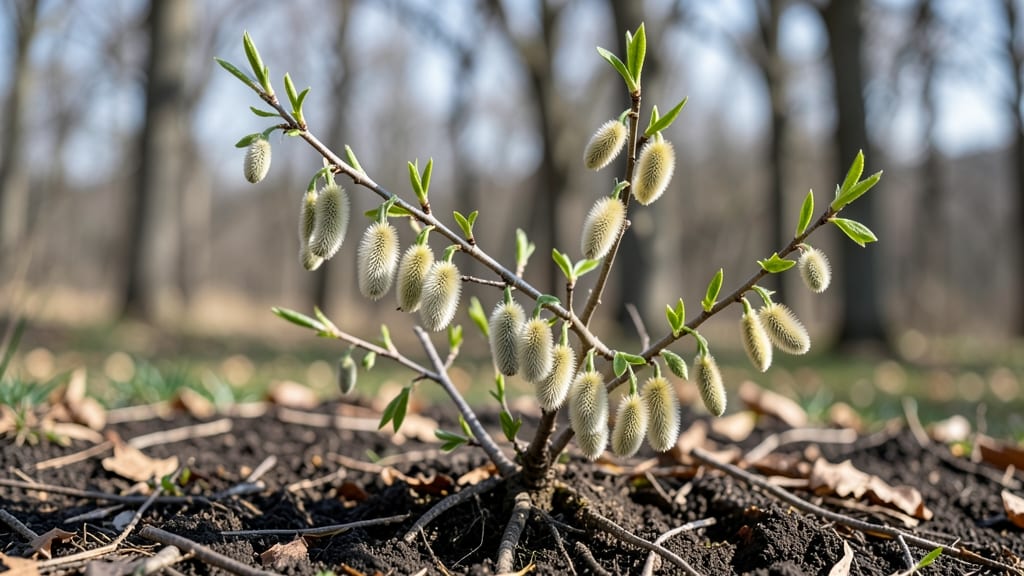
Pussy willow tree care starts with understanding why those iconic fuzzy catkins appear—it’s all about the right pruning rhythm. 🌿 I’ve learned that aggressive pruning in late winter (before buds swell) keeps the tree compact and encourages the thickest, fluffiest blooms next spring.
The key is timing: too early, and you risk losing next year’s flowers; too late, and you’ll miss the best growth window.
This tree thrives in moist, well-drained soil and partial sun—think of it as a low-maintenance wetland plant for your yard. Water deeply after planting, then let nature take over; pussy willows tolerate soggy soil better than most ornamentals.
The real magic happens when you prune back 1/3 of the branches each year, shaping it like a natural vase to showcase those signature catkins.
By summer, you’ll see the payoff: branches heavy with fuzzy blooms that last weeks, turning heads in your neighborhood. The tree’s natural arching shape makes it perfect for garden borders or as a statement piece near water features. Just avoid heavy pruning after blooms fade—you’ll sacrifice next year’s display.
For beginners, start with just a few cuts to learn the tree’s rhythm. Over time, you’ll develop a feel for when to prune and how much to trim. The goal? A tree that looks effortlessly elegant while giving you those coveted spring blooms every season.
📚 In This Guide
- What you need
- Instructions
- Tips and common mistakes
- Wrapping up and next steps
What you need
- ● Pruning shears – Bypass pruners (for clean cuts on small branches, ¼"–½" thick).
- ● Loppers – For thicker branches (½"–1½" diameter).
- ● Pruning saw – For branches over 1½" in diameter (with a fine-tooth blade for smooth cuts).
- ● Garden gloves – Cut-resistant (to protect hands from thorns and rough bark).
- ● Disinfectant (70% isopropyl alcohol or bleach solution) – 1 part bleach to 9 parts water (to sterilize tools between cuts).
- ● Rubbing alcohol or hand sanitizer – For cleaning hands after pruning.
- ● Heavy-duty trash bags – For collecting pruned branches (at least 2–3 bags per session).
- ● Ladder or step stool – If your tree is over 6–8 feet tall (ensure it’s stable and non-slip).
- ○ Notebook & pencil – To sketch a pruning plan (optional but helpful!).
- ● Pruning sealant – Tree wound sealant (only needed for large cuts over 2" in diameter).
- ● Extension pole pruners – For high branches without a ladder.
- ● Work apron with pockets – To keep tools and gloves handy.
- ● Sharpener for pruning tools – To maintain clean, precise cuts.
- ● Mulch or compost – To replenish soil after pruning (if removing large branches).
How to prune pussy willow trees for lush, fluffy growth
Here's the method I use to keep my pussy willows thriving year-round with those signature fuzzy catkins.
✂️ Step 1: Prune in Late Winter for New Growth
Timing matters most—wait until just before buds swell in late winter (typically February or early March). This gives your tree time to push out fresh, vigorous growth before spring. I always prune on a dry day to prevent disease spread from wet tools or cuts.
Start by removing any dead, diseased, or crossing branches first. These are easy to spot—they're brown, brittle, or rubbing against other branches. Use clean, sharp pruners to make cuts at a 45-degree angle just outside the branch collar. This prevents water from pooling and rotting the wound.
Next, thin out crowded branches to improve airflow. Aim to remove about 20-25% of the total canopy in one session. You'll see thicker, fuller growth in spring as the tree focuses energy on fewer branches. Never remove more than a third at once—this stresses the tree.
🌿 Step 2: Shape in Early Spring for Better Bloom Display
Once new growth appears in early spring (around March or April), it's time to refine the shape. Pussy willows bloom on new wood, so pruning now encourages more catkins. Focus on opening up the center of the tree to let sunlight reach inner branches.
Look for branches growing inward or downward—these compete with others for sunlight and nutrients. Cut these back to an outward-facing bud or side branch. I like to step back every few cuts to visualize the tree's shape. The goal is a rounded, balanced silhouette that showcases those fluffy blooms.
If your tree is leggy, prune the top third of the tallest branches to encourage bushier growth lower down. You'll see new shoots emerge from the sides within 4-6 weeks, filling out the tree's form.
☀️ Step 3: Light Maintenance Through Summer and Fall
During the growing season, only remove dead or diseased branches—no major pruning. Pussy willows set next year's catkins in late summer, so avoid heavy cuts now. If you notice suckers (shoots growing from the base), remove them immediately to redirect energy to the main tree.
In fall, after the catkins have faded (around October), do a final cleanup. Prune any weak, thin, or crossing branches that didn't get addressed earlier. This keeps the tree healthy and prepares it for dormancy. Avoid heavy pruning now—you want the tree to harden off properly for winter.
I also rake up fallen leaves around the base to prevent fungal diseases. A 3-foot-wide mulch ring (using shredded bark or wood chips) helps insulate roots in cold climates. Keep the mulch 2-3 inches deep and 6 inches away from the trunk to avoid rot.
⏰ Step 4: Winter Care to Protect Against Cold Damage
Pussy willows are hardy, but young trees or harsh winters need extra care. In December or January, wrap the trunk of young trees with tree guard or burlap to prevent sunscald (cracking from winter sun on frozen bark). This is especially important in Zone 5 or colder.
If your area gets heavy snow, gently brush snow off branches to prevent breakage. Never shake the tree—this can damage the structure. Instead, use a long-handled broom to remove snow gradually. You'll know you're doing it right when the branches hold their shape without bending.
In very cold climates, consider wrapping the entire tree in burlap for the first few winters. This adds an extra layer of insulation. Unwrap in early spring once new growth starts to avoid trapping heat and promoting disease.
Tips & tricks for pruning pussy willow trees
These simple strategies will help you keep your pussy willow looking its best year after year.
Timing is Everything: The late winter pruning window (February or early March) is critical because it allows your tree to push out fresh growth before spring. If you miss this window, you risk pruning too late and cutting into next year's catkins. I've learned this the hard way—pruning too early can stress the tree, while waiting too long reduces its ability to recover before spring growth begins.
The 45-Degree Angle Matters: When making cuts in Step 1, that 45-degree angle isn't just a detail—it's a lifesaver for your tree's health. Cutting just outside the branch collar prevents water from pooling and rotting the wound. I always use a clean, sharp pruner to make this cut, and I double-check that I'm not leaving a stub. This small detail makes all the difference in preventing disease and promoting faster healing.
Visualizing the Shape: In Step 2, stepping back every few cuts is one of my best tricks for achieving that perfect rounded silhouette. You can't judge the shape properly when you're too close. I like to imagine the tree as a balanced vase—tall enough to be impressive but wide enough to showcase those fluffy catkins. This approach helps me avoid over-pruning and ensures the tree maintains its natural beauty while still getting the airflow it needs.
Seasonal Maintenance Reminders: During the growing season (Step 3), only remove dead or diseased branches—no major pruning. This is especially important because pussy willows set next year's catkins in late summer. I've seen people over-prune in summer and end up with sparse blooms the following year. Also, those suckers at the base? Remove them immediately—they're energy vampires that drain nutrients from your main tree.
Pro Tips for Pussy Willow Tree Care
- These simple strategies will help you keep your pussy willow looking its best year after year.
- Timing is Everything: The late winter pruning window (February or early March) is critical because it allows your tree to push out fresh growth before spring.
- The 45-Degree Angle Matters: When making cuts in Step 1, that 45-degree angle isn't just a detail—it's a lifesaver for your tree's health.
Frequently asked questions
Got questions about keeping your pussy willow tree thriving? Here are answers to the most common ones—so you can enjoy those iconic fuzzy catkins year after year!
When is the best time to prune a pussy willow tree?
Prune your pussy willow tree late winter to early spring (just before new growth starts) for the best results. This timing encourages healthy blooms and prevents disease. Avoid pruning in fall or summer, as it can stress the tree or interfere with its natural cycle. Pro tip: If you must prune later, do it in early autumn—but leave at least 6 weeks before winter to allow healing.
How much can I trim back a pussy willow tree?
You can safely remove up to 30% of the tree’s branches in one season without harming it. Focus on dead, diseased, or crossing branches first, then thin out crowded areas to improve airflow. Avoid over-pruning—this can shock the tree and reduce next year’s fuzzy blooms. Pro tip: If your tree looks leggy, prune selectively to shape it rather than hacking back indiscriminately.
Can I grow a pussy willow tree in a container?
Yes! Pussy willows thrive in large containers (at least 18–24 inches wide) with well-draining soil. Choose a fast-draining mix (like 60% potting soil + 30% perlite + 10% compost) and repot every 2–3 years to refresh nutrients. Place the container in full sun to partial shade and water deeply when the top inch of soil feels dry. Pro tip: Use a trellis or support if branches get heavy with catkins!
Why aren’t my pussy willow branches producing fuzzy catkins?
Lack of catkins often stems from over-pruning, poor sunlight, or nutrient deficiencies. Ensure your tree gets at least 6 hours of sun daily and prune sparingly (never more than 30% at a time). Fertilize in early spring with a balanced 10-10-10 formula to boost growth. If branches are bare or yellowing, they may be dead—remove them to encourage new, healthy growth.
What’s a good alternative if pussy willows are hard to find?
If pussy willows are scarce in your area, try these fuzzy-blooming alternatives:
- Meadow Sage (Salvia nemorosa) – Soft purple flowers and silvery foliage.
- Russian Sage (Perovskia atriplicifolia) – Lavender-blue spikes with silvery stems.
- Cotton Candy Tree (Kiggelaria africana) – Fluffy white blooms (needs warmer climates).
- Weeping Willow (Salix babylonica) – Long, graceful branches (but not fuzzy catkins).
Wrapping up and next steps
Caring for your pussy willow tree is all about patience and precision—just like nurturing a favorite springtime bloom! 🌸 With the right tools, timing, and techniques, you’ll enjoy those fluffy, golden catkins year after year.
Now that you’re armed with pruning know-how, it’s time to roll up your sleeves and give your tree the love it deserves.
Ready to transform your yard into a willow wonderland? Start by scheduling your first pruning session this winter or early spring—your tree will thank you with lush, vibrant growth and show-stopping blooms. Happy pruning! ✂️🌿