
Pruning
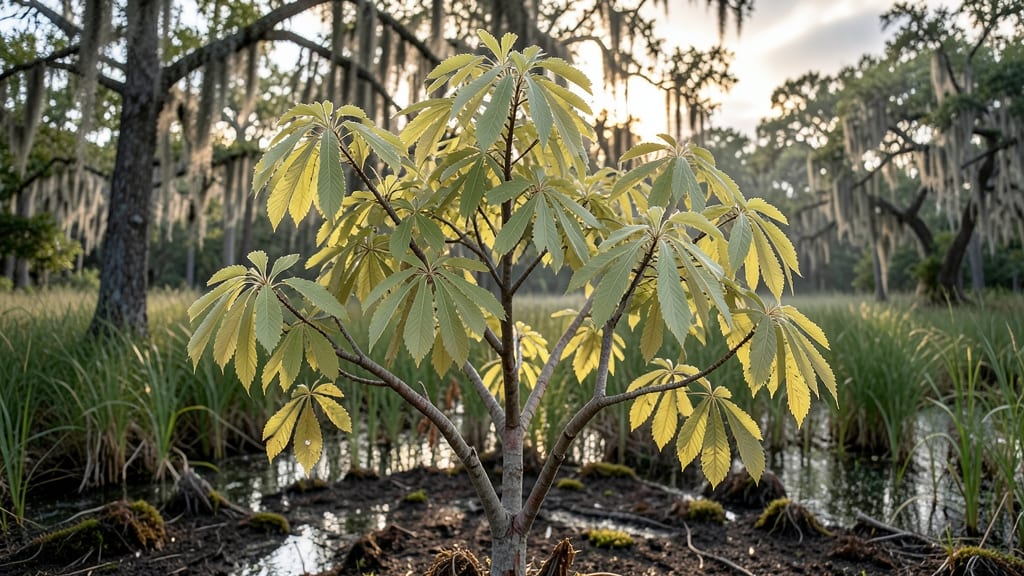
Identifying poison sumac tree bark is essential because its toxic urushiol oil triggers painful rashes and allergic reactions upon contact. The tree's smooth gray bark and distinctive red berry clusters make it particularly dangerous in wooded areas.
Poison sumac's urushiol oil causes reactions in 90% of exposed individuals, with symptoms appearing within 12-48 hours.
Unlike poison ivy, which requires direct leaf contact, poison sumac's oil lingers on bark and even in the air when crushed, making it more hazardous. 🌿 The tree's smooth, gray bark often develops vertical stripes as it matures, while its leaves grow in groups of 7-13 with serrated edges—key features for quick identification in the wild.
What makes this particularly concerning is that the oil remains potent even after the tree is dead, so fallen branches or old stumps can still pose risks. I always recommend wearing long sleeves and gloves when hiking near wetland areas, where poison sumac thrives.
The clustered red berries also serve as a warning sign—unlike harmless sumac varieties whose berries are fuzzy and brownish.
💡 In This Article
- Toxic Properties of Poison Sumac Bark and Urushiol Oil
- Field Guide to Identifying Poison Sumac Bark vs Safe Trees
Toxic properties of poison sumac bark and urushiol oil
Poison sumac's bark contains urushiol, the same oil found in poison ivy and poison oak, but in higher concentrations—up to 0.1-0.5 milligrams per square centimeter of bark. This potent compound triggers an immune response in 90-95% of exposed individuals, causing allergic contact dermatitis within 12-48 hours.
The oil is colorless and odorless, making it invisible until the skin reaction appears as red, itchy blisters that can spread rapidly if not treated.
The severity of poison sumac reactions often exceeds those from poison ivy due to the bark's rough texture, which can embed urushiol deeper into skin. Studies show that 1 microgram of urushiol (about the amount on a single leaf) can cause a reaction in sensitive individuals.
Unlike poison ivy, which requires direct contact, poison sumac's oil can also become airborne when the bark is crushed or burned, contaminating nearby surfaces and even clothing. 🌿 This makes it particularly dangerous during forest fires or when pruning without protective gear.
What sets poison sumac apart is its ability to maintain toxicity even after the tree dies. The urushiol oil remains active on dead branches and fallen bark for years, creating persistent hazards in wooded areas.
The chemical's stability means it won't degrade with heat or cold, so even charred wood from campfires can still cause reactions. This persistence explains why gardeners and hikers must treat all sumac varieties with caution, especially in wetland habitats where poison sumac thrives.
Long-term exposure risks include chronic dermatitis, where repeated contact leads to thickened, leathery skin patches that never fully heal. In rare cases, severe reactions can cause systemic poisoning, with symptoms like swelling, fever, and difficulty breathing—particularly dangerous for children or individuals with pre-existing skin conditions.
Unlike poison ivy, which typically affects only the contact area, poison sumac's oil can spread through clothing or tools, creating secondary exposure sites.
The oil's molecular structure—composed of catechol and alkyl side chains—allows it to penetrate skin layers quickly, binding to proteins in the epidermis. This chemical bond triggers the body's immune system to release histamines, causing inflammation and blister formation.
The reaction intensity varies by individual, with some experiencing mild redness while others develop large, oozing blisters covering entire limbs. 🔥 Immediate washing with cold water and soap (not hot) within 10 minutes of exposure can reduce severity by removing up to 80% of the oil before it binds.
Interestingly, the oil's potency doesn't diminish with age—even century-old sumac stumps can still cause reactions. This longevity explains why poison sumac remains a persistent hazard in forests long after the tree itself has fallen.
The oil's chemical stability also means it resists degradation from sunlight, rain, or even decomposition, making it one of nature's most enduring toxins. For comparison, poison ivy's urushiol degrades faster when exposed to air and light.