
Pruning
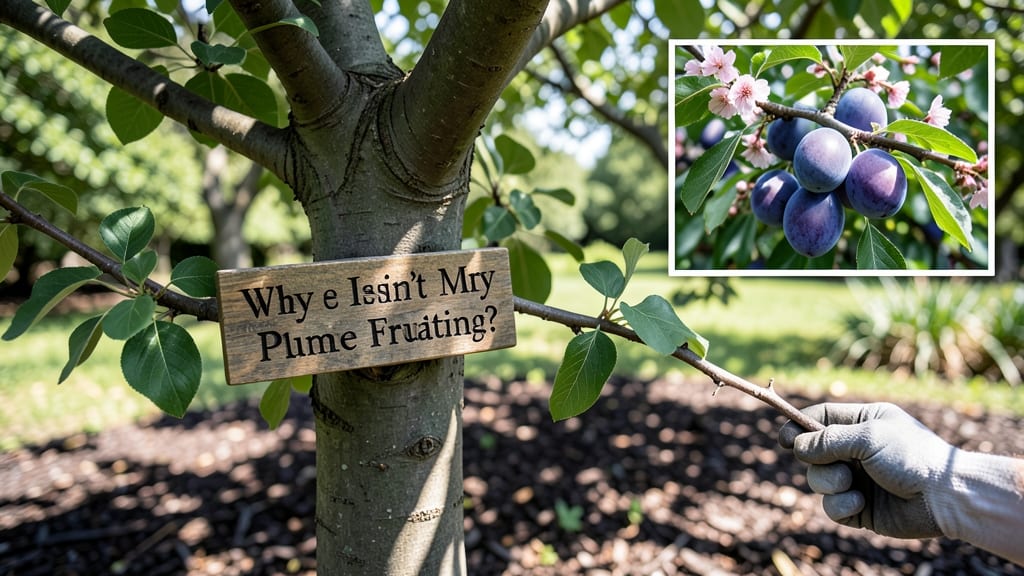
A plum tree not fruiting feels like a cruel joke after all that pruning and waiting. 🌿 The good news? Most barren plum trees aren’t dying—they’re just waiting for the right conditions (or a little help from you).
I’ve nursed three plum trees back to fruiting, and the fixes are simpler than you’d think—whether it’s light, pollination, or hidden pests playing spoiler.
The most common culprits are too much shade, late pruning, or poor pollination—especially if your tree blooms but drops flowers. Plums need 6-8 hours of sun daily and pruning after harvest, not during dormancy.
Even a single healthy bee isn’t enough—plant a second variety nearby if your tree’s flowers aren’t getting enough cross-pollination. Pests like borers or mites can also sap energy before flowers even form.
Start with a quick check: Are the branches thick with buds but no fruit? That’s a pollination or pest issue. No buds at all? Dig into soil pH (plums love 6.0-7.0) or check for winter damage.
Within a season, you could see blossoms—and next year, plump, juicy plums—if you address just one or two of these.
If the problem persists after adjusting care, consult a local extension office. Some plum varieties need cold stratification (chilling hours) to fruit, and others simply outgrow their vigor. But in most cases? A little targeted troubleshooting turns that "fruitless" tree into your next harvest hero.
Hidden Reasons Your Plum Tree Skips Fruit
Plum trees are stunning in bloom, but when they fail to produce fruit, it can feel like a betrayal—especially after all that care! 🌸🍑 The truth? A barren plum tree usually isn’t lazy; it’s reacting to hidden stressors.
Below, we break down the real culprits behind your tree’s fruitless behavior, backed by science and actionable fixes.
Plum trees (Prunus spp.) are dormant fruiters, meaning they need a winter chill period—typically 300–1,000 hours below 45°F (7°C)—to trigger flowering. Without enough cold, buds stay dormant, and no fruit forms.
Why it happens:
- Mild winters (common in warmer climates) prevent proper dormancy.
- Urban heat islands (cities with concrete and asphalt) raise soil temps, reducing chill accumulation.
- Young trees (<3 years old) may not have built up enough energy reserves for fruit production.
🔍 Signs to watch for:
- Buds swell in late winter but drop off before blooming.
- Leaves emerge earlier than usual (a sign of insufficient chill).
✨ Pro Tip: If you’re in a warm climate, choose low-chill plum varieties (e.g., ‘Santa Rosa’ or ‘Methley’ plums, which need ~300–500 hours).
Even if your plum tree blooms, lack of pollination or self-incompatibility can leave you with empty flowers.
Why it happens:
- Wind-pollinated plums (like European plums) need another compatible cultivar within 50–100 feet for cross-pollination.
- Self-sterile varieties (e.g., ‘Stanley,’ ‘Angeleno’) won’t set fruit alone—they need a pollinator like ‘Dickson’ or ‘Friar’ nearby.
- Bee shortages (due to pesticides, early frosts, or urban sprawl) reduce pollination success.
🔍 Signs to watch for:
- Flowers drop off quickly (within 2–3 days) without forming tiny fruitlets.
- Nearby trees bloom, but yours has no fruit while others do.
💡 Fix It:
- Plant a second plum variety (check compatibility charts for your region).
- Hand-pollinate with a soft brush if bees are scarce (best done on cool, dry mornings).
- Avoid broad-spectrum pesticides that kill pollinators.
Plum trees are heavy feeders, and nutrient imbalances can halt fruit development.
Why it happens:
- Nitrogen (N) deficiency → Fewer blooms (nitrogen fuels leaf and flower growth).
- Zinc (Zn) deficiency → Poor bud formation (zinc is critical for enzyme activity in fruit set).
- Potassium (K) deficiency → Weak fruit retention (fruit drops early).
- Over-fertilizing with phosphorus (P) → Reduces flowering by shifting energy to roots.
🔍 Signs to watch for:
| Nutrient Deficiency | Leaf Symptoms | Tree Behavior |
|---|---|---|
| Nitrogen (N) | Pale yellow leaves (older first) | Stunted growth, few blooms |
| Zinc (Zn) | Stunted growth, little leaf syndrome | Buds fail to open |
| Potassium (K) | Yellow edges on older leaves | Fruit drops prematurely |
| Phosphorus (P) excess | Dark green, thick leaves | No flowers, all foliage |
🌱 Fix It:
- Soil test first! (Know your pH—plums prefer 6.0–7.0).
- Spring feed: Use a balanced 10-10-10 fertilizer (or 5-10-10 for young trees).
- Zinc boost: Apply zinc sulfate (1 tbsp per gallon of water, spray foliage in early spring).
- Avoid high-P fertilizers (like bone meal) if your tree isn’t flowering.
Pruning too aggressively or at the wrong time can stress the tree into skipping fruit.
Why it happens:
- Heavy pruning in late winter/early spring → Removes flower buds before they open.
- Summer pruning → Encourages suckers and water sprouts (weak growth that steals energy from fruit).
- Topping the tree → Creates large wounds that invite disease and weakens structure.
🔍 Signs to watch for:
- No blooms after pruning (check if you cut into old wood where buds form).
- Excessive suckers growing from the base or trunk.
✂️ Fix It:
- Prune in late winter (before buds swell)—focus on open-center shape for plums.
- Remove only dead/diseased wood (never cut more than 25% of the canopy in one year).
- Avoid summer pruning unless removing water sprouts (use clean, sharp shears).
Fungal diseases and pests drain energy, leaving no reserves for fruit.
Why it happens:
- Silver leaf disease (fungal) → Blocks water transport, causing leaf drop and no fruit.
- Brown rot (Monilinia spp.) → Destroys blossoms before they set fruit.
- Plum curculio (weevil) → Lays eggs in fruit buds, preventing development.
- Aphids/spider mites → Suck sap, weakening the tree.
🔍 Signs to watch for:
- Blackened buds (brown rot).
- Silvery leaves (silver leaf disease).
- Holes in buds/fruit (plum curculio).
- Sticky residue (honeydew) on leaves (aphids).
🛡️ Fix It:
- Prevent brown rot with dormant oil spray (late winter) + copper fungicide at bloom.
- Control plum curculio with kaolin clay (physical barrier) or pyrethrin spray.
- Encourage natural predators (ladybugs, lacewings) by reducing pesticides.
- Remove fallen leaves (disease overwinters in debris).
Plums are drought-tolerant but not drought-proof—water extremes disrupt flowering.
Why it happens:
- Drought stress → Reduces bloom formation (tree conserves energy).
- Overwatering → Root rot (Phytophthora) chokes the tree, halting fruit set.
- Poor drainage → Oxygen deprivation in roots → weak growth.
🔍 Signs to watch for:
- Wilting leaves (even when watered) → root rot.
- Leaf scorch (brown edges) → underwatering.
- Mushrooms at the base → fungal root rot.
💦 Fix It:
- Deep watering (1–2 inches per week)—drip irrigation is best.
- Improve drainage with compost or sand if soil is clay-heavy.
- Mulch (3–4 inches) to retain moisture and regulate soil temp.
Even healthy trees take time to fruit—and some rootstocks are bred to delay production.
Why it happens:
- Young trees (<3 years) → Still establishing roots, not yet fruiting.
- Dwarfing rootstock (e.g., ‘Marianna 2624’) → Delays fruit by 1–2 years.
- Graft incompatibility → Weak growth, no energy for fruit.
🔍 Signs to watch for:
- No fruit after 4+ years (for standard trees) or 5+ years (dwarf).
- Stunted growth despite good care.
🌱 Fix It:
- Be patient! D
Revive Your Plum Tree’s Fruitfulness
If your plum tree is stubbornly refusing to bear fruit, don’t give up—there’s still hope! The key is identifying the root cause and taking targeted action. Below, we’ve mapped out practical fixes for each common issue, along with tips to prevent future disappointments. Let’s get your tree back on track to producing juicy, sweet plums.
If your plum tree lacks fruit due to poor pollination, it’s time to invite some helpers into the garden.
- 🐝 Plant companion pollinators: Add bee-friendly flowers like lavender, marigolds, or clover near your tree. Bees are the ultimate pollination partners!
- 🌸 Hand-pollinate (if needed): On cloudy or windless days, use a soft paintbrush to gently transfer pollen from one flower to another. Do this in the morning when flowers are open.
- ✨ Choose the right variety: Some plum trees are self-pollinating (like ‘Santa Rosa’), but others need a partner. Check your tree’s tags or consult a local nursery to ensure compatibility.
💡 Pro Tip: If you have space, plant two different plum varieties close together—they’ll cross-pollinate naturally and increase your harvest!
Over-pruning or pruning at the wrong time can stress your tree and stunt fruit production. Here’s how to fix it:
- 🔪 Prune in late winter or early spring: This is the best time to encourage new growth and fruit buds. Avoid heavy pruning in fall or summer.
- 🌿 Open the canopy: Thin out dense branches to improve airflow and sunlight penetration. Aim for an open, vase-like shape.
- 🍎 Remove water sprouts and suckers: These fast-growing shoots steal energy from fruit production. Cut them back to the main branch.
- 🌟 Encourage fruiting wood: Prune to keep older, woodier branches (3–5 years old) as these produce the most fruit.
✨ Prevention Tip: Use sharp, clean pruners to avoid disease spread. Sterilize them with rubbing alcohol between cuts!
A thirsty or malnourished tree won’t fruit well. Let’s get it the care it needs:
- 💦 Deep watering: Water deeply once or twice a week (depending on climate) to encourage strong root growth. Avoid shallow, frequent watering, which promotes weak roots.
- 🌱 Mulch properly: Apply 2–4 inches of organic mulch (like wood chips or straw) around the base, keeping it 6 inches away from the trunk. This retains moisture and regulates soil temperature.
- 🍃 Fertilize smartly:
- Spring: Use a balanced fertilizer (10-10-10) to kickstart growth.
- Summer: Switch to a low-nitrogen, high-phosphorus fertilizer (like 5-10-10) to support flowering and fruiting.
- Avoid over-fertilizing with nitrogen—it promotes leafy growth at the expense of fruit!
- 🌡️ Soil test: If your tree still struggles, test the soil pH (ideal range: 6.0–6.5 for plums). Amend with sulfur or lime as needed.
💡 Pro Tip: Yellowing leaves or stunted growth? Your tree might need micronutrients like zinc or iron. Use a chelated micronutrient spray for a quick boost.
Plum trees thrive in specific conditions. If your tree is in the wrong spot, it may skip fruiting:
- 🌞 Sunlight: Plums need 6–8 hours of full sun daily. If your tree is shaded, prune nearby structures or relocate it if possible.
- 🌬️ Wind protection: Young trees benefit from windbreaks (like a fence or hedge) to prevent stress and fruit drop.
- 🌡️ Temperature extremes: Plums need chilling hours (300–500, depending on variety) to flower. If you’re in a warm climate, choose low-chill varieties like ‘Methley’ or ‘Black Diamond.’
- 🚫 Avoid late frosts: Protect blossoms with frost cloth if late frosts threaten your region.
🎯 Prevention Tip: Plant your plum tree in a location with good drainage—waterlogged roots lead to poor health and fewer fruits.
Pests and diseases can weaken your tree, reducing its ability to fruit. Act fast to restore health:
- 🐜 Identify the culprit:
- 🐛 Plum curculio: Tiny weevils that damage fruit. Use row covers or neem oil sprays.
- 🍄 Brown rot: Fungal disease causing blossom blight. Prune infected branches and apply copper fungicide.
- 🐞 Aphids or mites: Suck sap and weaken the tree. Blast them off with water or use insecticidal soap.
- 🛡️ Preventative care:
- Keep the area under the tree clean (remove fallen fruit/leaves).
- Apply dormant oil in late winter to smother overwintering pests.
- Space trees properly (15–20 feet apart) to improve airflow and reduce disease risk.
🔥 Emergency Fix: If your tree is severely infested, consult a local extension service for targeted treatments.
Some problems are out of your hands—like an old tree past its prime or the wrong variety for your climate. Here’s what to do:
- 🌳 Young trees: Plum trees typically take 3–5 years to bear fruit. Be patient and provide excellent care during this time.
- 🍑 Older trees: If your tree is over 20 years old, it may be declining. Consider rejuvenation pruning (severe but selective pruning to stimulate new growth) or replacing it with a younger, more productive variety.
- 🔄 Wrong variety: If your plum tree is consistently barren, it might not suit your climate. Research cold-hardy, disease-resistant varieties like ‘Stanley’ or ‘Angeleno’ for better success.
✨ Long-Term Solution: Graft a new, fruiting variety onto your existing tree’s roots for a quicker harvest!
With these targeted fixes, your plum tree should be well on its way to producing a bountiful harvest. Remember, consistency is key—monitor your tree’s progress and adjust care as needed. Happy gardening!
Frequently asked questions
Why does my plum tree have flowers but no fruit?
This usually means poor pollination or self-incompatibility. Many plum varieties need another compatible tree within 50-100 feet for cross-pollination. Check if your tree's flowers drop quickly (within 2-3 days) or if nearby trees are fruiting while yours isn't. Planting a second variety like 'Dickson' or 'Friar' nearby often solves this.
How do I know if my plum tree isn't getting enough chill hours?
Watch for buds that swell in late winter but then drop off before blooming, or leaves emerging earlier than usual. Plums typically need 300-1,000 hours below 45°F (7°C). In warm climates, choose low-chill varieties like 'Santa Rosa' (300-500 hours) or 'Methley' (500-700 hours) that better match your region's winter temperatures.
Can I force my plum tree to fruit faster?
Not reliably, but you can optimize conditions. Young trees (<3 years) need patience, while older trees may need rejuvenation pruning to stimulate new growth. For immediate results, consider grafting a fruiting variety onto your existing tree's roots. Also ensure proper sunlight (6-8 hours daily), balanced fertilization, and consistent watering (1-2 inches per week).
What's the best fertilizer for fruiting plum trees?
Use a balanced 10-10-10 fertilizer in spring to kickstart growth, then switch to low-nitrogen, high-phosphorus (5-10-10) in summer to support flowering and fruiting. Avoid over-fertilizing with nitrogen—it promotes leafy growth at the expense of fruit. Always do a soil test first (ideal pH: 6.0-7.0) to avoid nutrient imbalances.
How do I tell if my plum tree has a pest problem?
Look for these red flags: Blackened buds (brown rot), silvery leaves (silver leaf disease), holes in buds/fruit (plum curculio weevils), or sticky residue (aphids). Start with dormant oil spray in late winter and copper fungicide at bloom time. For severe infestations, consult your local extension office for targeted treatments.