
Pruning
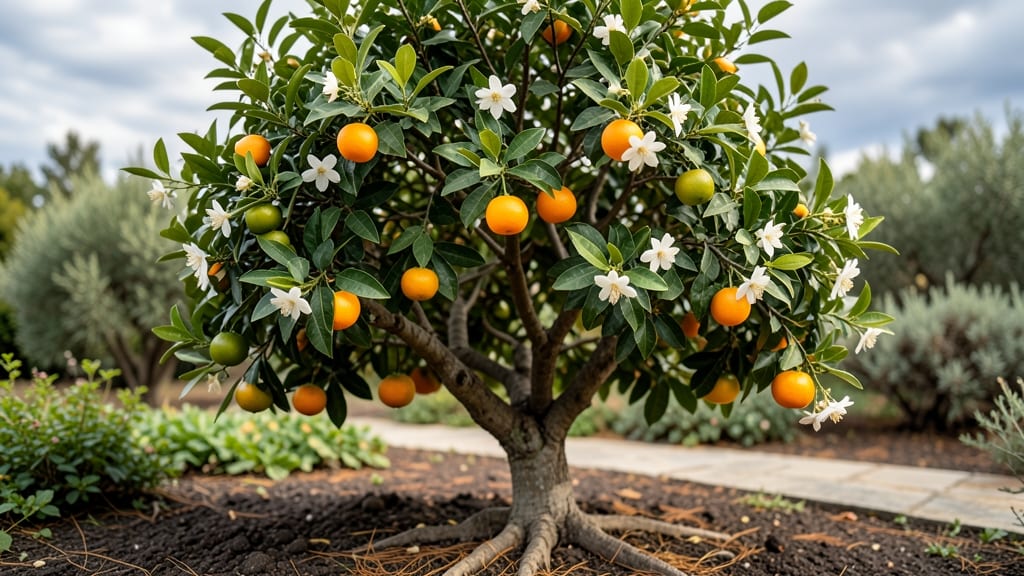
Your yard just got a year-round conversation starter with the palm tree with orange balls—those towering beauties with bright orange fruit clusters that look like nature’s own holiday decorations. 🌟 I planted mine five years ago, and every winter, the orange balls catch neighbors’ eyes from the street, while the rest of the garden fades into monochrome.
The secret to their showstopping fruit isn’t complicated: full sun, rich soil, and patience. These palms thrive in USDA zones 9-11 but can handle brief dips to 25°F—though younger trees need winter wraps.
They grow 3-5 feet per year, so that 10-foot palm you see today could be a 50-foot giant in 20 years if you give it space.
What you’ll love most is how low-maintenance they are. Water deeply once a week in summer, let the soil dry between waterings in winter, and fertilize with palm-specific food twice a year.
Prune only to remove dead fronds—no fancy shaping needed. The orange fruit? It’s edible (though seedy and fibrous), but most growers keep it for the bold winter color and wildlife appeal.
Perfect for coastal gardens, large patios, or as a statement plant near driveways. Here’s how to coax those orange balls to grow bigger and brighter every season—without the fuss.
Nature’s Colorful Mystery Explained
Those vibrant orange clusters adorning your palm tree aren’t just a pretty sight—they’re a fascinating biological response to environmental cues. Understanding why they appear helps you care for your tree with confidence. Let’s break down the science behind this striking phenomenon.
The orange "balls" you see are actually inflorescences—clusters of tiny flowers packed tightly together. Most palm trees, like the popular Cocos nucifera (coconut palm) or Phoenix dactylifera (date palm), produce these flowers as part of their reproductive cycle. Here’s how it works:
- Hormonal Signals: As the tree matures, hormonal shifts (like increased ethylene and auxin production) trigger flowering. These hormones act like a biological switch, telling the tree it’s time to reproduce.
- Environmental Cues: Warmth, consistent sunlight, and adequate water stress (not drought, but controlled moisture levels) encourage blooming. Pro tip: 🌡️ If your palm isn’t flowering, check if it’s getting 6+ hours of direct sunlight daily and well-draining soil.
- Genetic Timing: Some palms flower seasonally (e.g., spring/summer), while others, like the Canary Island date palm, bloom year-round in ideal climates. If yours is always lush with orange, it’s likely adapted to your region’s microclimate.
Bright orange isn’t just for show—it’s an evolutionary survival tactic. These clusters are designed to:
- Draw Pollinators: Bees, bats, and even wind (in some species) rely on visual cues. The orange color contrasts sharply against green foliage, making the flowers highly visible to potential pollinators.
- Release Fragrances: Many flowering palms emit sweet, musky scents at night to attract nocturnal pollinators like bats or moths. The scent + color combo maximizes their chances of spreading pollen.
- Protect Developing Fruit: After pollination, the flowers transform into fruit. The bright color can deter herbivores or signal ripeness to animals that aid in seed dispersal (like birds or rodents).
Fun fact: 💡 Some palms, like the Sabal palmetto, produce male and female flowers separately—the orange clusters you see might be all male, all female, or a mix, depending on the species!
Not all palms bloom reliably—environmental stress (in the right amounts!) can actually trigger flowering. Here’s how climate plays a role:
| Factor | How It Affects Blooming | Actionable Fixes |
|---|---|---|
| 🌡️ Temperature | Most palms need warmth (70–90°F) to flower. Cold snaps can delay or stop blooming entirely. | Use frost cloth in winter if you’re in a marginal climate. Choose cold-hardy species like Trachycarpus fortunei if you live in Zone 7 or below. |
| 💧 Water Stress | Palms often bloom after a period of controlled drought (not dehydration!). This mimics natural seasonal dry spells. | Reduce watering by 20–30% for 4–6 weeks before the usual blooming season, then resume normal care. |
| ☀️ Sunlight | Insufficient light leads to leggy growth and no flowers. Palms need full sun to produce energy for reproduction. | Prune nearby trees/shrubs to ensure 6+ hours of direct sun. If indoors, supplement with grow lights (12–14 hours/day). |
| 🌿 Soil Nutrients | Too much nitrogen = leafy growth, no flowers. Phosphorus and potassium are key for blooming. | Switch to a balanced 5-10-10 fertilizer in early spring. Avoid high-nitrogen lawn fertilizers. |
Warning: ⚠️ Overwatering or poor drainage can cause root rot, which starves the tree and prevents flowering. Ensure your palm’s soil is well-draining (sandy loam is ideal).
Young palm trees often won’t flower for years—some species take 5–10 years to mature enough to reproduce. Even then, health issues can halt the process:
- Underdeveloped Root Systems: If the roots aren’t established, the tree prioritizes growth over flowering. Solution: 🌱 Let young palms grow undisturbed for at least 3–5 years before expecting blooms.
- Pests or Disease: Spider mites, palm weevils, or fungal infections (like Ganoderma root rot) drain the tree’s energy. Solution: 🛡️ Inspect your palm regularly for yellowing fronds, sawdust-like frass (insect droppings), or oozing sap.
- Transplant Shock: Recently moved palms may skip flowering for 1–2 years while recovering. Solution: ⏰ Give newly planted palms extra care (mulch, deep watering) to reduce stress.
If your palm is mature (10+ years old) but still not flowering, it might be a male-only cultivar (some palms are grown for ornamental fronds, not fruit). Check with a local nursery or arborist to confirm!
Revitalizing Your Palm’s Vibrant Display
If your palm tree with orange balls (likely a Canary Island date palm or similar) is struggling, don’t worry—most issues can be fixed with targeted care. Below, we’ll tackle common problems and provide step-by-step solutions, from pruning to pest control, so your tree stays lush and colorful year-round.
If your palm’s fronds are too dense, blocking sunlight or looking messy, pruning can restore balance and encourage healthier growth.
🔪 Prune Properly (Step-by-Step)
- 📝 Identify Dead or Yellowing Fronds
- Remove any brown, crispy, or drooping fronds first—they’re dead and won’t recover.
- ✂️ Use Sharp Pruners or a Saw
- Cut fronds at the base where they meet the trunk, making a clean slice.
- 🌱 Thin Out Crowded Fronds
- Leave 3–5 healthy fronds per section of the trunk to allow airflow and sunlight.
- 💧 Water After Pruning
- Give your palm a deep watering to help it recover faster.
💡 Prevention Tips
- ⏰ Prune in Late Winter or Early Spring (before new growth starts).
- ⚠️ Avoid Over-Pruning—never remove more than ⅓ of the fronds at once.
- 🌡️ Monitor for Stress—if the tree looks wilted after pruning, it may need extra care (like shade and frequent watering).
Orange balls (fruit) can attract pests, and poor health weakens your palm’s defenses. Here’s how to handle common threats:
🐜 Controlling Scale, Mealybugs, or Spider Mites
- 🔍 Inspect Leaves & Trunk
- Look for sticky residue (honeydew), white cottony patches, or tiny webs.
- 🚿 Spray with Soapy Water
- Mix 1 tsp mild dish soap + 1 quart water, spray thoroughly, and repeat weekly.
- 🌿 Apply Horticultural Oil (For Stubborn Infestations)
- Use a neem oil or insecticidal soap spray (follow label instructions).
- 🐞 Encourage Beneficial Insects
- Ladybugs and lacewings eat pests—plant nearby flowers to attract them.
🍄 Treating Fungal Issues (Like Leaf Spot)
- 🧼 Clean Up Debris
- Remove fallen fronds and fruit to reduce spores.
- 💊 Use Fungicide
- Apply a copper-based fungicide or baking soda spray (1 tbsp baking soda + 1 quart water + a few drops of soap).
- 🌧️ Improve Airflow
- Thin out dense fronds to prevent humidity buildup.
💡 Prevention Tips
- 🌊 Water at the Base (avoid wetting fronds to prevent fungal growth).
- 🌿 Mulch Properly (use organic mulch to deter pests).
- 🌞 Ensure Full Sunlight (weak, shaded palms attract more pests).
Poor soil or nutrient deficiencies can dull your palm’s color and stifle fruit production.
🌿 Amending Soil for Better Growth
- 📊 Test Your Soil
- Use a DIY soil test kit (or send a sample to a local extension office).
- 🔄 Add Organic Matter
- Mix in compost or aged manure to improve drainage and fertility.
- 💊 Fertilize Correctly
- Use a palm-specific fertilizer (high in potassium and magnesium) in early spring and summer.
- ⚠️ Avoid Over-Fertilizing—too much salt can burn roots.
💡 Prevention Tips
- 💧 Water Deeply but Infrequently (palms hate soggy roots).
- 🌡️ Protect from Cold Drafts (sudden temperature drops stress palms).
- 🌿 Choose the Right Spot (full sun + well-draining soil = happy palm).
If your palm looks sad but isn’t critically damaged, try these fast fixes:
| Problem | Quick Solution | How Often |
|---|---|---|
| Dry, Crispy Fronds | Deep watering + mulch | Every 2–3 weeks |
| Yellowing Leaves | Flush soil with water (removes salt buildup) | Once a month |
| Slow Growth | Apply slow-release palm fertilizer | Twice a year |
| Fruit Not Ripening | Ensure full sun + balanced fertilization | Seasonally |
With the right care, your palm tree with orange balls will bounce back stronger than ever. Start with one fix at a time, monitor progress, and adjust as needed. Soon, you’ll have a showstopping centerpiece that turns heads all year!
Frequently asked questions
What kind of palm tree produces those bright orange clusters?
Those eye-catching orange balls belong to the Canary Island date palm (Phoenix canariensis), a stunning tropical species known for its dramatic winter color display. This palm thrives in warm climates (USDA zones 9-11) and can handle brief cold snaps down to 25°F with proper protection.
Are the orange "balls" edible?
Yes, but they're not the most delicious treat! The orange clusters are actually date-like fruits that are edible when ripe, though they're quite seedy and fibrous. Most gardeners grow these palms for their ornamental value rather than harvest the fruit—though birds and small animals love them!
How do I encourage more vibrant orange fruit?
Give your palm full sun exposure (6+ hours daily) and well-draining soil rich in organic matter. In early spring, apply a palm-specific fertilizer (high in potassium) to support flowering. Reduce watering slightly before the usual blooming season to mimic natural dry periods that trigger fruit production.
Can I grow this palm indoors?
While possible, it's challenging due to their size—mature Canary Island date palms can reach 50+ feet tall. For indoor growing, consider dwarf varieties like Pygmy date palm (Phoenix roebelenii), which produces smaller orange fruit clusters and stays under 6 feet tall. Place in a sunny south-facing window with supplemental grow lights.
Why aren't my palm's orange clusters as bright as in the pictures?
Bright orange color fades when palms lack sunlight or nutrients. Move your tree to a sunnier location and fertilize with a balanced palm food (5-10-10 ratio). Also check for pests like spider mites that can stress the tree—treat with neem oil if needed. The more sunlight and care, the more vibrant those clusters will become!