
Pests and Diseases
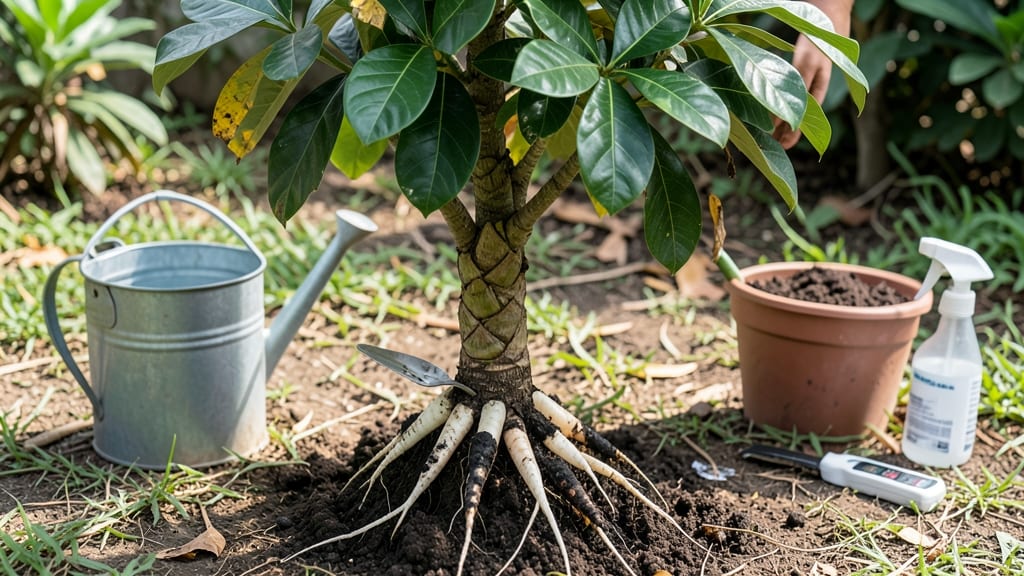
Your money tree’s drooping leaves and mushy stems aren’t a death sentence—just a cry for help from overwatered roots. 🌱 I’ve nursed back more than a few of these tropical beauties after root rot took hold, and the process is simpler than you’d think.
The first step? Stopping the water torture and giving those roots a chance to breathe.
Root rot starts when soil stays soggy for days, cutting off oxygen and inviting fungal invaders. You’ll spot the damage through yellowing leaves, blackened stems at the base, or a foul smell when you lift the pot.
The good news? Money trees are tough—they bounce back fast once you adjust care. We’re talking repotting in fresh, fast-draining mix and a strict “wait until the top inch is dry” watering rule.
Within weeks, you’ll see fresh green growth as the roots recover. The key is keeping soil lightly moist but never soggy, and using pots with drainage holes (yes, even for houseplants).
Your money tree will reward you with that signature braided trunk and lush foliage—proof that even the most neglected plants can make a comeback.
This method works for any overwatered tropical plant, from monstera to fiddle-leaf fig. The secret? Patience and consistent care. Let’s get those roots healthy again—your plant’s future depends on it.
Root Rot’s Silent Triggers
Your money tree (Pachira aquatica) thrives on balance—too much water, and its roots suffocate. Root rot isn’t just about "overwatering" in a vague sense; it’s a chain reaction of environmental mismatches that turn your plant’s roots into a soggy, oxygen-starved mess.
Let’s break down the real culprits behind this common (and preventable) disaster.
This is the most obvious trigger, but the details matter. Money trees store water in their thick, succulent stems, so they’re far more drought-tolerant than most houseplants. Yet, many gardeners water on a schedule—every Tuesday, say—without checking soil moisture. Here’s why this backfires:
- Compacted soil: Heavy potting mixes (like those with too much peat or clay) hold water like a sponge. When you water again before the top 2–3 inches dry out, roots sit in anaerobic conditions (no oxygen), inviting Pythium and Phytophthora fungi to throw a welcome party. 🎉
- No drainage escape: Even if your pot has holes, if the saucer beneath it acts as a water trap (or you forget to empty it), roots at the bottom drown while those at the top stay dry. This creates a gradient of stress, weakening the plant’s defenses.
- Seasonal ignorance: Money trees slow down in winter. Watering them the same amount year-round means their roots never get a break to recover from summer’s thirst.
Pro Tip: 💡 Stick your finger 2 inches into the soil. If it’s damp, wait. If it’s bone-dry, you’ve likely underwatered (and the plant is signaling distress by dropping leaves—another red flag).
Not all containers and mixes are created equal. Here’s how your setup might be sabotaging your money tree:
| Problem | Why It Causes Rot |
|---|---|
| Clay or ceramic pots without drainage | These materials wick moisture upward, keeping roots wet longer. Even "self-watering" pots can trap excess if the plant’s uptake slows (e.g., due to stress or cold). |
| Peat-heavy or non-aerated soil | Peat retains water for weeks, while dense mixes block air pockets roots need. Money trees need chunky, gritty soil (think: 50% potting mix, 30% perlite/pumice, 20% orchid bark). |
| Plastic pots without ventilation | Plastic traps humidity against the roots, creating a greenhouse effect that speeds fungal growth. Roots "sweat" but can’t dry out. |
Fix It: ✨ Repot into a terracotta pot with drainage and a fast-draining mix. If you love plastic, drill holes in the sides and bottom for airflow.
Root rot isn’t just about water—it’s about how fast your plant can process it. Temperature and humidity throw a wrench in that equation:
- Cold roots: Money trees hate drafts (e.g., near AC vents or windows in winter). Cold soil slows microbial activity, meaning roots can’t absorb oxygen efficiently. Meanwhile, warm air above the soil increases evaporation, leaving roots stuck in a wet, chilly limbo.
- High humidity: If your home’s humidity is above 60% (common in bathrooms or kitchens), the air around the pot stays saturated. Roots transpire less water because the environment isn’t drying them out, so excess moisture lingers.
- Sudden temperature swings: Moving a pot from a sunny windowsill to a cold floor can shock the roots, halting nutrient uptake and leaving them vulnerable to waterlogging.
Adjustments: 🌡️ Keep pots in 65–80°F (18–27°C) ranges and avoid humid corners. A small fan on low can improve airflow around the pot without stressing the plant.
Healthy roots have a protective microbiome—beneficial bacteria and fungi that outcompete pathogens. But when roots are constantly soggy, bad actors move in:
- Pythium and Phytophthora: These water mold fungi thrive in anaerobic (oxygen-free) soil. They consume root cells, replacing them with cottony, white strands that strangle the plant.
- Rhizoctonia: A soil-borne fungus that causes root rot and stem rot. It spreads via contaminated tools, soil, or even water from an infected plant.
- Bacterial soft rot: Less common but deadly. It turns roots into a liquid mush and smells foul (like rotting meat). Often spreads via overwatering and physical damage (e.g., rough repotting).
Prevention: 🔥 Sterilize tools with rubbing alcohol, avoid crowding plants, and never reuse contaminated soil. If you suspect fungal rot, reduce watering by 50% immediately.
Reviving Your Money Tree: Step-by-Step Fixes
Root rot in your money tree (Pachira aquatica) can feel like a death sentence, but with the right care, you can nurse it back to health. The key is acting fast and addressing the root of the problem—literally!
Below, we’ve broken down the solutions based on the most common causes, so you can tackle the issue with confidence.
Before diving into fixes, determine how severe the root rot is. Gently remove your money tree from its pot and inspect the roots:
- Healthy roots: Firm, white or light tan, with a slight sheen.
- Rotten roots: Mushy, dark brown or black, and may smell foul.
- Severely affected: If more than 50% of the roots are rotting, your plant may not recover.
> 💡 Pro Tip: If you’re unsure, snap a root—if it’s crispy, it’s dead. If it’s pliable, there’s still hope!
Use sterilized scissors or pruning shears to trim away the affected roots. Here’s how:
- 🔪 Cut ¼ inch above the rotten section to avoid spreading disease.
- 🌱 Keep 20-30% of healthy roots—your plant needs enough to regenerate.
- 🧼 Sterilize tools with rubbing alcohol between cuts to prevent contamination.
If your plant is mostly roots, don’t panic—it can still bounce back with the right care!
Root rot thrives in soggy conditions, so your money tree needs a fresh start in fast-draining soil. Here’s what to do:
- 🏺 Choose a pot with drainage holes (if repotting into the same container, clean it thoroughly).
- 🌿 Use a mix of: - 50% well-draining potting soil (avoid peat-heavy mixes). - 30% perlite or pumice (for aeration). - 20% orchid bark or coco coir (for structure).
- 🌱 Repot carefully, ensuring the remaining roots aren’t buried too deep.
> ✨ Prevention Tip: Add a 1-inch layer of gravel at the bottom of the pot to improve drainage.
Overwatering is the #1 cause of root rot, so let’s fix that:
- 💧 Wait until the top 1-2 inches of soil are dry before watering again. - 🚰 Water deeply but infrequently—your money tree prefers drought over soggy soil. - 🌧️ Use the "finger test": Stick your finger in the soil.
If it’s damp, wait. If it’s bone-dry, it’s time to water. - 🚫 Avoid saucers under pots—empty them immediately after watering to prevent root suffocation.
> 🎯 Golden Rule: When in doubt, underwater—money trees are resilient and can handle dry spells better than soggy ones.
A stressed plant is more susceptible to rot, so create ideal growing conditions:
- ☀️ Light: Place your money tree in bright, indirect light (east or north-facing windows are ideal).
- 💦 Humidity: Mist leaves 2-3 times a week or use a pebble tray with water to maintain humidity.
- 🌡️ Temperature: Keep it between 65-85°F (18-29°C)—avoid cold drafts or AC vents.
> 🔥 Recovery Boost: If your plant looks sad, a lukewarm shower (once a month) can help wash away dust and stress.
While your money tree recovers, hold off on fertilizer for 4-6 weeks—it can stress the roots further. Once it’s stable:
- 📊 Use a balanced, water-soluble fertilizer (diluted to half-strength).
- 🥗 Feed every 4-6 weeks during spring and summer.
- 🍎 Avoid slow-release granules until the roots fully recover.
Once your money tree is back in tip-top shape, follow these habits to prevent future rot:
✅ 🏺 Use pots with drainage holes—no exceptions! ✅ 🌿 Check soil moisture before watering (never on a schedule). ✅ 🍃 Trim yellowing leaves to reduce water loss and stress. ✅ 🔄 Repot every 2-3 years to refresh the soil. ✅ 🚫 Avoid over-potting—too much soil holds excess moisture.
Your money tree may take a few weeks to months to fully recover, but with patience and these steps, it can bounce back stronger than ever. Stay consistent, and soon you’ll see those lush, green leaves returning! 🌿💚
Frequently asked questions
How can I tell if my money tree has root rot before it's too late?
Look for these early warning signs: yellowing leaves starting from the bottom, stems that feel soft or mushy when touched, or a foul smell when you lift the pot. The soil may also stay clump together when dry and smell sour. If you see blackened, slimy roots when you inspect them, it’s a clear sign of rot.
Can I save my money tree if more than half its roots are rotted?
It’s still possible, but recovery will be slower. Trim away all the black, mushy roots and repot in fresh, fast-draining soil. Keep the plant in bright, indirect light and reduce watering to every 10-14 days until you see new growth. If the stem is also rotting, the chances decrease significantly.
What’s the best soil mix to prevent root rot in money trees?
Use a blend that mimics their tropical habitat: 50% well-draining potting mix, 30% perlite or pumice (for aeration), and 20% orchid bark or coco coir. This mix prevents compaction and allows excess water to drain quickly. Avoid peat-heavy mixes—they hold moisture too long and suffocate roots.
Why does my money tree keep getting root rot even after I repotted it?
Check these common mistakes: using a pot without drainage holes, watering on a schedule instead of checking soil moisture, or placing it in a saucer that traps water. Also, ensure the new soil mix is truly fast-draining—sometimes "well-draining" labels are misleading. Move it to a brighter spot and avoid cold drafts, which slow root recovery.
How long does it take for a money tree to recover from root rot?
With proper care, you’ll see new growth in 4-6 weeks, but full recovery can take 2-3 months. Be patient—don’t fertilize during this time, and avoid repotting again until the roots have stabilized. If the plant isn’t showing signs of improvement after 8 weeks, it may be beyond saving.