
Pruning
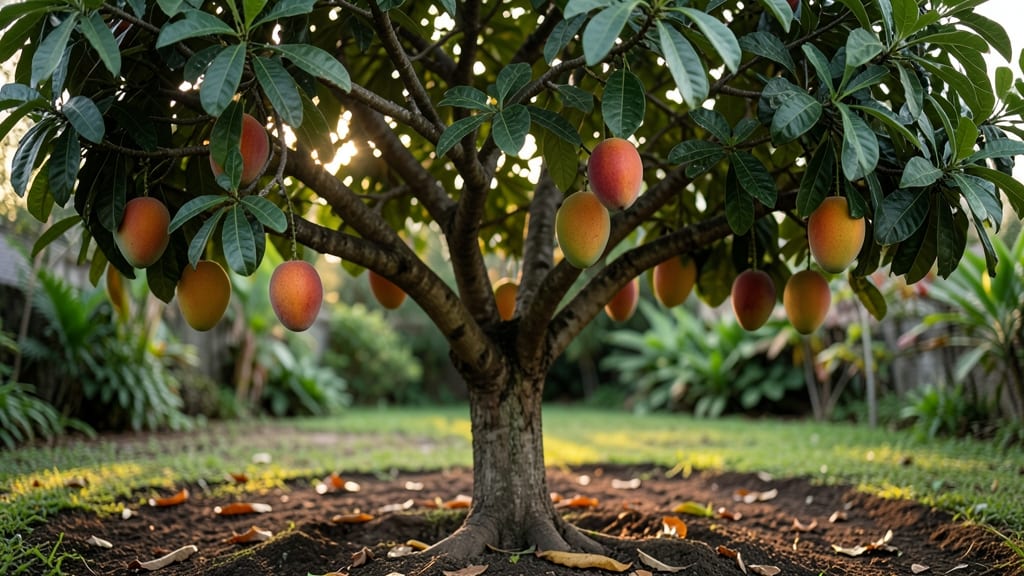
A mango tree with ripe fruits 🥭 is the crown jewel of any tropical garden, dripping with sun-kissed sweetness and vibrant color.
There’s nothing quite like the moment you spot your first mango tree with ripe fruits—golden, fragrant, and ready to burst with tropical sweetness. But knowing when and how to harvest them makes all the difference between a juicy masterpiece and a mealy disappointment.
In this guide, I’ll walk you through the visual cues that signal peak ripeness, the gentlest harvesting techniques to preserve flavor, and how to store them so every bite stays perfect.
Whether you’re a seasoned gardener or a first-time mango grower, these tips will help you turn your tree’s bounty into a showstopping centerpiece—and a delicious one, too.


How to identify perfectly ripe mangoes on the tree
Spotting the perfectly ripe mango on your tree is an art—one that combines color cues, texture tests, and even scent detection. Unlike many fruits that ripen off the vine, mangoes must be harvested at peak ripeness, or they’ll never reach their full sweet, creamy potential.
I’ve learned the hard way that waiting too long means mushy flesh, while picking too early guarantees bland, underripe disappointment.
Start by examining the skin color, which is your first clue. Most mango varieties transition from green to vibrant hues—think golden yellow, deep orange, or even red blushes, depending on the cultivar.
For example, Tommy Atkins mangoes develop a reddish tint, while Ataulfo varieties turn a bright golden yellow. Ignoring this visual cue is a common mistake—overripe mangoes often drop from the tree, so timing is everything.
| Variety | Color at Ripeness | Texture Test | Scent Clue |
|---|---|---|---|
| Tommy Atkins | Reddish-green to deep red | Yields slightly at stem | Sweet, tropical aroma |
| Ataulfo | Bright golden yellow | Softens near stem | Floral, honey-like scent |
| Haden | Red with green shoulders | Gives near base | Rich, fruity fragrance |
| Keitt | Green with red blush | Firm but not hard | Subtle sweetness |
Next, perform the gentle squeeze test—a technique I’ve perfected after years of trial and error. Press your thumb near the stem end of the mango; it should feel slightly soft but not mushy.
If it’s rock-hard, it’s not ready, and if it feels like a stress ball, it’s past its prime. Pro tip: Never squeeze too hard—you’ll bruise the fruit and attract pests like fruit flies.
Your nose is your secret weapon when it comes to mango ripeness. A ripe mango emits a distinct sweet, tropical aroma—almost like a mix of peach and citrus. If your mango smells sour or fermented, it’s overripe.
I once ignored this clue and ended up with a batch of mangoes that tasted more like vinegar than dessert. Trust your senses!
Pay attention to the stem separation trick, which is often overlooked. Gently twist the mango at its stem—if it detaches easily without resistance, it’s ready to pick. If the stem resists, the fruit needs more time.
This method works especially well for larger varieties like Kent, where the weight can make spotting ripeness tricky.
Timing matters too—morning harvests are ideal because the fruit is cooler and firmer, reducing bruising. Avoid picking after a hot afternoon, when the fruit is more prone to damage.
I’ve also noticed that rainy seasons can accelerate ripening, so keep a closer eye on your tree during monsoon months.
For dwarf varieties like Cogshall, ripeness cues are similar but slightly more subtle. These mangoes often ripen faster and may not develop the same vibrant colors as their larger counterparts. Instead, focus on the texture and scent—they’ll give you the clearest signal.
I’ve found that dwarf mangoes are best picked when they’re just shy of peak softness to ensure they ripen perfectly off the tree.
One final pro tip: Compare multiple fruits on the tree. Ripe mangoes often cluster together, so if one looks promising, check its neighbors. This visual comparison helps you spot the best candidates for harvesting.
I’ve used this method to fill my kitchen with perfectly ripe mangoes every season, and it’s saved me from countless disappointments.
Remember, patience is key. Rushing the process means sacrificing flavor and texture. When you finally spot that golden, fragrant mango hanging just right, you’ll know you’ve mastered the art of picking at peak ripeness. Now, go enjoy that sweet, juicy reward—you’ve earned it! 🌱🥭
Step-by-step guide to harvesting mangoes without damaging the tree
Harvesting mangoes at peak ripeness is an art—one wrong move can bruise the fruit or stress your mango tree. The key is patience and precision. Start by selecting only fully ripe mangoes (we’ll assume you’ve already mastered the ripeness test from our previous section!).
Use the right tools and technique to ensure both the fruit and tree stay happy.
Never twist or yank mangoes from the branch—this tears the stem and invites pests. Instead, use a sharp pruning saw or clean hand pruners to make a clean cut.
The goal is to remove the fruit while leaving the fruit spur (the small bump where the stem attaches) intact. This protects the tree’s future fruiting potential.
How to Harvest Mangoes Safely
-
Step 1: Gather Your Tools
- ✂️ Pruning saw (for thick stems)
- ✂️ Hand pruners (for smaller fruits)
- 🧤 Gloves (to protect from sap and thorns)
- 📦 Harvest basket (soft, lined with cloth)
-
Step 2: Locate the Stem
- Find the fruit spur (small bump at the base)
- Make your cut 1/4 inch above the spur
- Avoid cutting into the branch bark
-
Step 3: Cut with Precision
- Hold the fruit firmly but gently
- Cut diagonally downward (prevents water pooling)
- Use one smooth motion—no sawing back and forth
-
Step 4: Handle Large Fruits
- For oversized mangoes, support the weight
- Use a ladder or stool if needed
- Place fruit in basket stem-side up to avoid bruising
-
Step 5: Post-Harvest Care
- Inspect the tree for damaged branches
- Clean tools with rubbing alcohol to prevent disease
- Store mangoes at room temperature for 2-3 days before refrigerating
If you’re dealing with thorny varieties like ‘Ice Cream’ or ‘Keitt’, wear long sleeves and thick gloves. Thorns can snag clothing and leave painful scratches. For dwarf mango trees, a small harvest basket on a pole makes collecting fruits from lower branches easier without bending over.
Avoid these common mistakes: Twisting stems (causes tearing), using dull tools (crushes fruit), or harvesting when fruits are still firm. Even a slight bruise can speed up spoilage, so handle each mango like it’s your most prized variety.
Once harvested, let them ripen at room temperature for 2-3 days to develop full sweetness.
With practice, you’ll harvest mangoes like a pro—minimizing damage to both fruit and tree while maximizing flavor. Soon, your mango tree with ripe fruits will be the star of your garden, and your kitchen! 🥭