
Trees
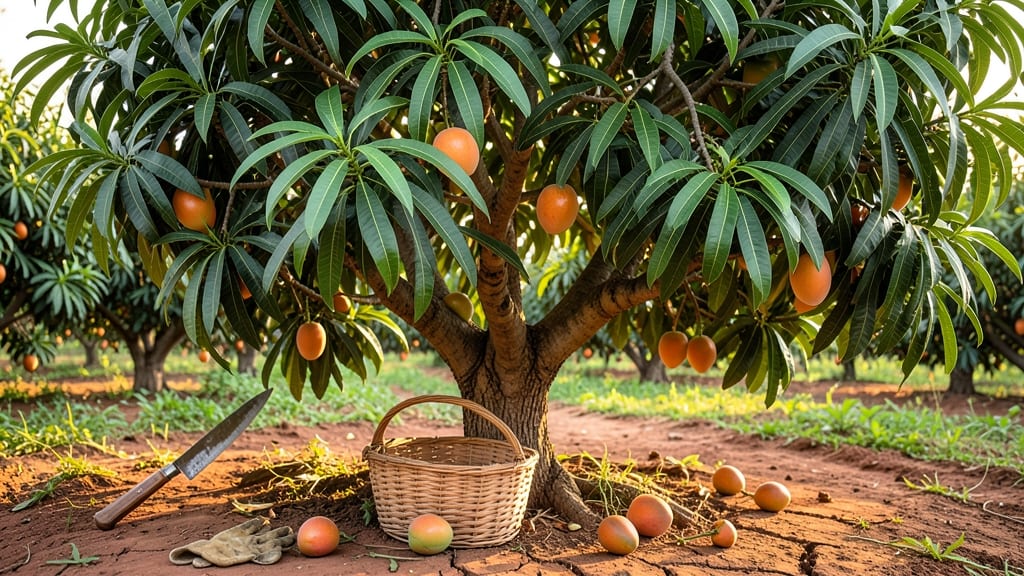
Harvesting a ripe mango tree 🥭 is all about timing—because those sweet, juicy fruits won’t wait forever, and picking too soon means bland, underripe disappointment.
Imagine standing under your tree, surrounded by vibrant fruit, only to realize half are still too hard or lack that signature tropical aroma.
That’s the moment you wish you’d known the exact signs of peak ripeness—like the deepened color, the slight give when pressed, or that irresistible sweet scent at the stem.
Whether you’re in General (Tropical/Subtropical) zones 10-11 or a microclimate-protected 9b area, the right harvest window makes all the difference. Below, I’ll walk you through how to read your tree’s cues, the best tools to use, and how to store your bounty so every mango shines.
From the first blush of color to the perfect twist-off stem, you’ll never miss a harvest again—and your taste buds will thank you.


How to determine the perfect mango harvest time by color, texture, and smell
Harvesting mangoes at the right moment transforms a good crop into an exceptional one. Unlike some fruits that ripen fully on the vine, mangoes release their signature sweetness and aroma only after reaching peak ripeness.
In tropical climates, mangoes typically mature between April and September, but the exact timing depends on your local climate and variety. For subtropical growers, harvest windows may shift slightly later, often aligning with summer's peak heat.
To avoid disappointment, I’ve learned to rely on a three-pronged approach: visual cues, tactile tests, and scent analysis. Each method builds on the other, ensuring you never miss the perfect harvest window.
For example, a deepened color might signal ripeness, but without the right texture or aroma, the fruit could still be underripe. Let’s break down each clue so you can confidently pick your mangoes at their peak.
📌 Visual Clues: Mango skin color shifts dramatically as the fruit ripens. Green mangoes are unripe, while ripe varieties develop hues of yellow, orange, or red, depending on the cultivar. For instance, Alphonso mangoes turn golden yellow, while Kent mangoes develop a deep red blush. However, color alone isn’t enough—some varieties, like Keitt, may stay green even when ripe, requiring additional tests.
🤲 Tactile Tests: The gentlest pressure on the mango’s skin should reveal its readiness. A ripe mango will yield slightly to firm but gentle pressure, like pressing your thumb into a ripe avocado. If the fruit feels hard or resists pressure, it’s not ready. Conversely, if it feels mushy or overly soft, it’s overripe and may spoil quickly. This test is especially critical for green-skinned varieties that don’t change color.
👃 Scent Analysis: The most reliable indicator? A sweet, tropical aroma at the stem. Hold a mango near your nose and inhale deeply—ripe mangoes emit a fruity, floral scent that’s unmistakable. If you detect no scent or a faint, grassy smell, the fruit needs more time. This cue is particularly useful in subtropical climates, where cooler temperatures can slow ripening.
| Ripeness Indicator | Unripe | Perfectly Ripe | Overripe |
|---|---|---|---|
| Color | Green or dull | Deep yellow/orange/red (varies by variety) | Darkened or wrinkled skin |
| Texture | Hard and firm | Slightly soft with gentle give | Mushy or leaking |
| Scent | No aroma or grassy smell | Sweet, tropical fragrance at stem | Fermented or sour odor |
| Stem Test | Stem resists twisting | Stem detaches with slight twist | Stem falls off easily |
| Regional Note | Tropical: May-July Subtropical: June-August |
Harvest 1-2 weeks before full ripeness for transport | Best used immediately or processed |
Regional variations play a huge role in harvest timing. In tropical climates like Florida or Hawaii, mangoes often ripen between May and July, while subtropical zones such as Southern California or Australia may see harvests stretching from June to August.
Even within the same region, microclimates can shift ripening by weeks. For example, mangoes grown in cooler highland areas may take longer to ripen than those in lowland heat.
One trick I’ve picked up from local growers is to tag your mangoes when they first show color changes. This helps track which fruits are nearing ripeness and ensures you don’t miss the optimal harvest window.
Additionally, keep an eye on weather patterns: prolonged heat can accelerate ripening, while cool spells may slow it down. If you’re unsure, err on the side of early harvest—mangoes ripen best at room temperature after picking.
For green-skinned varieties like Keitt or <
Step-by-step mango harvesting techniques to avoid damage and maximize yield
Once you’ve identified your mangoes are ripe, the next challenge is harvesting them without causing damage. Mangoes are delicate when ripe, and improper handling can lead to bruising or spoilage. The key is using the right techniques to pick them safely and efficiently.
I’ve learned through experience that gentle handling and the right tools make all the difference in preserving fruit quality.
Start by gathering your supplies: a sturdy harvesting pole (for tall trees), pruning shears (for stubborn stems), and soft cloths (to protect the fruit). Avoid using sharp tools directly on the fruit, as they can puncture the skin and invite rot.
Work during the coolest part of the day—early morning or late afternoon—to prevent heat stress on the fruit.
Here’s how I harvest mangoes without damaging them, step by step:
How to Harvest Mangoes Safely
- 1 Inspect the fruit: Look for ripe mangoes with a deepened color and slight give when pressed. Avoid harvesting if the fruit is still hard or green.
- 2 Position yourself: Stand on a stable ladder or use a harvesting pole for tall trees. Never stretch or balance precariously—safety first!
- 3 Grip the fruit: Hold the mango with one hand, supporting its entire weight to prevent dropping. Use your other hand to twist the stem gently.
- 4 Twist, don’t pull: Rotate the fruit clockwise (or counterclockwise) while applying slight pressure. The stem should detach cleanly near the base.
- 5 Handle with care: Place harvested mangoes in a soft container (like a mesh bag or padded box) to avoid bruising. Avoid stacking them to prevent damage.
- 6 Check for damage: Inspect each mango for bruises or punctures. Discard any damaged fruit immediately to prevent spoilage from spreading.
If a mango resists detaching, use pruning shears to cut the stem about 1 inch above the fruit. This prevents the stem from tearing and leaving a jagged edge. Never yank the fruit—this can damage both the branch and the mango itself.
For very tall trees, a harvesting pole with a hook is a game-changer. It lets you reach high branches without climbing.
After harvesting, sort your mangoes by ripeness. Place them in a single layer in a well-ventilated container to ripen at room temperature. Avoid refrigerating ripe mangoes, as cold temperatures can dull their flavor.
If you’re not ready to eat them immediately, store unripe mangoes in the fridge to slow ripening—just let them sit at room temperature for a day or two before enjoying.
Troubleshooting common issues is part of the process. If mangoes drop prematurely, it could signal over-maturation or pest damage. Check for fruit flies or sap-sucking insects and treat accordingly. Uneven ripening? It’s often due to uneven sunlight exposure—prune branches to improve airflow and light penetration next season.
With these techniques, you’ll maximize your mango yield while keeping your fruit fresh and delicious. Happy harvesting—your taste buds will thank you! 🥭🌿