
Fertilization
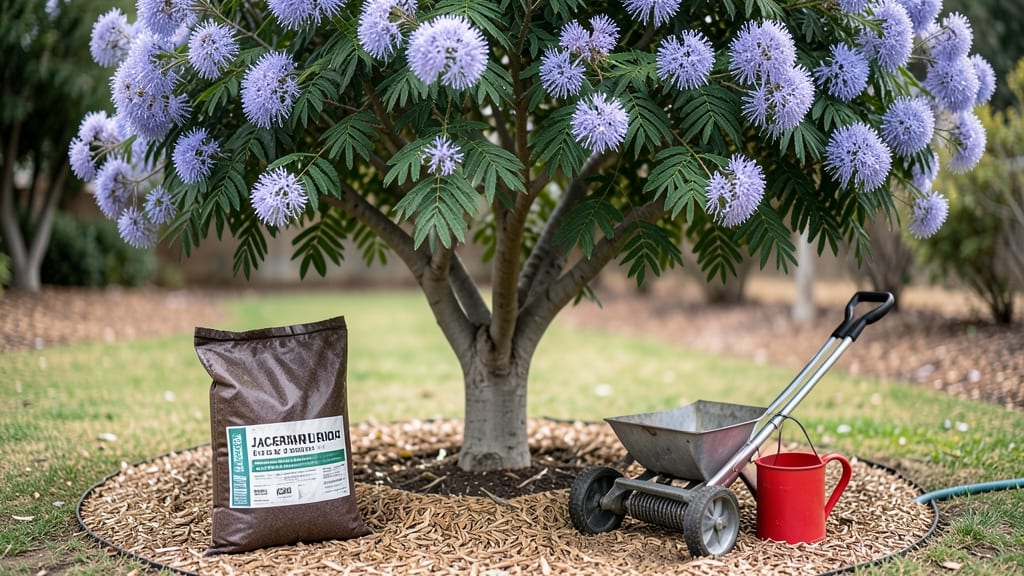
The secret to jaw-dropping purple blooms on your jacaranda tree fertilizer is the right mix of nutrients at the right time. Picture this: You’ve poured love into your tree—watering, pruning, even shielding it from harsh winds—yet the flowers stay sparse or the leaves look tired.
The missing piece? A smart fertilizer schedule tailored to its growth stages, not just a random feeding plan.
Jacarandas thrive in zones 9-11 but need a balanced approach: too much nitrogen in summer burns roots, while skipping spring feedings stunts blooms. Below, I break down the exact fertilizer types, timing, and dosages to keep your tree lush year-round—no guesswork, just results.
Ready to transform your jacaranda from "meh" to "showstopper"? Let’s dive into the seasonal feeding plan that finally unlocks its full potential.
Best fertilizers for jacaranda trees by growth stage
Your jacaranda tree thrives with the right nutrients at each stage—seedlings need gentle feeding, while mature trees crave phosphorus-rich fertilizers for those iconic purple blooms. The key? Matching your fertilizer to the tree’s current needs, whether it’s root development or flower production.
I’ve tested both organic and synthetic options to find what works best for each phase.
Jacarandas respond best to a balanced NPK ratio like 6-4-4 or 8-3-9, but the micronutrients—like magnesium and zinc—are just as critical. For example, a seedling might need a low-nitrogen starter fertilizer, while a flowering tree benefits from a higher-phosphorus boost.
Let’s break down the best choices for every growth phase.
🌱
| Growth Stage | Recommended Fertilizer Type | NPK Ratio | Key Micronutrients | Application Timing |
|---|---|---|---|---|
| Seedlings (0-2 years) | Slow-release organic (compost, worm castings) or synthetic starter (5-5-5) | 3-4-6 or 5-5-5 | Iron, manganese, zinc | Every 6-8 weeks (spring-fall) |
| Mature Trees (3-10 years) | Balanced granular (6-4-4) or organic (composted manure) | 6-4-4 or 8-3-9 | Boron, calcium, magnesium | Every 8-12 weeks (spring-fall) |
| Flowering Stage (Spring) | High-phosphorus bloom booster (10-5-10) or bone meal | 10-5-10 or 7-9-5 | Phosphorus, potassium, sulfur | Late winter (Feb-March) |
| Established Trees (10+ years) | Slow-release organic (composted leaf mold) or synthetic (8-2-12) | 8-2-12 or 6-3-6 | Magnesium, copper, molybdenum | Every 10-12 weeks (spring-fall) |
For seedlings, I recommend starting with a low-nitrogen fertilizer like a 3-4-6 ratio to encourage root growth without overwhelming the young plant. A compost tea or worm castings works wonders for organic gardeners, while synthetic options like a 5-5-5 starter fertilizer provide quick, balanced nutrients.
Apply this in early spring when new growth begins.
When your jacaranda reaches maturity (3-10 years), switch to a balanced granular fertilizer with a 6-4-4 or 8-3-9 ratio. This supports both foliage and flower production. I’ve seen the best results with composted manure or a slow-release pellet, applied every 2-3 months during the growing season.
Avoid fertilizing in summer heat, as it can cause leaf burn.
🌷
The flowering stage is when jacarandas need a phosphorus boost. A fertilizer with a higher middle number—like 10-5-10—encourages more abundant blooms. I’ve had success with bone meal (a natural organic option) or a bloom-specific synthetic fertilizer.
Apply this in late winter, just as buds form, to give your tree the energy it needs for a spectacular spring display.
For established trees (10+ years), focus on maintenance fertilization with a low-nitrogen option like 8-2-12. These trees are less responsive to heavy feeding and can suffer from over-fertilization.
I prefer composted leaf mold or a slow-release organic pellet to keep nutrients available without risking buildup. Apply this in early spring and fall to support root health.
Micronutrients are often overlooked but critical for jacarandas. A soil test can reveal deficiencies, but common issues include low magnesium (yellowing leaves) or zinc deficiency (stunted growth). I recommend a chelated micronutrient spray or adding Epsom salt (for magnesium) if you notice these
Seasonal jacaranda fertilizer schedule for year-round health
Your jacaranda tree thrives on a seasonal fertilizer schedule that mirrors Australia’s climate—think spring blooms, summer recovery, and winter dormancy. Unlike many trees, jacarandas need phosphorus-rich feeds before flowering and balanced nutrients for root strength.
The key? Adjusting for your soil type—sandy soils need more frequent feeding, while clay soils benefit from slower-release fertilizers.
Timing is everything. Spring (September-November) is prime time for pre-bloom fertilization, while summer (December-February) demands caution—overfeeding can scorch roots in 40°C+ heat. Winter (June-August) is a no-fertilizer zone unless your region has mild winters.
Below, I’ve broken down the month-by-month plan tailored to Australia’s zones, with soil-specific tweaks to maximize those iconic purple cascades.
For sandy soils, I recommend liquid seaweed extracts in spring to boost micronutrient uptake, while clay soils benefit from gypsum applications before fertilizing to improve drainage. Pro tip: Always water your jacaranda deeply 24 hours before applying fertilizer to prevent root burn—especially in hot, dry zones like Queensland.
Young jacarandas (under 3 years) need half the fertilizer of mature trees. Use a soft-spoon technique: Gently scratch the soil surface to place granules near roots without disturbing them.
Avoid synthetic fertilizers with high nitrogen (like 30-0-0)—they’ll fuel leafy growth at the expense of blooms. Instead, opt for low-nitrogen, high-phosphorus blends during flowering seasons.
Watch for yellowing leaves after fertilizing—this signals overfeeding. Flush the soil with water to leach excess salts, then switch to <